
SpaceRocket
Home
Launches
ArticlesNewsEventsStatisticsModelsLinks
Home
Rocket Library500+ launch vehiclesFamily TreeBy country & familyEnginesEngine family treeCompareSide-by-side specsReuseBooster flight records
Launches
StationsISS & Tiangong trackerSatellites3D satellite mapAsteroid WatchNear-Earth objectsNASA APODPicture of the day
ArticlesNewsEventsStatisticsModelsLinks
🚀SpaceRocket

Exploring the cosmos through data. Track rockets, events, and space missions in real time.

Quick Links

  • Home
  • Rockets
  • Launches
  • Events
  • Articles
  • News
  • Statistics
  • Links

Legal

  • About Us
  • Privacy Policy
  • Terms of Service
  • Contact Us

Data Sources

Launch & event data: Launch Library 2. News: SNAPI. APOD & imagery: NASA. Background research: Wikipedia (CC BY-SA 4.0).

© 2026 SpaceRocket. All rights reserved.

Data from TheSpaceDevs, SNAPI & NASA

← Back to NewsRead Original
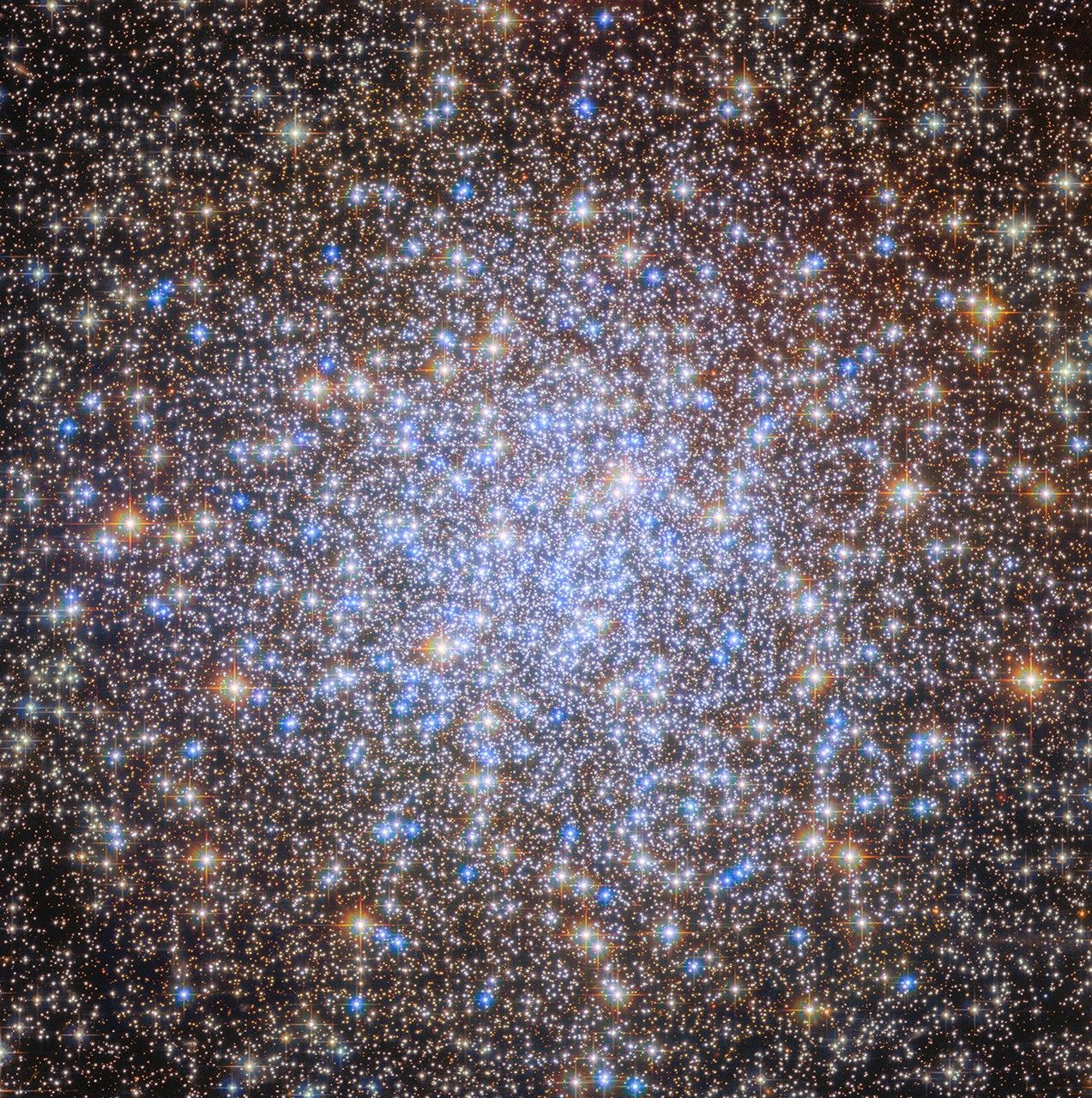
Starry Chandelier Cluster
NASAJune 30, 2026

Starry Chandelier Cluster

This image released on June 26, 2026, features the globular cluster NGC 6723, sometimes called the Chandelier Cluster. Like its namesake, it sparkles with countless lights. However, each ‘lightbulb’ in this chandelier is an individual star 27,000 light-years away in the constellation Sagittarius (the Archer).

Globular clusters like NGC 6723 contain some of the oldest stars in our galaxy. These clusters have ages that often exceed 10 billion years old, and some are nearly as old as the universe itself. Astronomers think globular clusters are some of the first structures that formed in our galaxy, coalescing potentially billions of years before the thin disk of stars in which our Sun orbits. The details of how globular clusters formed, however, are not yet certain.

Learn more about the Chandelier Cluster.

Image credit: ESA/Hubble & NASA, A. Sarajedini, G. Piotto

Full text from nasa.gov (public domain).

🚀 Related Launches