
Mapping Alien Continents: Achieving Optical VLBI for Exoplanet Imaging
Paul StankusBrookhaven Science Associates
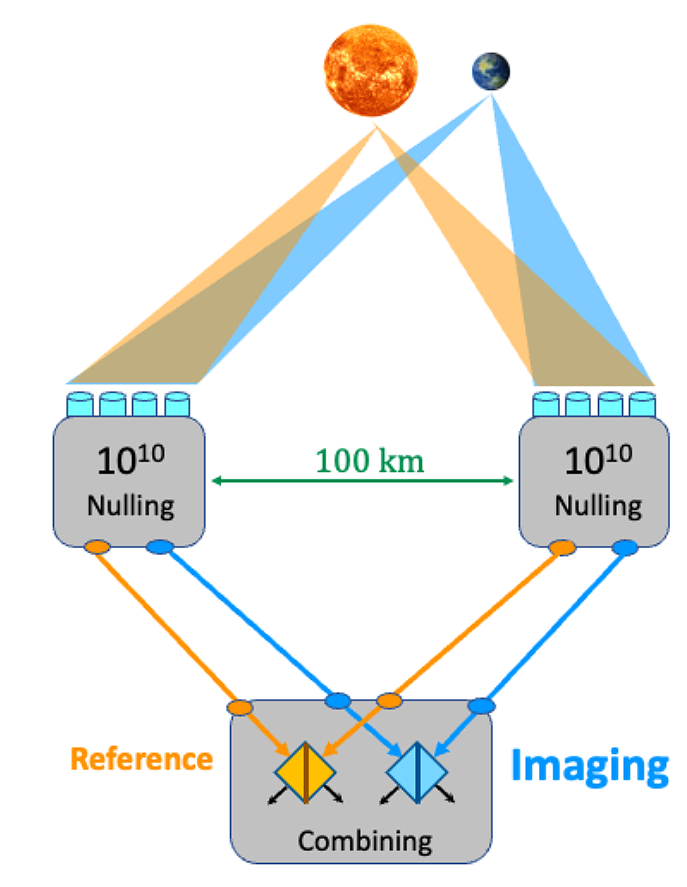
The scientific goal of the proposed work will be reconstructing the image, ie resolving surface features, of an Earth-like exoplanet around a nearby star as seen in visible light. The innovation is in two stages. First, the design of a new kind of nulling interferometer — “dynamic hierarchical nulling” — combining inputs from multiple apertures and capable of separating star light from planet light with contrast of 10^10 or better in the visible. Second, combine the output beams from two such nullers on spacecraft stationed ~100km apart to achieve the required angular resolution using Michelson interferometric imaging; note that the hierarchical nuller preserves the star’s light in a separate beam which can then be used as in interference phase reference. The capability to survey the features of Earth-like exoplanets is perfectly aligned with NASA priorities and sure to excite public interest.
2026 Selections
Full text from nasa.gov (public domain).