
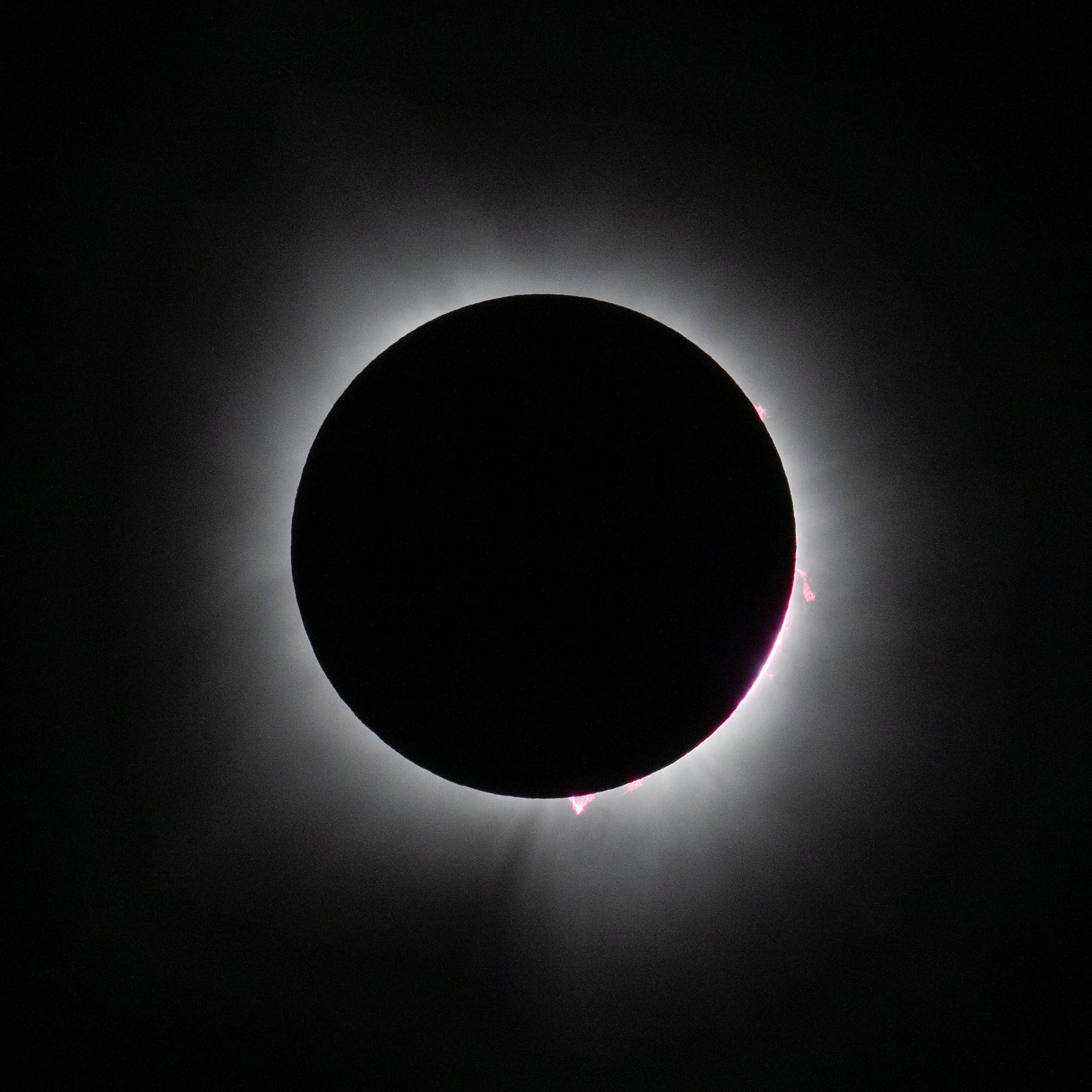
NASA Sets Coverage for August Northern Hemisphere Total Solar Eclipse
On Wednesday, Aug. 12, a total solar eclipse will be visible in parts of Greenland, Iceland, northern Russia, the Atlantic Ocean, Spain, and a small corner of Portugal. NASA will stream the eclipse live with views across the path and interviews with subject matter experts through a variety of platforms.
Learn where to watch online:
https://www.nasa.gov/live
Viewers in other places in the Northern Hemisphere also will have the chance to experience a partial solar eclipse, including parts of the U.S. (from Alaska to North Carolina), most of Canada, much of Europe, and northwestern Africa.
During the eclipse, NASA will conduct experiments in the path of totality. To investigate the dynamics of the Sun’s corona, a NASA-funded science team will chase the Moon’s shadow with a WB-57 high-altitude research aircraft. The NASA-supported Nationwide Eclipse Ballooning Project is sending students from several U.S. universities to Iceland and Spain to launch scientific balloons before, during, and after the eclipse to research how the temporary darkening of our skies during the eclipse affects Earth’s atmosphere.
NASA’s eclipse coverage is as follows (all times Eastern):
Wednesday, Aug. 12
NASA photography coveragePhotos of the eclipse, dependent on visibility, will be available shortly after the eclipse. View images on the agency’s Flickr account.
Watch, engage on social mediaDuring the broadcast, NASA experts will answer questions submitted on social media. Send in your questions and let people know you’re watching the eclipse on X, Facebook, and Instagram by following and tagging these accounts: X: @NASA, @NASASolarSystem, @NASAScience_
Facebook: NASA, NASASolarSystem, @NASAScience
Instagram: @NASA, @NASASolarSystem, @NASAScience_
Learn more about the eclipse at:
https://science.nasa.gov/eclipses
-end-
Abbey Interrante / Karen FoxHeadquarters, Washington301-201-0124 / 202-358-1600abbey.a.interrante@nasa.gov / karen.c.fox@nasa.gov
Full text from nasa.gov (public domain).