
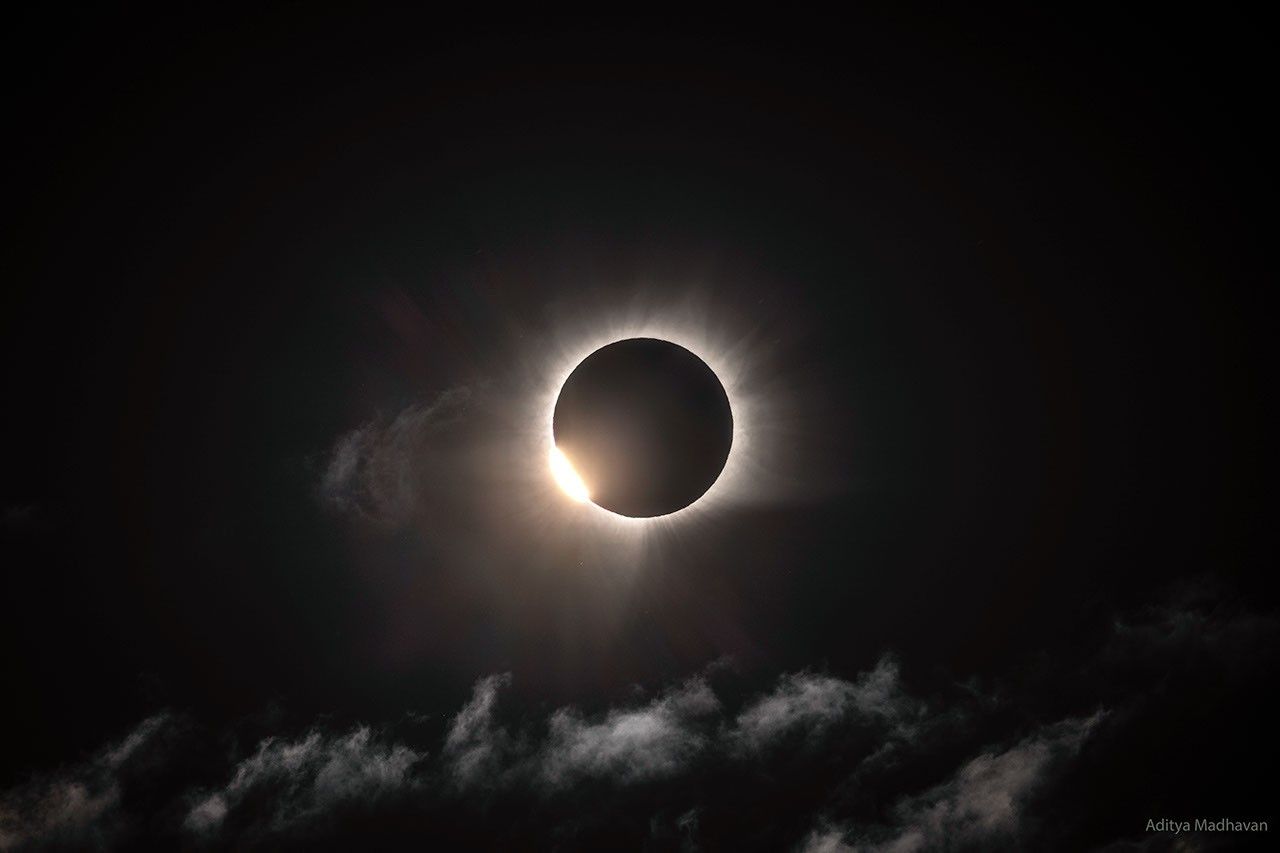
APOD: 2026 August 14 – Total Solar Eclipse from Greenland
APOD
Astronomy Picture of the Day
Discover the cosmos! Each day a different image or photograph of our fascinating universe is featured, along with a brief explanation written by a professional astronomer.
Explanation: On August 12, the Moon's shadow reached out to touch our fair planet. Beginning in the Arctic Ocean, it swept along a narrow track that led the dark lunar umbra across parts of Greenland, Iceland, the Atlantic, Portugal, and northern Spain. And for a moment, denizens of Earth who found themselves with clear skies under the shadow of the Moon could witness a total solar eclipse. After dodging the weather by sea and making a landing along Rype Fjord on the Greenland east coast (at 71.07055N, 27.71252W), this hard-won snapshot was captured at 17:33:26 UTC. That's near the initial reach of clearing skies along the path of totality, so the image is likely one of the first unobstructed views of the totally eclipsed Sun. Through a break in the clouds, the stunning photo also records one of this eclipse's transient diamond rings and the magnificent solar corona emerging near the moment totality began.More spectacular eclipse images: Solar Eclipse of 2026 August 12Tomorrow's picture: perhaps a Perseid
Full text from nasa.gov (public domain).