
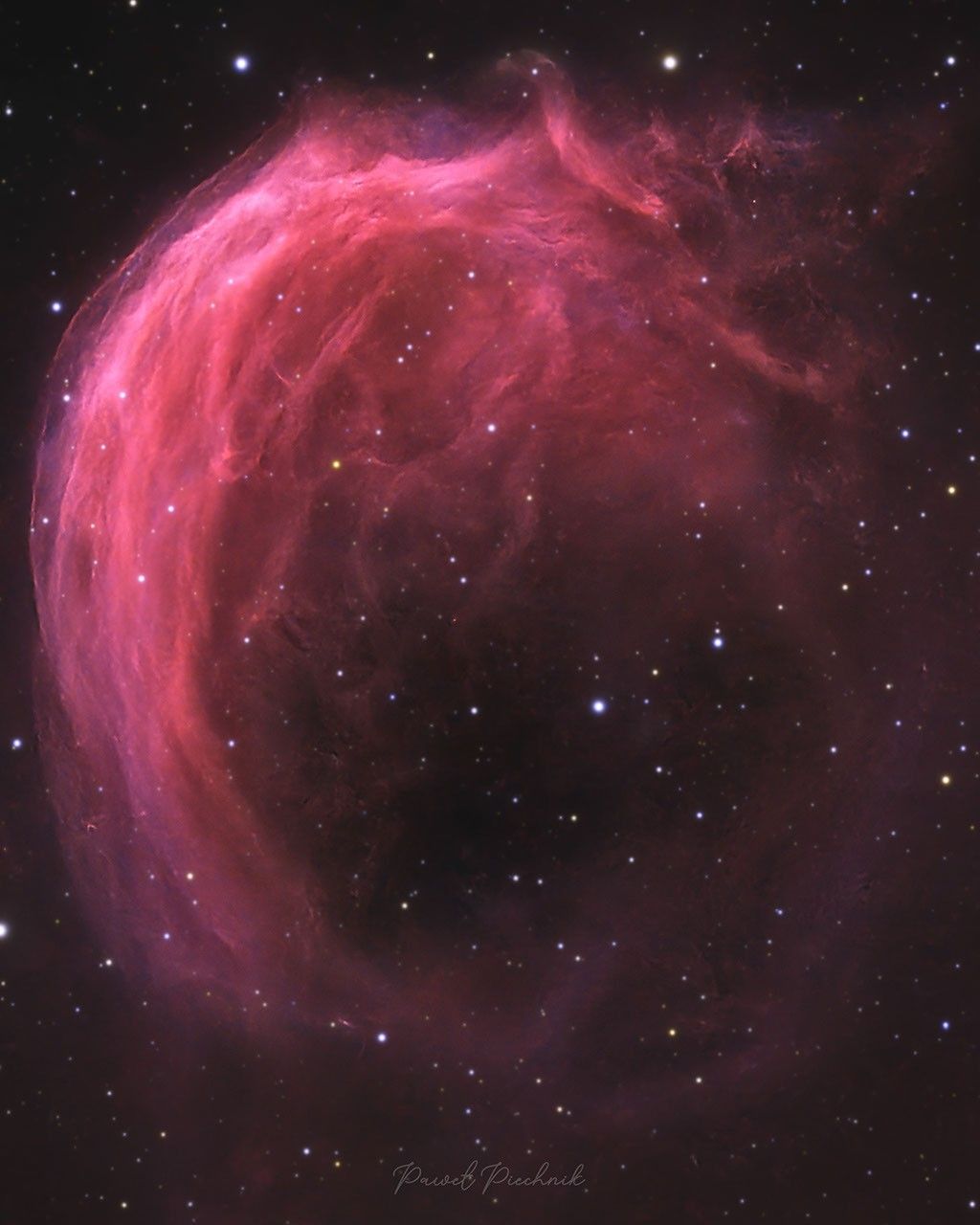
APOD: 2026 September 29 – Sh2-188: The Shrimp Nebula
APOD
Astronomy Picture of the Day
Discover the cosmos! Each day a different image or photograph of our fascinating universe is featured, along with a brief explanation written by a professional astronomer.
Explanation: What causes the swirl in the Shrimp Nebula? Its high speed is likely. What is sure is that Sh2-188 is one of the larger planetary nebulas on the night sky, by angular size, spanning about half the diameter of the Moon. Moreover, the white-dwarf core -- leftover from the Sun-like star that shed its outer atmosphere -- is moving unusually fast through interstellar space, creating a bow shock most visible on the upper left that is similar to a boat plowing through water. Although faint, the Shrimp Nebula glows also by compressing and brightening gas on its leading edge. The featured image was taken in the light of hydrogen, sulfur, and oxygen by a backyard telescope in Krakow, Poland and then digitally adjusted to approximate the nebula's true colors.APOD's email for image submissions has changed. Please see: APOD SubmissionsAPOD's main NASA site has moved: From apod.nasa.gov to science.nasa.gov/apodTomorrow's picture: open space
Full text from nasa.gov (public domain).