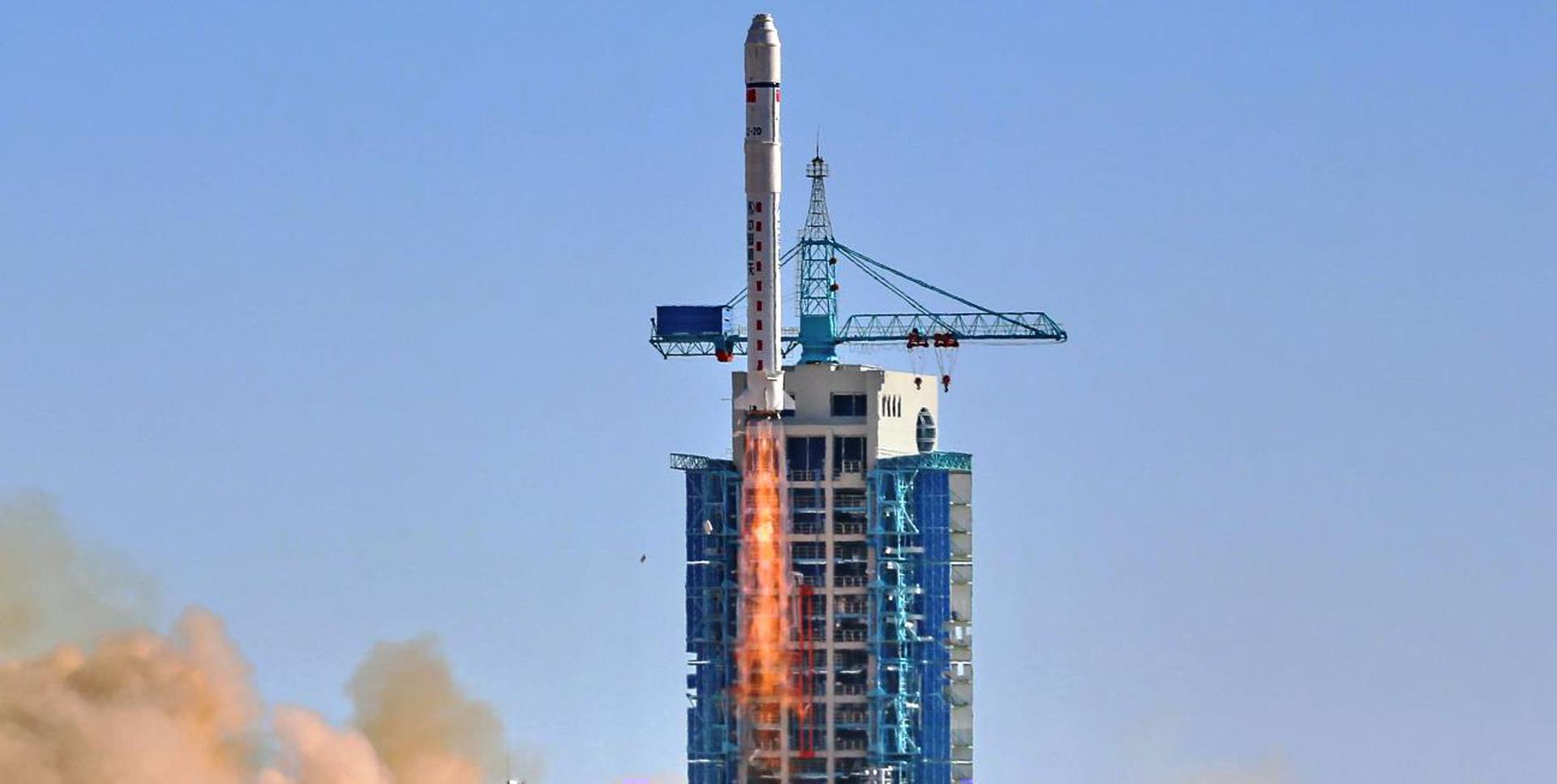
The Long March 2D, also known as the Chang Zheng 2D, CZ-2D and LM-2D, is a Chinese orbital carrier rocket. It is a 2-stage carrier rocket mainly used for launching LEO and SSO satellites.
The Long March 2D, also known as the Chang Zheng 2D, CZ-2D, and LM-2D, is a Chinese orbital carrier rocket developed by the China Aerospace Science and Technology Corporation (CASC), the state-owned main contractor for the Chinese space program. The vehicle belongs to the Long March rocket family, the lineage of launch vehicles that forms the backbone of China's orbital launch capability, and more specifically to the Long March 2 series within that family. It conducted its maiden flight on August 9, 1992, and remains in active service today. According to its database description, the rocket is primarily used for launching satellites into low Earth orbit (LEO) and sun-synchronous orbit (SSO), roles that have made it a regular workhorse for Chinese satellite missions over more than three decades of operation.
The Long March 2D is a two-stage carrier rocket standing 38.3 meters tall with a body diameter of 3.35 meters. Its launch mass is 232 tonnes. In terms of payload capability, the vehicle can deliver up to 3,500 kilograms to low Earth orbit, which is the principal destination for the satellites it carries. The database records no geostationary transfer orbit capacity for this configuration, consistent with its stated focus on LEO and SSO missions rather than high-energy deployments. The rocket is not reusable: SpaceRocket's data lists it as an expendable vehicle, and its record shows no attempted landings, with zero successful and zero failed landing attempts logged. This places it among the conventional expendable launchers of the Long March family, designed around reliable delivery of medium-class payloads to low-altitude orbits rather than booster recovery.
According to SpaceRocket's database, the Long March 2D has flown 100 times since its 1992 debut, with 99 of those launches recorded as successful and only one ending in failure. That corresponds to a success rate of 99 percent across more than three decades of operations, one of the strongest reliability records in the data for any orbital launcher. The launch record in SpaceRocket's own tracking, which currently groups six logged launches by outcome, shows all six as successful, consistent with the vehicle's broader statistical profile. No landing attempts have been made, as the rocket is expendable by design. Taken together, the numbers describe a mature, dependable launch system: a two-stage vehicle that has carried out a century of orbital missions with a single recorded failure, maintaining steady service as a dedicated launcher for low Earth and sun-synchronous orbit satellites within China's space program.
Sources: Launch Library 2 (TheSpaceDevs) · Wikipedia (CC BY-SA 4.0)