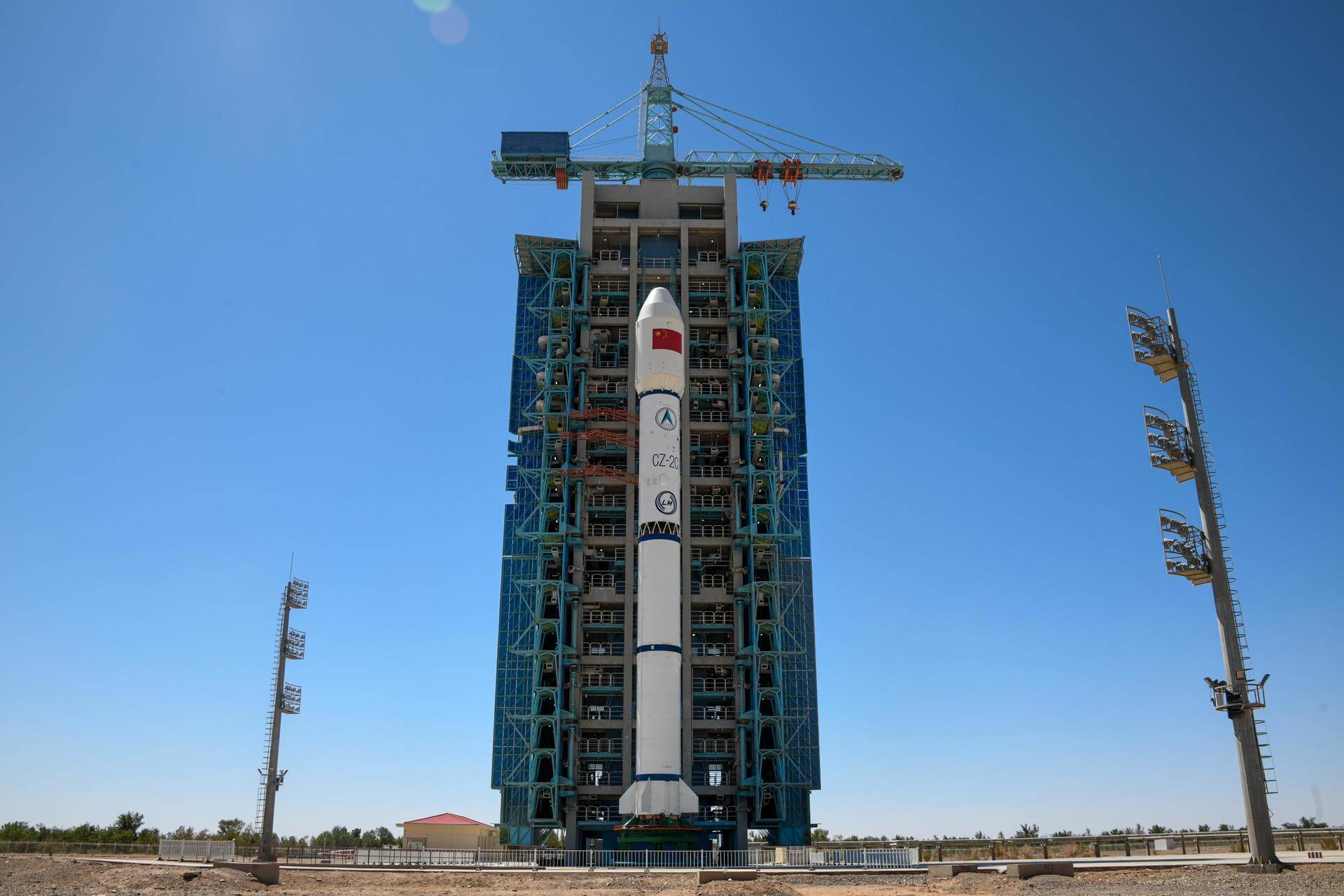
The Long March 2C is a family of expendable launch vehicles made and operated by China. It is a two stage launch vehicle with storable propellants, consisting of Nitrogen Tetroxide and Unsymmetrical Dimethylhydrazine.
The Long March 2C is a family of expendable launch vehicles developed and operated by China. It is manufactured by the China Aerospace Science and Technology Corporation (CASC), the state-owned main contractor for the Chinese space program, which designs, develops and produces a range of spacecraft, launch vehicles, missile systems and ground equipment. The vehicle belongs to the broader Long March family, China's principal series of orbital launchers, and more specifically to the Long March 2 branch of that family. The Long March 2C flew for the first time on 9 September 1982, making it one of the longer-serving members of the Long March line. It remains in active service today, more than four decades after its maiden flight, and continues to be operated as part of China's government-run space launch program.
The Long March 2C is a two-stage launch vehicle that uses storable propellants, consisting of nitrogen tetroxide as the oxidizer and unsymmetrical dimethylhydrazine (UDMH) as the fuel. Propellants of this type can be stored at ambient conditions for extended periods, a characteristic associated with the vehicle's design heritage. The rocket stands 42 metres tall with a body diameter of 3.35 metres and has a launch mass of 233 tonnes. It is capable of delivering up to 3,850 kilograms of payload to low Earth orbit; no geostationary transfer orbit capacity is listed for this configuration in SpaceRocket's database. The vehicle is fully expendable: it was not designed for stage recovery, and no landing attempts of any kind have been recorded for it. As a family rather than a single fixed configuration, the Long March 2C designation covers the vehicles built and operated under this name within the Long March 2 series.
According to SpaceRocket's database, the Long March 2C has conducted 65 launches since its 1982 debut, of which 64 were successful and one ended in failure, corresponding to a success rate of roughly 98 per cent. Within the launch record tracked in detail by SpaceRocket, the entries currently on file are all listed as successful. No landing attempts, successful or otherwise, have been recorded for the vehicle, which is consistent with its expendable design. Taken together, these figures indicate a mature and highly reliable launch system: a single failure across more than six decades of combined operational history, spread over a service life exceeding forty years, points to a well-established design. The vehicle's continued active status, alongside its longevity within the Long March family, suggests it has remained a useful component of China's launch capabilities well after many contemporary systems of its era were retired.
Sources: Launch Library 2 (TheSpaceDevs) · Wikipedia (CC BY-SA 4.0)