
Every Chinese Rocket Engine Class, Compared: Which Vehicles Fly Which Propulsion
August 10, 2026
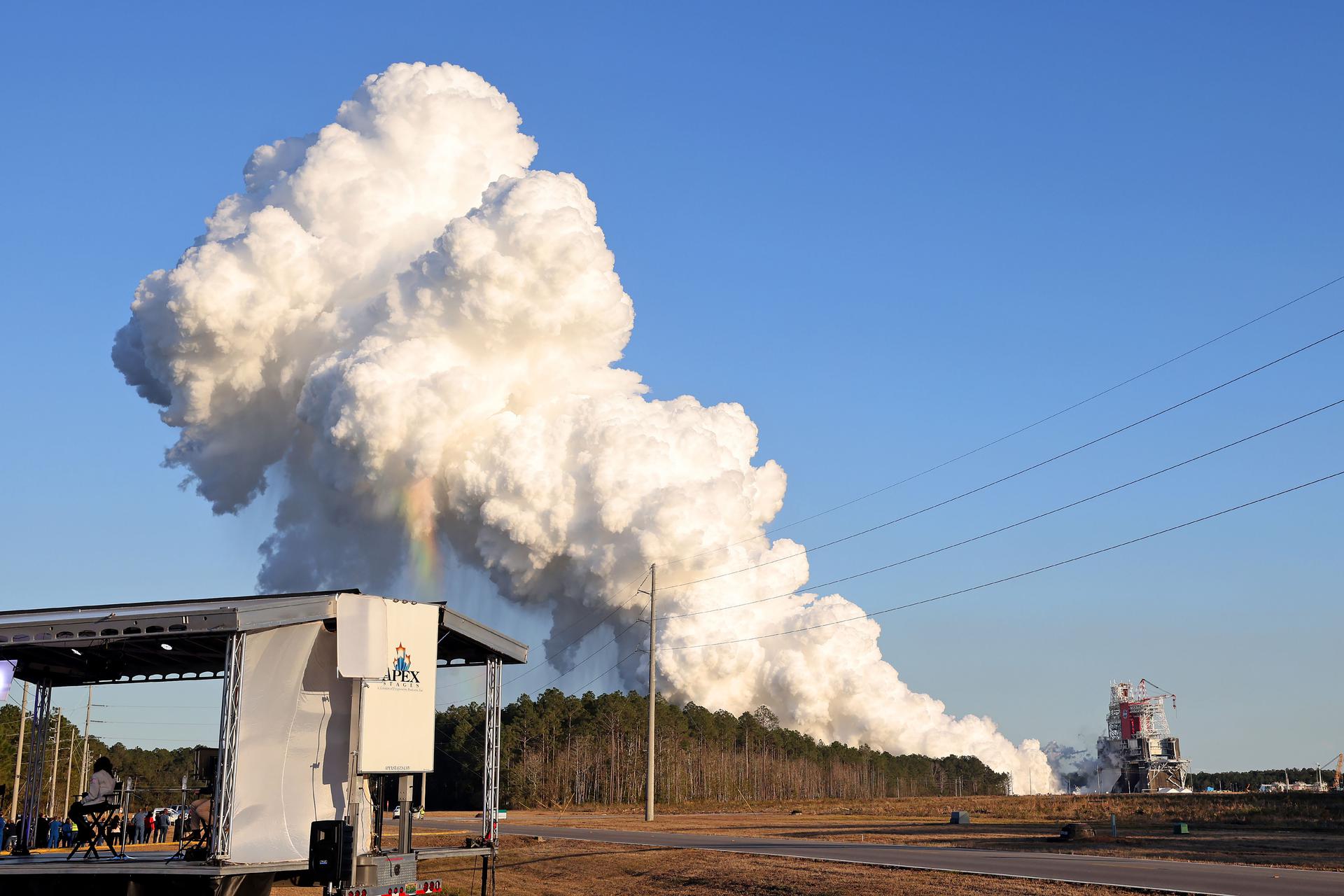
Rocket engines are the least visible but most decisive part of any launch program. China now operates vehicles across every major propulsion class: decades-old storable hypergolic stages, a newer generation of kerosene-liquid oxygen boosters, hydrogen upper stages, a large commercial solid sector, and — most recently — methane-fueled engines on privately built rockets. Using SpaceRocket's launcher configuration database and launch log, this article sorts China's active and historical fleet by propulsion class and shows which propulsion families are actually doing the work in orbit. Where engine-level development has only been reported in Chinese-language media or company statements, we flag it as unverified rather than treating it as confirmed performance data.
I. The four (now five) propellant families
Chinese-language explainers widely shared among spaceflight audiences break the field into a simple hierarchy: solid motors deliver short bursts of high thrust and long shelf life but low efficiency; nitrogen tetroxide and hydrazine-derived fuels are storable and reliable but toxic; kerosene with liquid oxygen offers the best cost-performance for first stages; and liquid hydrogen with liquid oxygen delivers the highest specific impulse at the cost of bulky, difficult tankage — making it best suited to upper stages. SpaceRocket's database shows China's fleet maps almost exactly onto this framework, with liquid methane now emerging as a fifth option pursued mainly by commercial companies.
- Storable hypergolic (N2O4/UDMH): the Long March 2, 3, and 4 families, built on storable propellants as confirmed in SpaceRocket's database entries for the Long March 2C and its variants.
- Kerosene-liquid oxygen (kerolox): the YF-100-powered Long March 6 and 6A, the kerosene-LOX Long March 12, and the Long March 7 and 8 families.
- Hydrolox: cryogenic upper stages, including the YF-75D-powered second stage of the Long March 8A, as noted in its SpaceRocket database entry.
- Solid: Kuaizhou 1A, Kinetica 1, Ceres-1, Gravity-1, Long March 11, Smart Dragon 3, and others.
- Methalox: the Zhuque family from LandSpace, which has begun appearing in SpaceRocket's launch log with Zhuque-2E, Zhuque-2E Block 2, and Zhuque-3 flights.
II. The hypergolic workhorses still dominate cumulative flight history
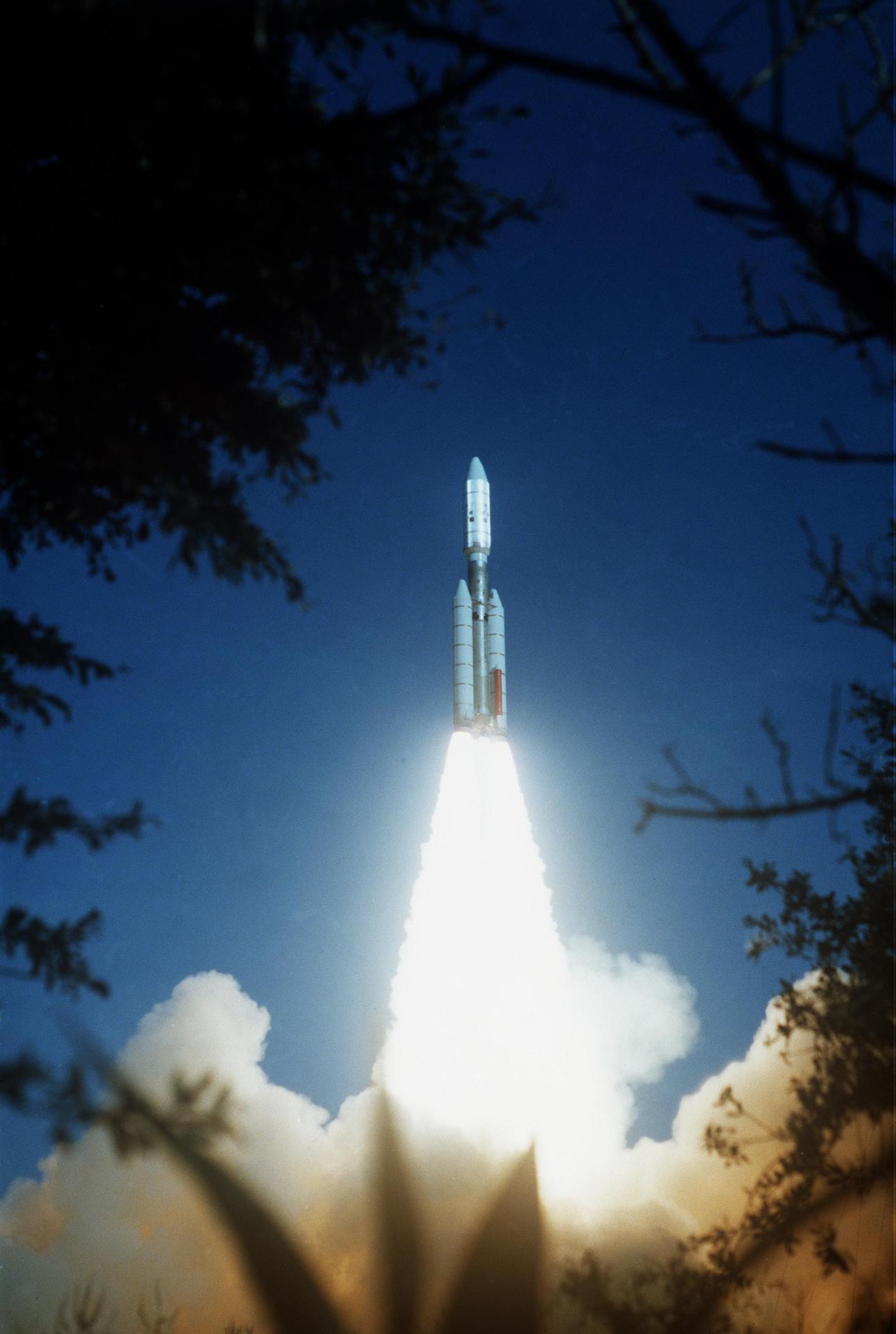
Measured by lifetime flight count in SpaceRocket's launcher database, China's storable-propellant fleet remains the backbone of the national program. The Long March 2D alone has reached 100 launches, the Long March 3B/E stands at 78, and the Long March 2C at 65. These vehicles burn nitrogen tetroxide and unsymmetrical dimethylhydrazine — propellants that are toxic and corrosive but ignitable on contact and storable at ambient conditions, which made them the practical choice for China's first generations of orbital rockets.
| Vehicle | Maiden flight | Total launches | LEO capacity (kg) | GTO capacity (kg) |
|---|---|---|---|---|
| Long March 2D | 1992-08-09 | 100 | 3,500 | — |
| Long March 3B/E | 2007-05-13 | 78 | 12,000 | 5,500 |
| Long March 2C | 1982-09-09 | 65 | 3,850 | — |
| Long March 4C | 2006-04-26 | 60 | — | — |
| Long March 4B | 1999-05-10 | 57 | 4,200 | 1,500 |
| Long March 3B | 1996-02-14 | 24 | 11,500 | 5,100 |
| Long March 2F/G | 2011-10-31 | 22 | 8,399 | — |
| Long March 3 | 1984-01-29 | 13 | 5,000 | 1,500 |
Two observations stand out in the data. First, the hypergolic fleet splits cleanly into LEO workhorses (the Long March 2D and 4B/4C, used for LEO and sun-synchronous satellites) and GTO workhorses (the Long March 3 series, with the 3B/E lifting 5,500 kg to geostationary transfer orbit). Second, the human-rated Long March 2F family — derived from the Long March 2E, itself based on the 2C per its database description — shows that even crewed Shenzhou flights still ride on storable propellants. Replacing this class wholesale will take years, which is why the newer engine families matter.
Long March 2C maiden flight
—
Long March 3 maiden flight
—
Long March 2D maiden flight
—
Long March 3B maiden flight
—
Long March 4B maiden flight
—
Long March 4C maiden flight
—
Long March 3B/E maiden flight
—
Long March 2F/G maiden flight
—
—
Long March 6: first YF-100 kerolox flight
—
Long March 7 maiden flight
—
Long March 8 maiden flight
—
Long March 6A maiden flight
—
Gravity-1 debut (commercial solid)
—
Long March 12 maiden flight
—
Long March 8A maiden flight
III. Kerolox and the YF-100: the new-generation core
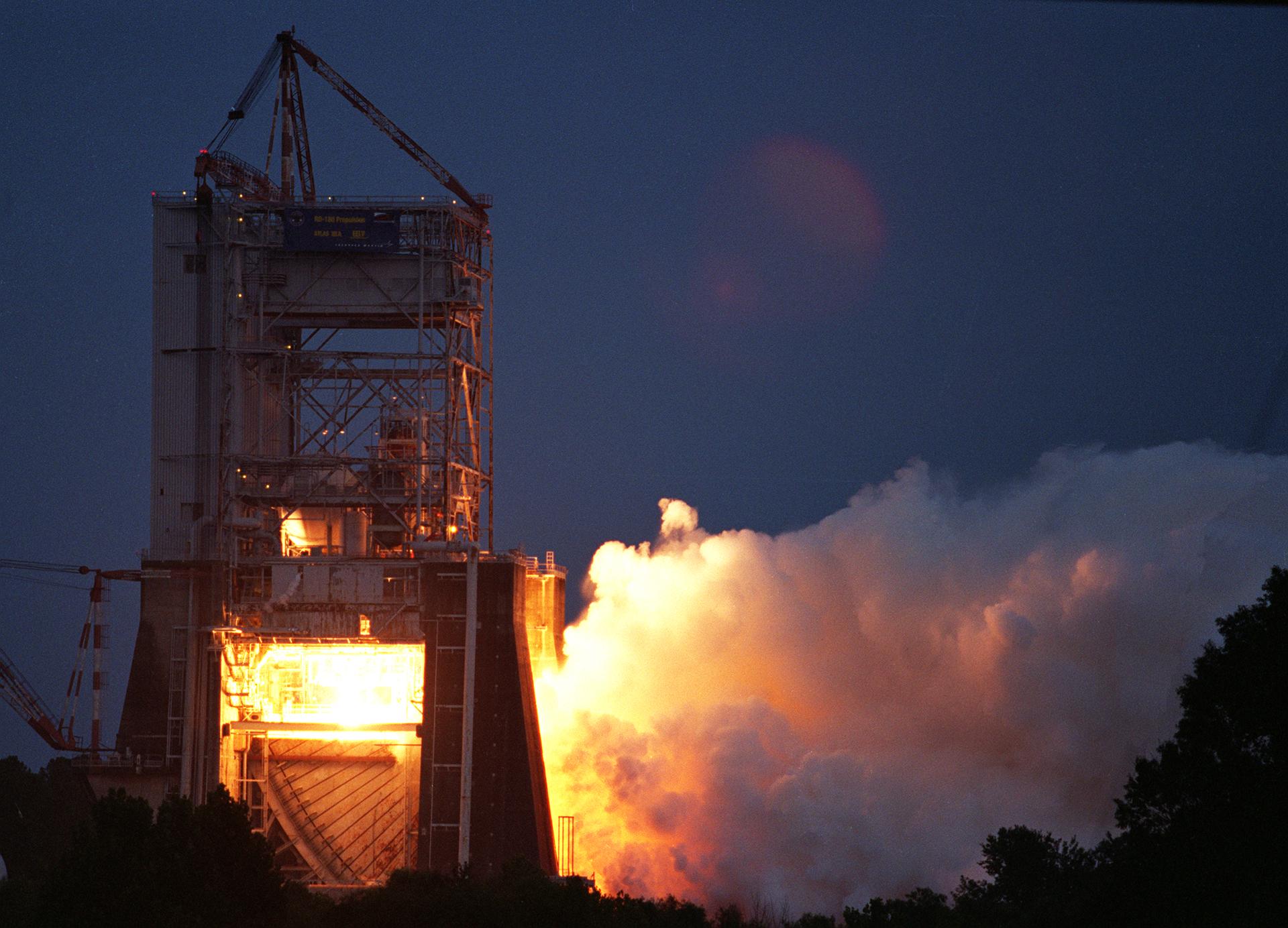
The clearest engine-level fact in SpaceRocket's database is the role of the YF-100 kerosene-liquid oxygen engine: the Long March 6A flies two YF-100 engines on its first stage, augmented by four solid rocket boosters, versus a single YF-100 on the original Long March 6. That pairing illustrates the design logic of China's new-generation fleet — a common kerolox core engine scaled by engine count and strap-on boosters rather than by developing entirely new propulsion for each vehicle.
| Vehicle | Propulsion class | Maiden flight | Total launches | LEO capacity (kg) |
|---|---|---|---|---|
| Long March 6A | Kerolox (2× YF-100) + 4 solid boosters | 2022-03-29 | 26 | — |
| Long March 6 | Kerolox (1× YF-100) | 2015-09-19 | 15 | — |
| Long March 12 | Kerolox (kerosene/LOX per database) | 2024-11-30 | 6 | 12,000 |
| Long March 7 | Liquid-fueled new generation | 2016-06-25 | 10 | 13,500 |
| Long March 8 | Kerolox core + hydrolox upper stage | 2020-12-22 | 6 | 8,100 |
| Long March 8A | Kerolox core + 2× YF-75D hydrolox stage | 2025-02-11 | 9 | 9,800 |
The recent launch log confirms the shift is operational, not aspirational. In SpaceRocket's most recent launch records, the Long March 6A leads all Chinese vehicles with 12 launches, followed by the Long March 7A and 8A at 8 each — all members of the new kerolox-centered generation. The hypergolic Long March 3B/E still logs 7 launches and the Long March 2D 6 in the same window, but the center of gravity has visibly moved. The Long March 12, a 3.8-meter-diameter kerosene-LOX vehicle that debuted on 2024-11-30, has already flown 6 times, and single flights of the Long March 12A, 12B, 10A, and 10B variants appear in the log as well.
IV. Hydrolox: small engine count, outsized role
China's hydrogen-oxygen propulsion appears in the database primarily as upper stages. The Long March 8A's entry notes a 3.35-meter liquid hydrogen/liquid oxygen second stage powered by two upgraded YF-75D engines, giving the vehicle up to 7 tonnes to a 700 km sun-synchronous orbit, 9,800 kg to LEO and 3,500 kg to GTO. The Long March 8 uses the hydrolox third stage of the Long March 3A/3B/3C and 7A families as its second stage. The Long March 5, China's 25-tonne-to-LEO heavy lifter with an 867-tonne launch mass and 5-meter core diameter, is described in the database as the first Chinese vehicle designed from the ground up around non-hypergolic liquid propellants. The pattern matches the physics: high-performance hydrogen stages are reserved for the upper reaches of flight where their efficiency pays, while cheaper propellants handle liftoff.
V. The solid sector: high vehicle count, low mass
Solid propulsion is where Chinese commercial launch got its start, and the database shows both the volume and the limits of that approach. ExPace's Kuaizhou 1A has flown 31 times but lifts only 300 kg to LEO from a 30-tonne, 19.4-meter vehicle. Galactic Energy's Ceres-1 has 17 flights at 350 kg to LEO. The heaviest solid entries are CAS Space's Kinetica 1 (15 launches, about 2,000 kg to LEO from a 135-tonne vehicle whose first stage the database describes as apparently derived from the DF-31 missile) and Orienspace's Gravity-1, a 405-tonne, five-solid-motor cluster vehicle rated at 6,500 kg to LEO with 3 flights since its 2024-01-11 debut. Solids offer responsiveness and simplicity, but none of these vehicles approaches the payload class of the kerolox fleet — which is why every major Chinese commercial player is working on liquid engines.
VI. Methalox arrives: the Zhuque family in the flight log
SpaceRocket's recent launch log records the first operational cadence of Chinese methane-liquid oxygen rockets: two flights of Zhuque-2E Block 2, two of Zhuque-3, and one of Zhuque-2E. The database does not yet carry engine specifications for these vehicles, so thrust figures circulating in Chinese-language coverage should be treated as unconfirmed leads. That coverage describes LandSpace's TQ-12A as a flight-proven engine in the 80-tonne thrust class, a TQ-12B in the 100-tonne class in high-frequency testing, and a 220-tonne-class full-flow staged combustion demonstrator — claims SpaceRocket has not independently verified. What the launch log does confirm is the trajectory: methane propulsion in China has moved from test stands to repeated orbital flight.
VII. On the test stand: reusability-driven engine development
The most concrete engine-development data point available comes from an official statement by CAS Space: its in-house 110-tonne-class kerolox engine, the LQ-2 (Lijian-2), completed a 620-second long-duration qualification firing — described as 3.5 times a flight duty cycle — with a single longest run of 400 seconds and cumulative reliability testing exceeding 2,000 seconds. The company states the engine uses a pintle injector and is being developed for repeated start and reuse. Two things are notable: a 110-tonne-class kerolox engine would sit in the same thrust neighborhood as the YF-100 family that anchors the state fleet, and the emphasis on long-duration and restart testing mirrors the global industry shift toward reusable first stages. Chinese commentary around these programs is notably sober about the remaining gap: observers tracking recent Chinese booster recovery tests have pointed out that descent burns of 17 to 24 seconds consume multiple tonnes of propellant, a performance penalty that must be engineered down before reusable vehicles reach their advertised payload figures.
VIII. Fleet activity: which propulsion class is actually flying
Combining lifetime totals with the recent launch log yields a clear ranking of propulsion classes by operational tempo. The table below lists the most active Chinese vehicles in SpaceRocket's recent records alongside their propulsion class.
| Vehicle | Recent launches (SpaceRocket log) | Propulsion class |
|---|---|---|
| Long March 6A | 12 | Kerolox + solid boosters |
| Long March 7A | 8 | Kerolox + hydrolox upper stage |
| Long March 8A | 8 | Kerolox + hydrolox (YF-75D) |
| Long March 3B/E | 7 | Hypergolic + hydrolox upper stage |
| Long March 12 | 6 | Kerolox |
| Long March 2D | 6 | Hypergolic |
| Long March 2F/G | 5 | Hypergolic |
| Long March 5 | 4 | Non-hypergolic liquid (heavy lift) |
| Zhuque-2E Block 2 / Zhuque-3 | 2 + 2 | Methalox |
| Kinetica-class / Kuaizhou 11 | 3 | Solid |
IX. Summary and outlook
China's engine landscape, as the data shows it, is a fleet in managed transition. The hypergolic Long March 2, 3, and 4 families still hold the cumulative records — 100 flights for the Long March 2D alone — and continue to carry crewed and GTO missions. But operational momentum belongs to the kerolox generation built around the YF-100 and its siblings: the Long March 6A, 7A, 8A, and 12 now top the flight-rate table. Hydrolox upper stages remain a small but essential efficiency layer, the solid commercial sector provides volume at small payload classes, and methalox has begun its operational career with the Zhuque family. The next milestones to watch are engine-level rather than vehicle-level: whether the 110-tonne-class LQ-2 moves from 2,000 cumulative test seconds to flight, whether methane engines move from a handful of Zhuque flights to routine cadence, and whether reuse-focused engines can close the propellant-margin gap that separates test hops from economically reusable rockets. SpaceRocket's launch database will track each of these as the flight counts accumulate.