US vs China Moon Missions: From Unmanned Probes to Crewed Landings
August 5, 2026
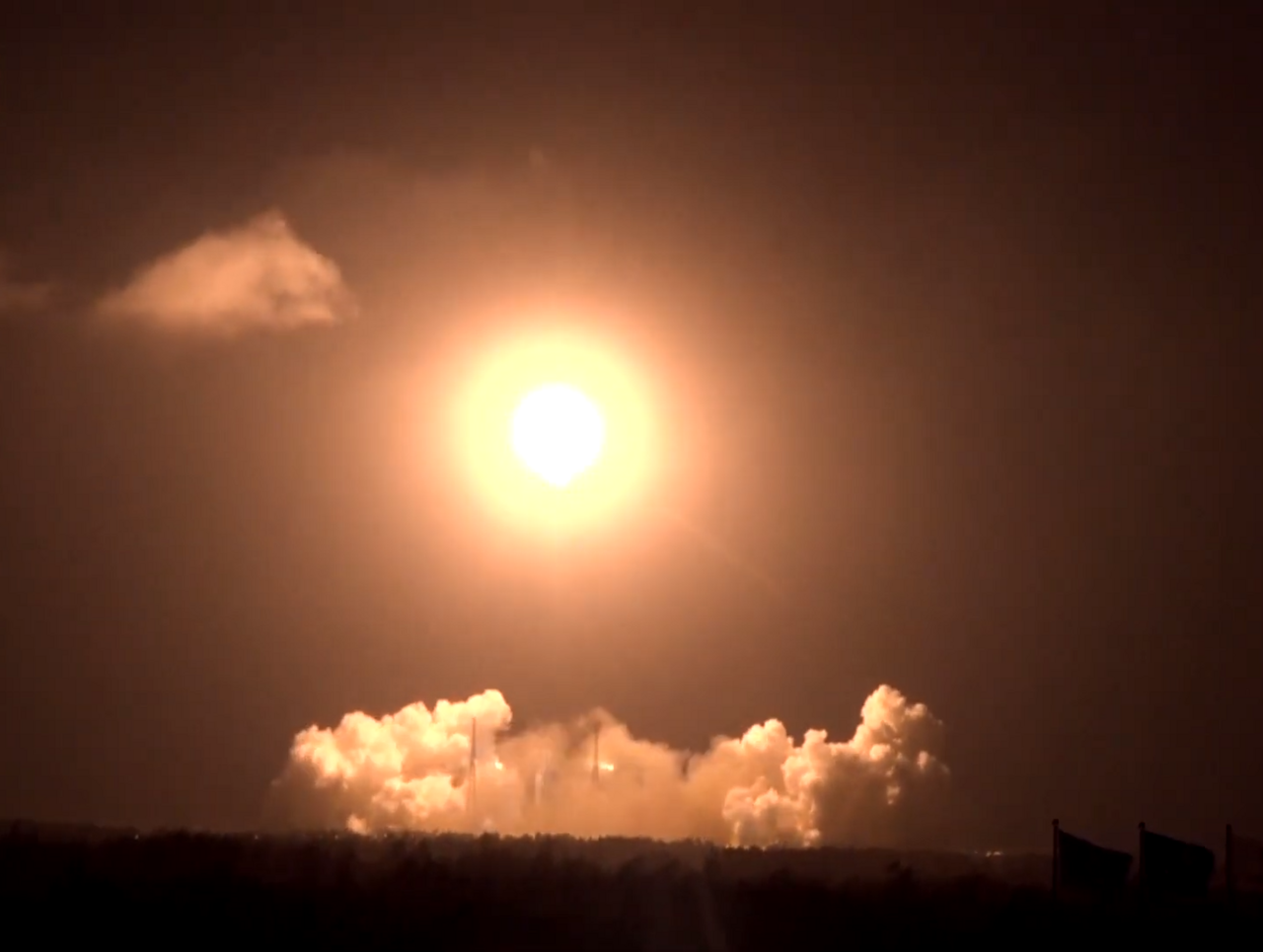
The Moon is the destination every spacefaring nation points at first, and no two programs illustrate the modern divide better than the United States and China. America reached the lunar surface with Apollo between 1969 and 1972, returned to the surface in 2024 with commercial landers under NASA's CLPS program, and is now assembling the Artemis program to land astronauts near the lunar south pole. China completed its own first soft landing in 2013 with Chang'e 3, and in 2024 became the only country since the Apollo era to return lunar samples from the far side. Today the two programs are converging on the same goal — putting crews on the Moon within the next decade — through completely different rockets, spacecraft, and strategies. This article compares the unmanned record of both sides first, then lays out Artemis against China's crewed plan on a side-by-side timeline.
I. The Unmanned Race: Two Generations of Probes
The United States led the first generation of lunar exploration in the 1960s with the Ranger impactors, the Lunar Orbiter mappers, and the Surveyor soft landers that prepared the way for Apollo. After a long pause, NASA returned with LRO and LCROSS in 2009, and since 2024 has flown commercial landers under the Commercial Lunar Payload Services (CLPS) umbrella. China compressed this entire arc into a single generation: Chang'e 1 and 2 mapped the Moon from orbit in 2007 and 2010, Chang'e 3 soft-landed with the Yutu rover in 2013, Chang'e 4 achieved the first-ever far-side landing in 2019, and Chang'e 5 and 6 returned samples in 2020 and 2024. The timeline below places the milestones side by side, with China on the left and the United States on the right.
Unmanned lunar milestones
No lunar program yet; China's first satellite, Dongfanghong 1, launches only in 1970.
Surveyor soft-landers on the Moon (Surveyor 1, 1966), validating the landing techniques Apollo will need.
Chang'e 1 enters lunar orbit — China's first mission to the Moon.
No active lunar orbiter; NASA's lunar science is focused on Mars.
Chang'e 2 launches with higher-resolution mapping cameras.
LRO and LCROSS arrive; LRO is still mapping the lunar surface today.
Chang'e 3 soft-lands with the Yutu rover — China's first touchdown on another world.
LADEE studies the thin lunar exosphere from orbit.
Chang'e 4 lands on the lunar far side with Yutu-2 — a world first, relayed via the Queqiao satellite.
No US lander since the 1970s; NASA begins funding CLPS commercial landers.
Chang'e 5 returns 1,731 g of lunar samples to Earth from the near side.
Artemis I prepares for its uncrewed launch around the Moon.
Chang'e 6 returns samples from the lunar far side — the first ever.
Odysseus (Intuitive Machines) makes the first US soft landing since Apollo; a second CLPS lander, Blue Ghost, lands in 2025.
| Metric | United States | China |
|---|---|---|
| First soft landing | Surveyor 1, 1966 | Chang'e 3, 2013 |
| First lunar samples | Apollo 11, 1969 (382 kg total from Apollo) | Chang'e 5, 2020 (1,731 g) |
| Far-side landing | None | Chang'e 4, 2019 |
| Far-side sample return | None | Chang'e 6, 2024 |
| Current orbiter | LRO (since 2009) | Relay satellites + periodic orbiters |
| Lander approach | Commercial CLPS landers | State-built Chang'e probes |

II. The Crewed Race: Artemis vs Long March 10
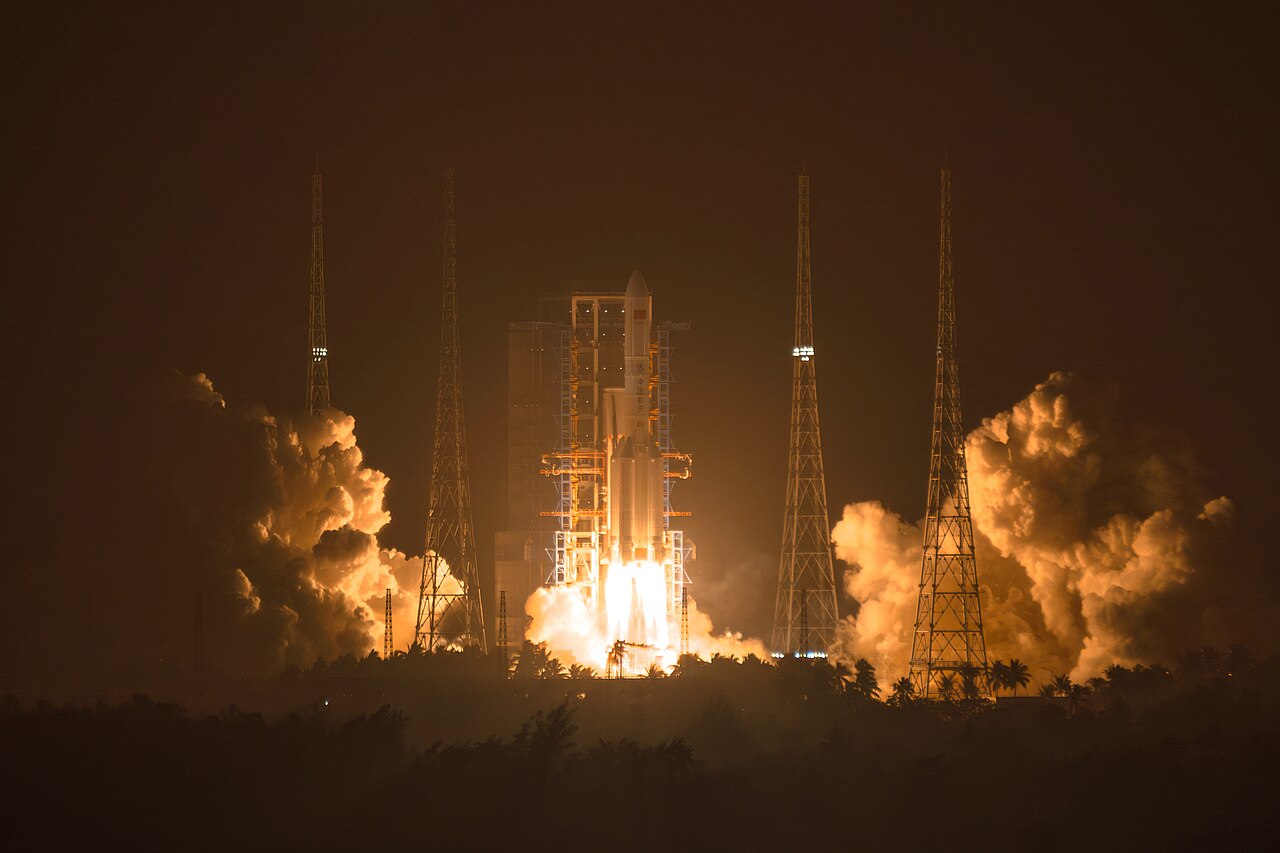
Both countries now treat a crewed return to the Moon as a national priority. NASA's Artemis program pairs the Space Launch System (SLS), the Orion crew capsule, and a Starship-based lander to place two astronauts on the south pole by the late 2020s. China's plan, formally targeting a landing before 2030, pairs the new Long March 10 (CZ-10) rocket with the Mengzhou crew spacecraft and the Lanyue lunar lander. The two programs differ sharply in architecture: Artemis relies on a single very heavy launcher plus an outsized lander delivered separately, while China's baseline splits the crew and lander onto two Long March 10 launches that dock in lunar orbit. The timeline below tracks the two programs in parallel.
Crewed lunar program milestones
Long March 10 development work accelerates; ground tests of engines and structures begin.
Artemis I launches uncrewed: Orion flies around the Moon and back in November 2022.
First full-scale Long March 10 test flights and booster separation tests take place.
Artemis II slips to 2026; NASA reviews Starship HLS lander development.
Long March 10A/10B variants begin appearing in the launch log; Mengzhou spacecraft drop tests continue.
Commercial CLPS landers reach the Moon; Artemis II crewing confirmed.
Mengzhou and Lanyue move toward flight hardware; CZ-10 crewed-version testing continues.
Artemis II (planned) carries four astronauts around the Moon.
Test milestones toward the first crewed flight; landing rehearsals in lunar orbit planned.
Artemis III (target) attempts the first crewed south-pole landing with Starship HLS.
Official target for the first Chinese crewed lunar landing.
Artemis Base Camp studies; Gateway station modules in lunar orbit.
International Lunar Research Station (ILRS) basic structure, pursued with Russia and partners.
Extended lunar surface operations around the south pole.
III. Rockets and Spacecraft, Compared
| Component | United States (Artemis) | China (CZ-10 / Mengzhou / Lanyue) |
|---|---|---|
| Crew launch vehicle | SLS Block 1 (~98 m, ~95 t to LEO, 4× RS-25 + 2 SRBs, LOX/LH2) | Long March 10 (~90 m class, ~70 t to LEO, kerolox YF-100 cluster core) |
| Crew spacecraft | Orion (4 crew, ESA service module) | Mengzhou (3 crew in lunar configuration) |
| Lunar lander | Starship HLS (delivered separately, docked in orbit) | Lanyue lander (flown by a second CZ-10) |
| Crew transfer | Two SLS flights total: crew + lander, dock in lunar orbit | Two CZ-10 launches: crew + lander, dock in lunar orbit |
| Landing target | Lunar south pole | Lunar south pole region (planned) |
| Supporting station | Gateway (planned, with partners) | ILRS (with Russia and partners) |

IV. What the Two Programs Mean
The unmanned comparison shows how far China has closed the gap in less than two decades: from its first lunar orbiter in 2007 to the world's only far-side sample return in 2024. The United States, for its part, has resumed lunar landings through commercial partners and is applying Apollo-era landing heritage to a far more ambitious south-pole campaign. The crewed programs are even more directly comparable — both use a heavy launcher, a multi-crew capsule, a dedicated lander, and an orbital rendezvous between the crew and lander elements. The main difference is scale and timing: Artemis is already flying its rocket and capsule around the Moon, while China's first crewed landing target sits at the end of this decade, on a rocket family that is still maturing. Whichever program reaches the surface first, the south pole of the Moon — with its shadowed ice deposits — is the prize both are racing toward, and the long-term science stations (ILRS versus Artemis Base Camp) will determine who turns lunar access into sustained presence. For more on the rockets behind China's program, see China's commercial rockets; for the full launch record, browse the launch archive.