
US vs China Reusable Rocket Comparison: Falcon 9 vs Long March 8 & Zhuque 2
March 15, 2025
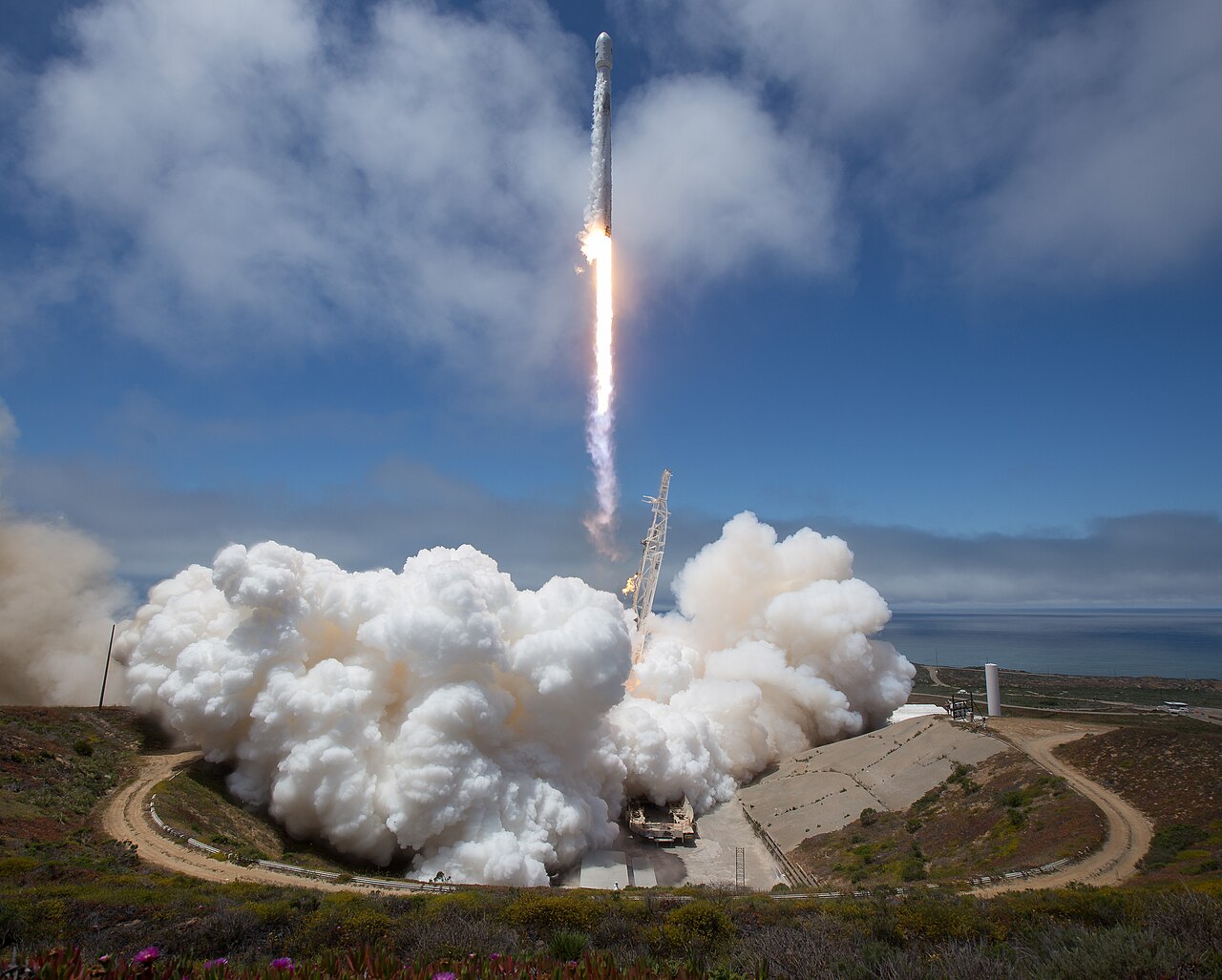
Reusable launch vehicles represent a revolutionary technological breakthrough in the 21st-century space industry. SpaceX's Falcon 9 was the first to achieve vertical recovery and reuse of orbital-class rockets, while China is actively advancing reusable rocket programs such as the Long March 8 (CZ-8) and Zhuque-2. This article provides an in-depth comparison across multiple dimensions, including technical approaches, recovery methods, launch costs, and commercial progress.
I. Technology Comparison
The road to reusable rockets
China's Long March family remains fully expendable; reuse is not yet a design goal.
Falcon 9's first stage performs its maiden flight (June 2010); SpaceX begins reusability development.
Chinese commercial startups emerge (LandSpace, i-Space, Galactic Energy) with plans for reusable liquid rockets.
SpaceX lands and refiles Falcon 9 boosters (2015-17), proving vertical recovery at orbital scale.
Zhuque-2 (LandSpace) and other Chinese methalox projects move toward flight; the Long March 8R reusability study begins.
Falcon 9 reuse becomes routine — boosters fly 5-10 times; Crew Dragon debuts.
Zhuque-2 becomes the world's first methane rocket to reach orbit (July 2023); Zhuque-3 recovery tests begin.
Falcon 9 passes 300+ recoveries and 20+ reflights per booster; Starship test flights begin.
Zhuque-3 and Tianlong-3 target first flights with booster recovery; Long March 10B attempts sea-net recovery.
Starship advances toward operational reuse; Falcon 9 remains the global workhorse.
The Falcon 9 employs a classic two-stage rocket structure, with the first stage using nine Merlin 1D engines and the second stage using one Merlin Vacuum engine. Its core design philosophy is to achieve recovery through lightweight materials and precise control while ensuring structural integrity. The Long March 8 adopts a design closer to traditional rockets, using non-toxic, non-polluting liquid hydrogen and liquid oxygen propellants. As a representative of private spaceflight, the Zhuque 2 has chosen a liquid oxygen and methane propellant approach.
| Parameter | Falcon 9 | Long March 8 | Zhuque 2 |
|---|---|---|---|
| Full rocket height | 70 m | 50.3 m | 49.5 m |
| Liftoff mass | 549 t | 356 t | 216 t |
| LEO payload capacity | 22.8 t | 25 t | 14 t |
| Propellant | LOX/Kerosene | LH2/LOX | LOX/Methane |
| Engine count | 9 (first stage) | 2 (first stage) | 4 (first stage) |
| First flight | 2010 | 2020 | 2023 |
II. Recovery Methods & Progress
The Falcon 9 has successfully completed over 300 recoveries, including both land-based and sea-based recovery methods. The first stage has been reused more than 20 times, significantly reducing per-launch costs. The Long March 8R (reusable version) is expected to make its first flight in 2025, using vertical landing. Following its successful first launch, the Zhuque 2 is advancing the development of a reusable version.
- Falcon 9: Land/sea vertical recovery, >99% success rate
- Long March 8R: Vertical recovery planned, first flight in 2025
- Zhuque 2R: Recovery planned for 2025
- Blue Arrow Aerospace: Zhuque 3 under development
III. Launch Costs & Commercialization
The core goal of reusable technology is to lower launch costs. Through reuse, the Falcon 9's per-launch cost has dropped to approximately $60 million (heavy version). The Long March 8 targets a cost of approximately $80 million to $100 million. As a small rocket, the Zhuque 2 has more flexible pricing, primarily targeting the commercial satellite launch market.
| Metric | Falcon 9 | Long March 8 | Zhuque 2 |
|---|---|---|---|
| Price per launch | $60M+ | $80M-100M | $15M-25M |
| Reuse count | 20+ times | Target 10 times | Target 5+ times |
| Launch frequency | 50+ per year | 5-10 per year | 10+ per year |
| Primary customers | NASA, commercial satellites | Government, commercial satellites | Commercial satellites |
IV. Summary & Outlook
The US and China each have their own strengths in reusable rocket technology. The US leads in technological maturity and commercialization, while China is rapidly catching up in its national space industry system and emerging private space sector. In the future, as the Long March 8R and Zhuque 3 mature, the global reusable rocket market will see a duopoly between the US and China. Reusable technology will further drive the growth of the space economy, making large-scale space activities possible.