
Space Tourism Race: A New Frontier for US, China, and European Commercial Space
July 20, 2026
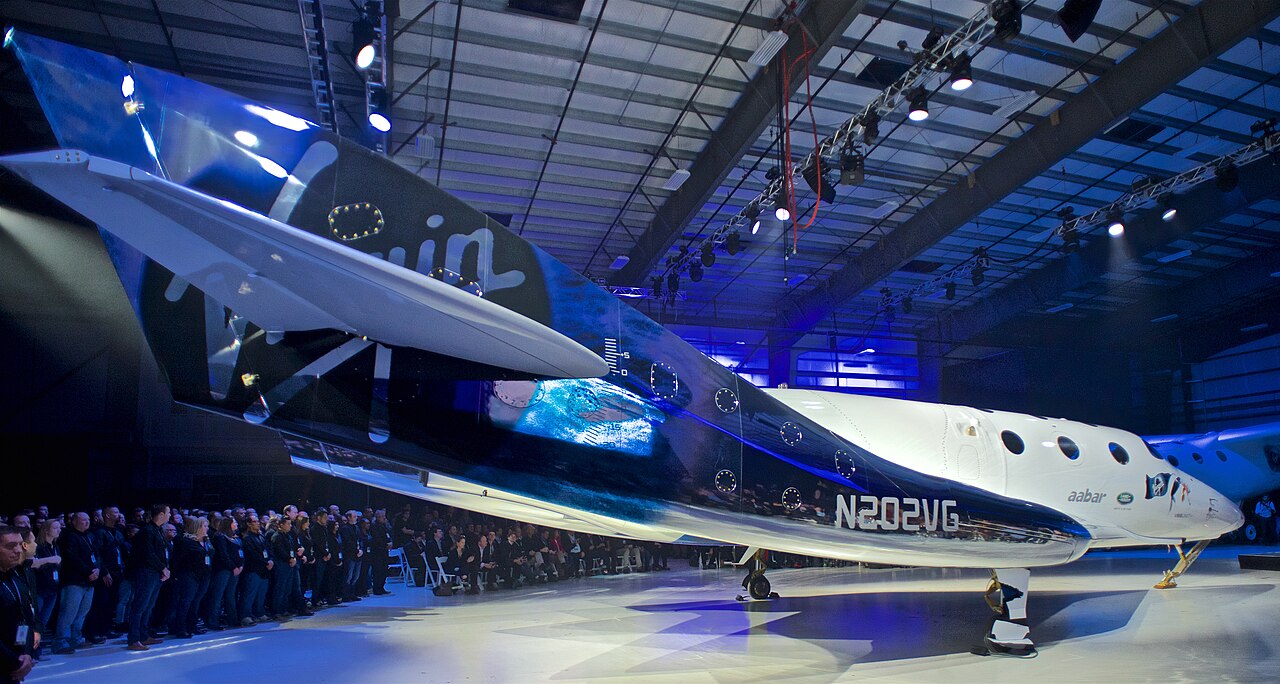
As 'space travel' from science fiction movies gradually becomes reality, and the dream of ordinary people traveling among the stars is no longer distant, global commercial space companies are driving space tourism from blueprint to reality through technological breakthroughs and model innovation. In 2025-2026, Blue Origin has completed multiple commercial space tourism flights, Virgin Galactic is about to launch commercial services, and Chinese companies are also accelerating their catch-up.
I. The US: Commercial Operations of the Leader
Blue Origin's New Shepard rocket-capsule system has completed multiple crewed flights since 2021, carrying dozens of private astronauts past the Kármán line. Each flight reaches an altitude of roughly 104-107 km, providing approximately 3-4 minutes of microgravity before the capsule descends under parachutes. Virgin Galactic is advancing the commercialization of its next-generation Delta-class spaceplane, targeting commercial service launch in Q4 2026, with ticket prices of $750,000 per seat, and already has over 675 customers on the waiting list.
| Company | Vehicle | Status | Ticket price | Launch frequency |
|---|---|---|---|---|
| Blue Origin | New Shepard | Commercial operations | ~$250K-500K/seat | 6+ per year |
| Virgin Galactic | Delta-class spaceplane | First flight Q4 2026 | $750K/seat | 4-10 per month |
| SpaceX | Starship | Crewed testing | To be determined | To be determined |
II. China: The Challenger in Space Tourism
Chinese commercial space companies are accelerating the development of space tourism technology. In September 2025, Zhongke Aerospace unveiled the Lihong series reusable vehicle in Guangzhou, marking the official debut of China's first fully reusable vehicle designed for space tourism. This vehicle has the capability for more than 30 repeated flights, can carry 7 passengers or 3 tons of cargo per flight, reaches a maximum altitude of over 100 km, and provides approximately 3 minutes of weightlessness. Zhongke Aerospace plans to conduct its first flight test in 2027 and officially launch crewed space-edge tourism services in 2028.
- Zhongke Aerospace: Lihong series vehicle, 30-reuse capability, 7 passengers, service in 2028
- Deep Blue Aerospace: Nebula-1 launch vehicle, 90% 3D-printed main structure, suborbital travel in 2027
- Traverser: Crewed spacecraft, open interface standards, spacecraft-rocket collaboration model
- Orient Space: Lijian-2 heavy rocket, 60 launches per year capability
III. Europe & Other Players
Elsewhere, New Zealand-Dutch company Dawn Aerospace plans to operate its Mk-II Aurora spaceplane from the Oklahoma Spaceport in 2027, aiming to be the first vehicle capable of reaching the Kármán line twice per day. In Europe, the UK-led Invictus project (managed with Frazer-Nash) targets a Mach 5 reusable hypersonic test platform, and the UK's Reaction Engines continues to develop SABRE engine technology that underpins precooled air-breathing propulsion.
IV. Business Models of Space Tourism
Space tourism is not just a thrilling experience, but also a massive commercial ecosystem. In terms of ticket prices, China's first commercial space ticket is priced at approximately 3 million RMB, and Deep Blue Aerospace's pre-sale ticket is 1 million RMB. The Wenchang International Space City Administration pointed out that consumer scenarios such as accommodation, dining, popular science, and cultural creativity surrounding the launch site will generate a hundred-billion-level 'space tourism economic circle.'
| Metric | Data |
|---|---|
| Global non-professional astronauts in space | 130+ people |
| China's first commercial space ticket price | ~3 million RMB |
| Deep Blue Aerospace pre-sale price | 1 million RMB/seat |
| Global market size forecast | Trillions of USD |
| China's space tourism first year forecast | 2028 |
| 2025 Government Work Report | Commercial space listed as strategic emerging industry |
V. Technology Path Comparison
In terms of technical paths, the US, China, and Europe each have their own characteristics. The US primarily uses vertically launched rockets with mature technology and high launch frequency; China adopts an open model of 'spacecraft-rocket collaboration,' where crewed spacecraft define standards and rocket companies compete; Europe leans toward the concept of horizontal takeoff and landing spaceplanes. Behind these different technical paths are different industrial logic and strategic considerations, but the ultimate goal is the same: to make space tourism an experience accessible to more people, rather than a privilege reserved for the few.