
Falcon 9 vs. Long March 10B: A Deep-Dive Comparison of Two Reusable Rocket Paradigms
August 10, 2026
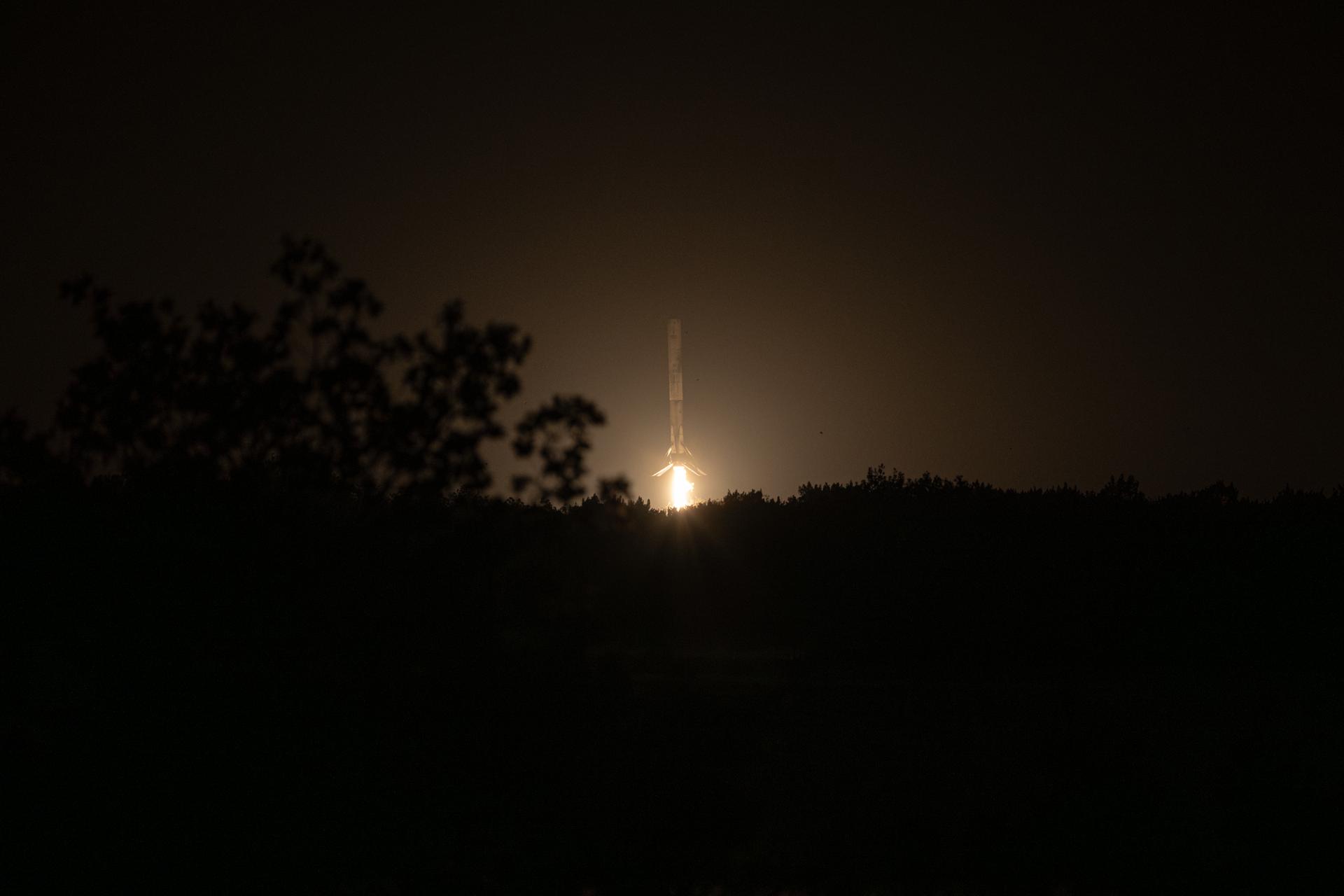
In July 2026, the China Academy of Launch Vehicle Technology (CALT), a subsidiary of the China Aerospace Science and Technology Corporation (CASC), conducted a first-of-its-kind maritime net-capture recovery test for the first stage of the Long March 10B (Changzheng 10B) launch vehicle. For the first time, a large rocket stage was captured undamaged in realistic sea conditions. This milestone means that, alongside propulsive vertical landing, another large-scale rocket recovery method has officially entered full-scale engineering validation. Two distinct recovery philosophies — the precision-powered landing epitomised by SpaceX’s Falcon 9, and the maritime net capture being pioneered by the Long March 10B — now stand on the same competitive stage.
This article provides a comprehensive, in-depth comparison of the two systems across multiple dimensions: basic vehicle parameters, recovery method, cost structure, risk profile, technical difficulty and reuse cadence.
Many landing attempts fail — thrust, propellant, grid-fin issues
—
Fastest booster turnaround: about 21 days
—
Single-booster reuse record passes 20 flights
—
—
First full-scale maritime net-capture recovery test
1. Basic Vehicle Parameters and Market Position
**Falcon 9 (Block 5)**
- Height: 70 m (with fairing)
- Diameter: 3.7 m
- Liftoff mass: ~549 t
- First stage: 9 Merlin 1D kerolox engines, total sea-level thrust ~7.6 MN
- Second stage: 1 Merlin 1D Vacuum engine
- Payload to LEO: ~22.8 t (expendable), ~17.5 t (with drone-ship landing), less for return-to-launch-site landing
- Fairing diameter: 5.2 m
- Reusability: first stage reused multiple times (record >20 flights); fairings also recovered and reused.
**Long March 10B (under development; parameters based on publicly available information and reasonable estimates)**
- Height: ~65 m
- Core stage diameter: 5 m
- Liftoff mass: ~750 t
- First stage: 7 YF-100K kerolox staged-combustion engines, total sea-level thrust ~8.2 MN
- Second stage: 1 YF-75D hydrolox engine (vacuum thrust ~90 kN) or a vacuum-optimised YF-100K variant
- Payload to LEO: ~22 t with first-stage recovery, ~27 t in expendable mode
- Fairing diameter: 5.2 m
- Reusability design: first stage recovered via maritime net capture; second stage expendable
The Long March 10B can be viewed as a lighter, booster-less derivative of the Long March 10 crewed lunar rocket. By adopting a single-core two-stage architecture and incorporating reusability, it is aimed at large-scale LEO constellation deployment and space station resupply — missions that require medium-lift capability, high flight rates and low cost, much like the Falcon 9.
2. Recovery Methods: A Deep Comparison
2.1 Falcon 9: Propulsive Vertical Landing
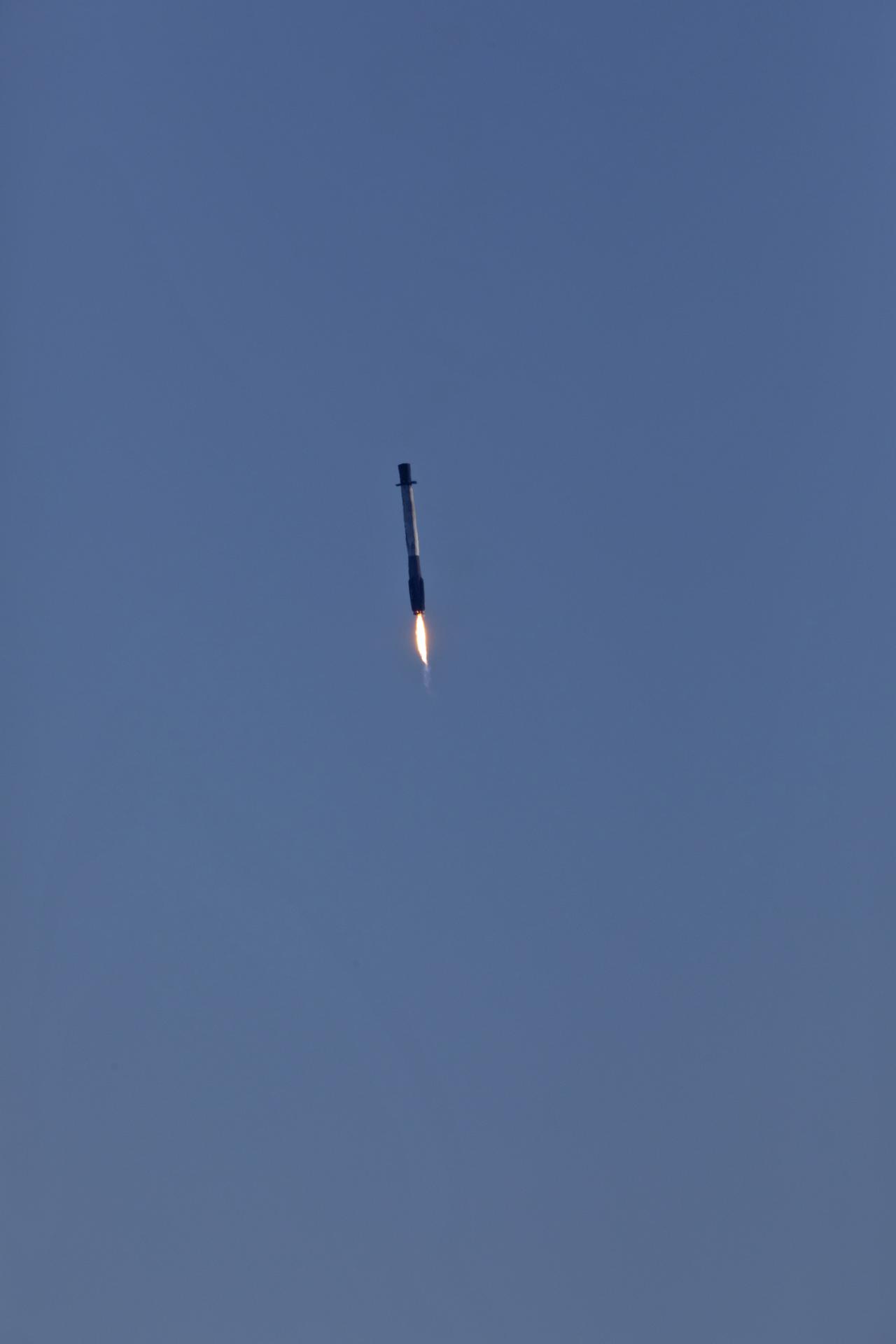
After stage separation, the Falcon 9 first stage performs a series of three engine burns:
- **Boostback burn** (for land-based RTLS): alters the velocity vector to head back toward the launch site.
- **Reentry burn**: slows the stage in the upper atmosphere, reducing heat load and dynamic pressure.
- **Landing burn**: a single Merlin engine throttled deeply, combined with grid-fin aerodynamic control, brings the stage to a pinpoint vertical touchdown on a landing pad or on an autonomous drone ship (“Of Course I Still Love You”, “A Shortfall of Gravitas”); landing legs are deployed.
Landing precision is typically within a 10-metre-class circle. The Merlin 1D engine can throttle to about 57% of rated thrust but cannot hover; it therefore performs a “hoverslam” manoeuvre — velocity must reach zero exactly at the moment of contact, demanding extreme accuracy in thrust modulation and navigation algorithms.
Sea-state constraints: wave heights preferably below 2.5–3 metres, with wind-speed limits. The drone ships feature dynamic positioning to hold station.
2.2 Long March 10B: Maritime Net Capture
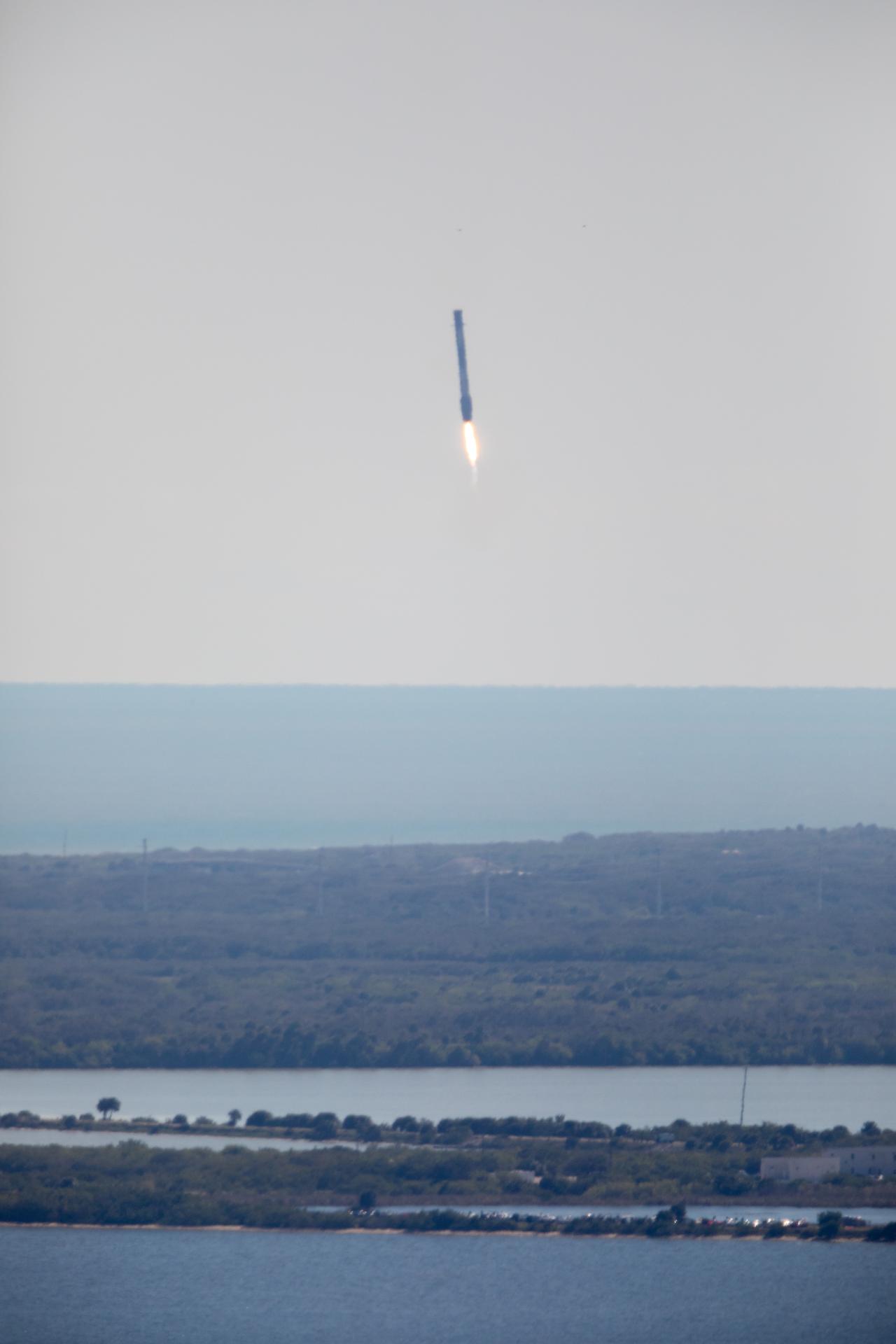
The Long March 10B recovery sequence is divided into three phases: deceleration, parafoil glide, and net capture.
- After stage separation, a short deceleration burn reduces velocity to a regime suitable for parafoil deployment (subsonic to low speed).
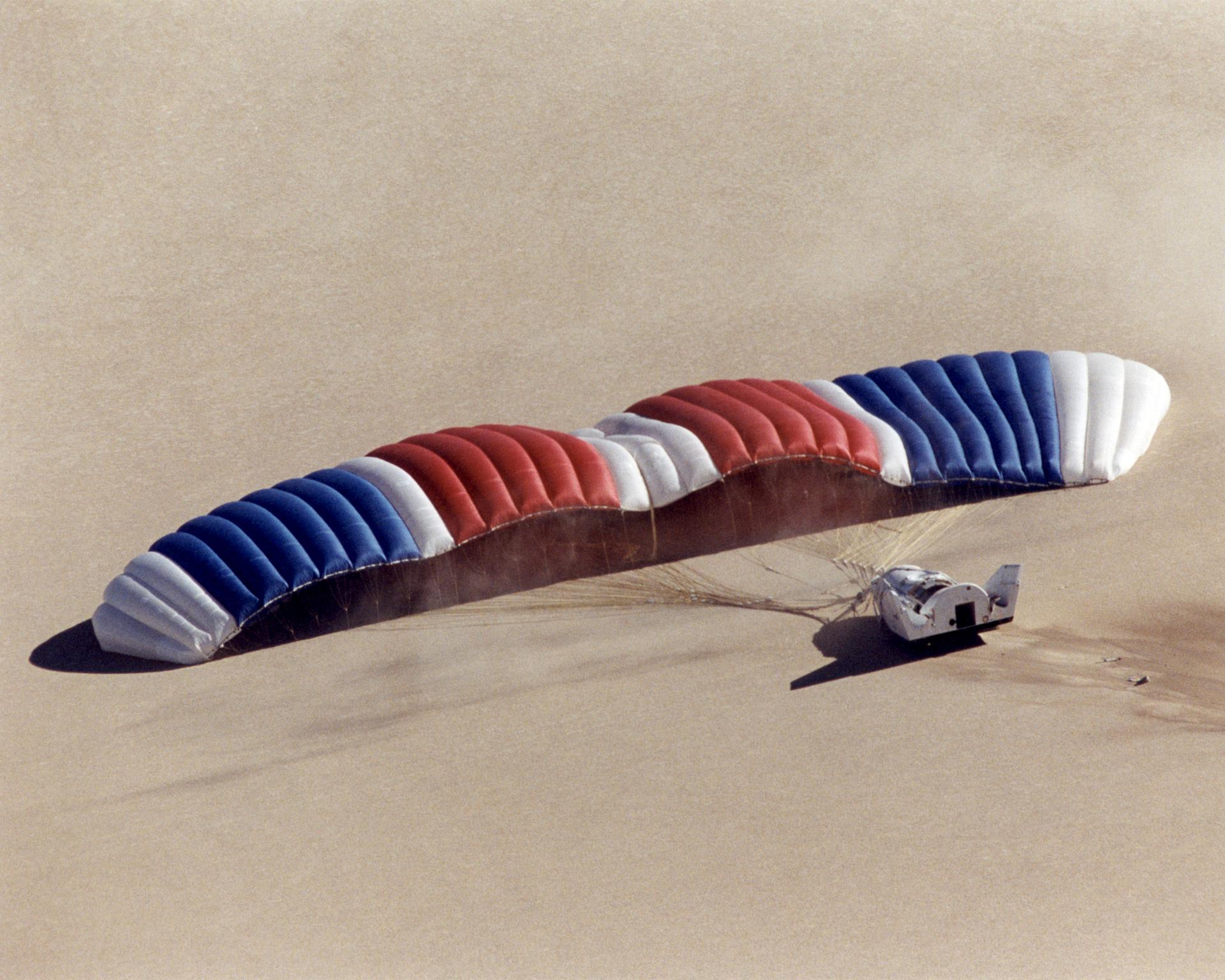
- A large ram-air parafoil (comparable to precision airdrop systems), with a surface area of several hundred square metres, deploys and carries the tens-of-tonnes stage. Differential control via servo-actuated rigging lines steers the parafoil and adjusts the glide trajectory.
- A dedicated recovery vessel is pre-positioned at sea. Mounted on board is a huge flexible capture net, woven from high-strength synthetic fibres and equipped with energy-absorbing dampers. The parafoil flies the stage in a near-horizontal attitude into the net area. Upon contact, the net deforms and its dampers dissipate kinetic energy, bringing the stage to a halt.
- An onboard crane then gently lowers the stage to a horizontal or vertical securing fixture for transport back to port, where it undergoes inspection and refurbishment.
In contrast to Falcon 9’s leg-based landing, net capture offers distinctive characteristics:
- The stage no longer has to endure landing impact loads, potentially allowing a lighter structure.
- No terminal hoverslam manoeuvre is required, reducing dependence on deep-throttling and multiple engine re-starts.
- However, it introduces an entirely new chain of complexity: parafoil, capture net, and dynamic maritime rendezvous.
Ideal capture windows require reasonably calm sea states, but the net ship can actively adjust heading and net-opening angle to accommodate some wind and current variability.
3. Cost Comparison
**Falcon 9**
- After years of reuse-driven optimisation, SpaceX’s internal marginal launch cost has fallen to approximately $15–20 million, of which a new second stage accounts for about $10 million, with first-stage refurbishment, propellants, range and recovery operations making up the remaining $5–10 million.
- The commercial launch price offered to external customers is about $67 million (including margin), yielding a unit cost of roughly $3,000/kg to LEO.
- High reuse rates are the core cost driver: after 20 flights of a single booster, stage amortisation becomes negligible. Fairing reuse further trims per-launch cost.
**Long March 10B (cost projection)**
- In expendable mode, the launch cost of a CZ-10B is estimated to be on the order of 400–500 million yuan (~$55–70 million).
- With first-stage reuse, the cost of manufacturing seven new YF-100K engines and the first-stage structure is saved, but expenses for parafoil, capture net consumables and recovery vessel operations are added.
- Assuming 10 reuses per first stage, the per-launch cost could drop to the 250–300 million yuan range (~$35–42 million), corresponding to a unit cost of roughly $15,000–20,000/kg — still above Falcon 9’s current level, yet highly attractive for non-commercial markets.
- As reuse frequency increases and the recovery system matures, costs are expected to trend further downward, narrowing the gap with Falcon 9.
In terms of cost, Falcon 9 enjoys a clear first-mover advantage and economies of scale. The Long March 10B’s net-capture system will initially carry higher operational expenditure, especially with a dedicated recovery fleet; its economic benefits are likely to materialise only once high-cadence operations are achieved.
4. Risk Comparison
**Falcon 9 primary risks**
- Engine failure during the landing burn: historically, many early landing failures were caused by insufficient thrust, propellant starvation, or grid-fin control anomalies. After hundreds of iterations, the Block 5 landing success rate exceeds 99%.
- Drone-ship platform risk: severe sea states can prevent the drone ship from holding position, or the rocket could collide with the vessel.
- Ground/asset risk: a large landing deviation could theoretically damage the drone ship (not yet experienced) or land-based infrastructure. Hence, the landing zone is kept clear of personnel.
**Long March 10B primary risks**
- Parafoil deployment reliability: deploying at supersonic or transonic speeds risks shock‑wave interference and canopy tearing. With a heavy stage, any control failure means the vehicle may hit the sea at an uncontrolled speed or drift outside the capture zone.
- Net-capture miss: sudden wind shifts, navigation errors or ship-positioning offsets can result in a high-angle impact or a net miss, causing the stage to be lost to the sea. Even a successful net engagement might subject the stage to lateral impact, resulting in tank denting or plumbing damage.
- Marine environment risk: seawater intrusion into engines and avionics if the stage ends up in the water, even briefly. After capture, the suspended stage could swing and strike the ship, requiring rapid securing.
- Overall safety profile: because operations occur in open sea, risk to personnel on the ground is negligible. Even a recovery failure constitutes only a property loss.
By comparison, Falcon 9’s landing risk is concentrated in the final tens of seconds, but a mature fault-response system is in place. The Long March 10B’s risk chain is longer, spanning parafoil deployment, glide and net capture; a failure in any link could result in recovery loss, though it inherently presents an even lower personnel and infrastructure risk.
5. Technical Difficulty: In-Depth Analysis
**Falcon 9 key technical challenges** 1. **Supersonic retro-propulsion**: the stage re-enters at several Mach; the engines must ignite stably in the incoming airflow, requiring robust combustion stability and thermal protection. 2. **Deep throttling**: reducing Merlin 1D thrust to 57% stresses the turbopump and injector; thrust step-response must be extremely fast. 3. **Grid-fin aerodynamics**: non-linear control authority at hypersonic speeds, and fin erosion, demand precise modelling and material breakthroughs. 4. **Precision navigation and landing**: a GPS/inertial tightly coupled system, with terminal errors controlled to metre level and real-time dynamic re-targeting of the landing point. 5. **Multi-engine coordination**: during reentry and landing, the outer engines are used for deceleration while the centre engine performs the final landing; this imposes asymmetric structural loads and requires sophisticated thrust-vector control.
**Long March 10B key technical challenges** 1. **Heavy-lift parafoil design and deployment**: a parafoil capable of handling a stage weighing tens of tonnes breaks new ground globally. Challenges include high wing-loading stability, deployment dynamics and line strength. 2. **Parafoil servo control**: precise steering of glide direction and descent rate by asymmetric line retraction, with algorithms fusing GPS, inertial data and possibly relative visual navigation. 3. **Dynamic maritime capture**: the recovery ship and the descending stage must achieve a precise six‑degree‑of‑freedom rendezvous in position, velocity and attitude, with the net mouth continuously aligned. This is analogous to a combination of aerial refuelling and carrier arrestment, but with a passive, unpowered gliding vehicle weighing tens of tonnes. 4. **Net energy-absorption system**: must dissipate kinetic energy on the order of several megajoules within a few seconds, while avoiding excessive localised pressure on the stage and preventing secondary rebound. The demands on net material and damper design are extreme. 5. **Corrosion protection and structural integrity**: the stage will be exposed to a salt-spray environment; capture impacts may create micro-cracks. An entirely new inspection and refurbishment regime must be established.
The core difference between the two technical paths: Falcon 9 achieves precise control of attitude and velocity in a very short time and distance using active propulsion, while the Long March 10B decomposes the recovery process into deceleration, glide and capture phases, using aerodynamic and mechanical systems to spread the technical difficulty — but the multiple steps also introduce more critical links.
6. Reuse Efficiency and Turnaround Time
**Falcon 9**
- After a booster is recovered, it undergoes cleaning, engine static-fire acceptance, and inspections of grid fins and landing legs. The fastest recorded turnaround is about 21 days (achieved in 2022); typical intervals are 1–2 months.
- Multiple reuses do not require engine replacement; grid fin and structural life are well proven.
**Long March 10B (projection)**
- After maritime net capture, the stage must be detached from the net, secured on deck, and shipped back to port. This leg may add 1–3 days.
- Refurbishment tasks include parafoil replacement, resetting of capture-net energy absorbers, full airframe salt-spray cleaning, non-destructive inspection (especially in impact-loaded areas), and re-verification of engines through hot-fire tests. Initial turnaround times may be several months; with experience this could shorten to roughly one month.
- Because parafoil and net absorbers are consumable or semi-consumable items, turnaround time will include a certain fixed material logistics period.
In reuse cadence, Falcon 9’s “fly back and land” mode eliminates the sea‑transfer link, giving it a clear current advantage in turnaround speed. The Long March 10B’s maritime net capture adds a logistics chain from the capture vessel to the port, so its short‑term reuse rhythm will likely be slower than Falcon 9’s; however, this gap can narrow once supporting infrastructure is well established.
7. The Philosophies Behind the Two Approaches
Falcon 9’s vertical landing embodies a philosophy of **extreme active control** — compressing the recovery process into a momentary, precisely metered release of propulsive force, where nearly everything depends on engines and algorithms. After more than a decade of iteration by SpaceX, this route has produced a highly standardised, automated pipeline of recovery, refurbishment and re-flight.
The Long March 10B’s net-capture recovery, in contrast, represents an engineering philosophy of **system decoupling and stepwise treatment**: the high-speed reentry deceleration is entrusted to a parafoil system, while the final precision stop is handed off to the coordination between net and vessel, reducing dependence on deep engine throttling and multiple restarts. It asks of the engine manufacturer and structural designer a different kind of tolerance — allowing the recovered article to come to a stop in a “gentler” fashion. In some respects, this revives early human concepts of “parachute plus mid‑air/sea capture” recovery, but now realised through modern materials, navigation and control technologies.
These two technical paths are not mutually exclusive; rather, they enrich the portfolio of reusable space‑launch options. For commercial constellation deployments demanding extremely high launch cadence, Falcon 9’s rapid‑turnaround model holds a huge advantage. For countries where launch sites are far from recovery zones, or where sea conditions are complex yet a moderately high launch rate is desired, net capture may offer a more adaptable solution.
The successful debut of the Long March 10B’s maritime net capture means that a concept which once existed only in academic papers and sub‑scale demonstrators has at last crossed the threshold into full‑scale engineering validation. Together with Falcon 9, it is writing the phrase “rockets are not disposable” into an increasing number of launch contracts.