Mars Exploration Programs: Perseverance vs Tianwen-1
June 10, 2025
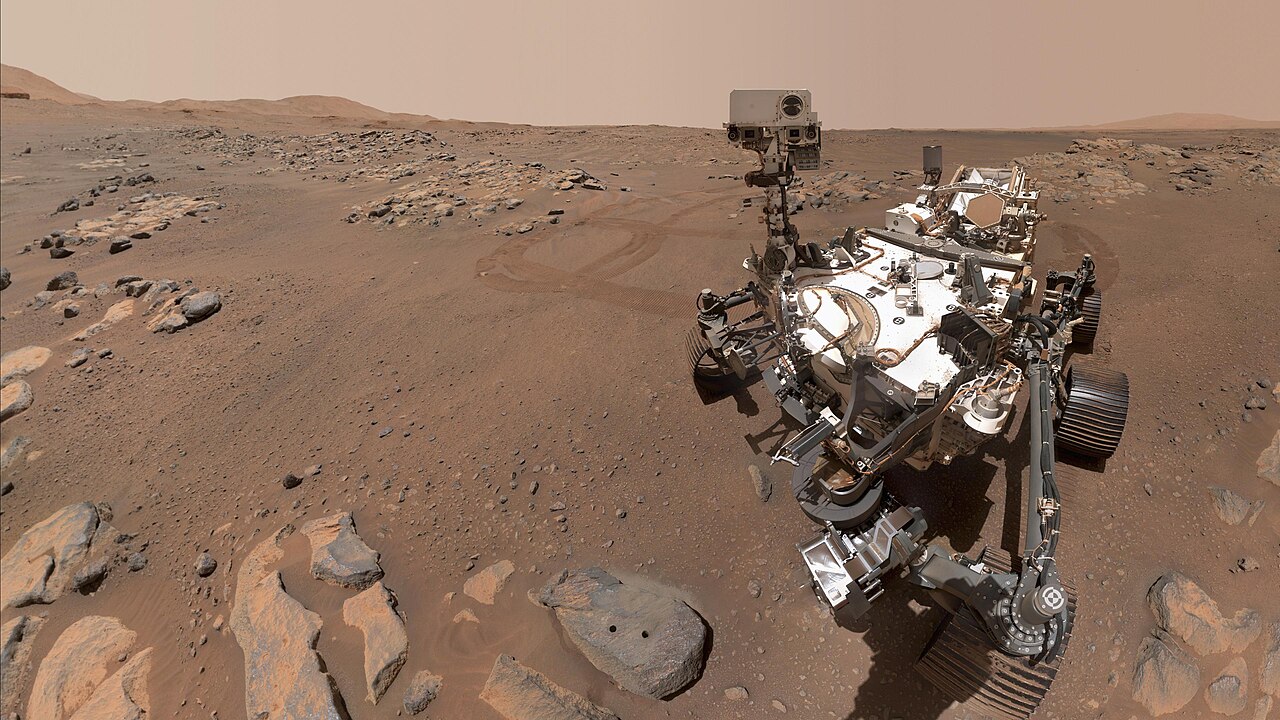
Mars is a key target for human deep space exploration. In 2021, the US Perseverance rover and China's Tianwen-1 probe successfully landed on Mars one after another, ushering in a new era for Mars exploration by both countries. These two missions represent the highest level of Mars exploration in the world today, but each has distinct characteristics in mission objectives, technical paths, and scientific output.
I. Mission Overview
Mars exploration milestones
No Mars program yet; China's early years are focused on orbital satellites.
NASA's Mariner and Viking probes reach Mars; Mariner 9 (1971) is the first to orbit.
China has no Mars missions; its space program is building Long March rockets and Shenzhou crewed capsules.
NASA lands Mars Pathfinder/Sojourner (1997) and the MER rovers Spirit and Opportunity (2004).
China's first interplanetary attempt, Yinghuo-1, fails to leave Earth orbit alongside Russia's Phobos-Grunt.
NASA's Curiosity rover lands in Gale Crater (2012), beginning modern sample analysis.
Tianwen-1 launches (July 2020), reaches Mars orbit, and lands Zhurong in May 2021 — orbit, land and rover in one mission.
Perseverance lands in Jezero Crater (Feb 2021) and flies the Ingenuity helicopter.
China plans Tianwen-3 Mars sample return around 2028 and Tianwen-4 for the Jupiter system in the 2030s.
Perseverance collects cached samples for the NASA-ESA Mars Sample Return campaign; NASA explores commercial Mars options.
| Parameter | Perseverance | Tianwen-1 |
|---|---|---|
| Launch date | July 30, 2020 | July 23, 2020 |
| Landing date | February 18, 2021 | May 15, 2021 |
| Landing site | Jezero Crater | Southern Utopia Planitia |
| Mission mass | 3,690 kg (including cruise stage) | ~5,000 kg (including orbiter) |
| Rover mass | 1,025 kg | 240 kg |
| Main objective | Search for signs of life | Complete orbit, land, and rove in one go |
| Design life | 10 years | Rover 3 months / Orbiter 1 year |
II. Scientific Objectives & Payloads
Perseverance's core scientific objective is to search for signs of ancient microbial life in Jezero Crater and collect Mars rock samples for future return to Earth. It carries seven scientific instruments, including the first Mars helicopter, Ingenuity. Tianwen-1 aims to complete orbiting, landing, and roving in a single mission, carrying six scientific payloads including a medium-resolution camera, infrared spectrometer, and radar.
- Perseverance: Search for signs of life, collect samples, test oxygen generation technology
- Tianwen-1: Global remote sensing, roving survey, subsurface structure detection
- Ingenuity helicopter: First powered flight on Mars
- Zhurong rover: China's first Mars rover
III. Technical Highlights Comparison
| Technical area | Perseverance | Tianwen-1 |
|---|---|---|
| Landing method | Sky crane (lowering) | Hazard avoidance hovering + buffer legs |
| Power system | RTG nuclear battery | Solar + lithium battery |
| Mobility | 6-wheel rocker-bogie | 6-wheel independent drive |
| Autonomous navigation | VisualNav | Vision + laser inertial combination |
| Communication | X-band direct/relay | UHF + X-band |
| Innovative technology | Mars helicopter, MOXIE oxygen generation | First orbit-land-rove in one mission |
IV. Scientific Results & International Cooperation
By 2025, Perseverance has traveled over 30 km, collected more than 20 rock samples, and the Ingenuity helicopter has completed over 70 flights. The Zhurong rover worked on the Martian surface for about a year, capturing numerous photos of Martian terrain and discovering evidence of water activity. The Tianwen-1 orbiter continued global remote sensing of Mars for years after landing. Looking ahead, China plans a Mars sample-return mission (Tianwen-3) around 2028, followed by a Jupiter system mission (Tianwen-4) later in the 2030s.
The Mars exploration programs of the US and China each have their own characteristics and complement each other. NASA has accumulated decades of experience in Mars exploration, while China has demonstrated rapid catch-up and innovation capabilities. Healthy competition between the two countries in deep space exploration will drive humanity's understanding of Mars and the entire solar system to continue to deepen.