
Merlin and Raptor: Thrust-to-Weight Leadership and the Full-Flow Era
August 10, 2026
Rocket engine design advances through a small number of genuinely load-bearing ideas. Two of them define SpaceX's propulsion lineage. The first is the pursuit of extreme thrust-to-weight ratio — building engines light enough and compact enough that many can be clustered together — a philosophy most associated with the Soviet NK-33 and later carried to new extremes by the Merlin 1D. The second is full-flow staged combustion (FFSC), a cycle studied for nearly six decades but flown for the first time by SpaceX's Raptor, which also committed to liquid methane as its fuel. This article traces both threads, using engine figures from reference compilations and flight records from SpaceRocket's launch database, and closes with the Chinese program — LandSpace's Lanyan — now following Raptor down the full-flow path.
I. The NK-33 Heritage: Thrust-to-Weight as a Design Philosophy
The NK-33, developed for the Soviet N-1 lunar rocket, held a thrust-to-weight ratio of roughly 137:1 — the highest of its era, a distinction worth stating carefully, because later engines exceeded it. Reference comparisons place the Saturn V's F-1 at about 83:1, the Soyuz family's RD-107 at roughly 65:1, and the Space Shuttle's RS-25 at about 73:1. The NK-33 achieved this while also delivering a vacuum specific impulse of 331 seconds and a chamber pressure of 145 bar, roughly double the F-1's 70 bar. High chamber pressure in a relatively light package was the core of the design: performance per kilogram of engine, not raw thrust per engine.
The Merlin 1D inherited this philosophy directly. The same reference material credits the Merlin 1D with a thrust-to-weight ratio of roughly 190:1 — substantially above the NK-33, though in a smaller-thrust engine class. The strategic implication matters more than the number itself: an engine light enough to cluster in quantity trades single-engine performance for system-level resilience and aggregate thrust. That trade, first attempted at scale with thirty engines on the N-1, only became reliable decades later.
| Engine | Thrust-to-Weight Ratio | Additional Reference Data | Era Context |
|---|---|---|---|
| NK-33 | ~137:1 | Vacuum Isp 331 s; chamber pressure 145 bar | Highest of its era; N-1 lunar rocket |
| F-1 | ~83:1 | Chamber pressure 70 bar | Saturn V first stage |
| RD-107 | ~65:1 | — | Soyuz family lineage |
| RS-25 | ~73:1 | — | Space Shuttle main engine |
| Merlin 1D | ~190:1 | Smaller thrust class than NK-33 | Powers the Falcon 9 family |
II. The N-1 Lesson: Why Thirty Engines Failed Then
The N-1 remains the cautionary case for engine clustering. Its first stage carried thirty engines governed by the KORD control system, and the program flew four times between 1969 and 1972, failing each time. Reference accounts of the four flights show that the failures were dominated not by the engines' individual quality but by interactions, control logic, and system coupling — precisely the problems a modern clustered design must solve.
| N-1 Flight | Date | Reference Account of Failure |
|---|---|---|
| 3L | 1969-02-21 | At roughly 70 seconds, the KORD system erroneously shut down engine No. 12 and its symmetric counterpart No. 24, triggering a cascade shutdown and crash |
| 5L | 1969-07-03 | About 0.25 seconds after ignition, the No. 8 engine's liquid-oxygen pump burst; debris struck neighboring engines, KORD shut down 29 engines, and the vehicle fell onto the pad with an explosion estimated near 1 kt TNT equivalent — described, with limited sourcing, as one of the largest non-nuclear explosions in spaceflight history |
| 6L | 1971-06-27 | Loss of roll control; structural breakup at roughly 49 seconds |
| 7L | 1972-11-23 | All 30 engines operated together for the first time until about 90 seconds, when pogo longitudinal oscillation tore a liquid-oxygen pump |
Flight 3L
KORD erroneously shuts down engines No. 12 and 24; cascade shutdown and crash
Flight 5L
No. 8 engine LOX pump bursts 0.25 s after ignition; vehicle falls onto the pad
Flight 6L
Loss of roll control; structural breakup at ~49 seconds
Flight 7L
All 30 engines burn together until pogo oscillation tears a LOX pump at ~90 s
The lesson the N-1 left behind is that clustering is a control-systems problem before it is an engine problem. Plumbing, debris containment, shutdown logic, and vibration coupling all scale in difficulty with engine count. Both of SpaceX's engine generations addressed this inheritance differently: Merlin by proving high engine counts through operational repetition, Raptor by making each engine so small that thirty-three of them fit on a single booster.
III. Merlin 1D and the Falcon 9 Industrial Record
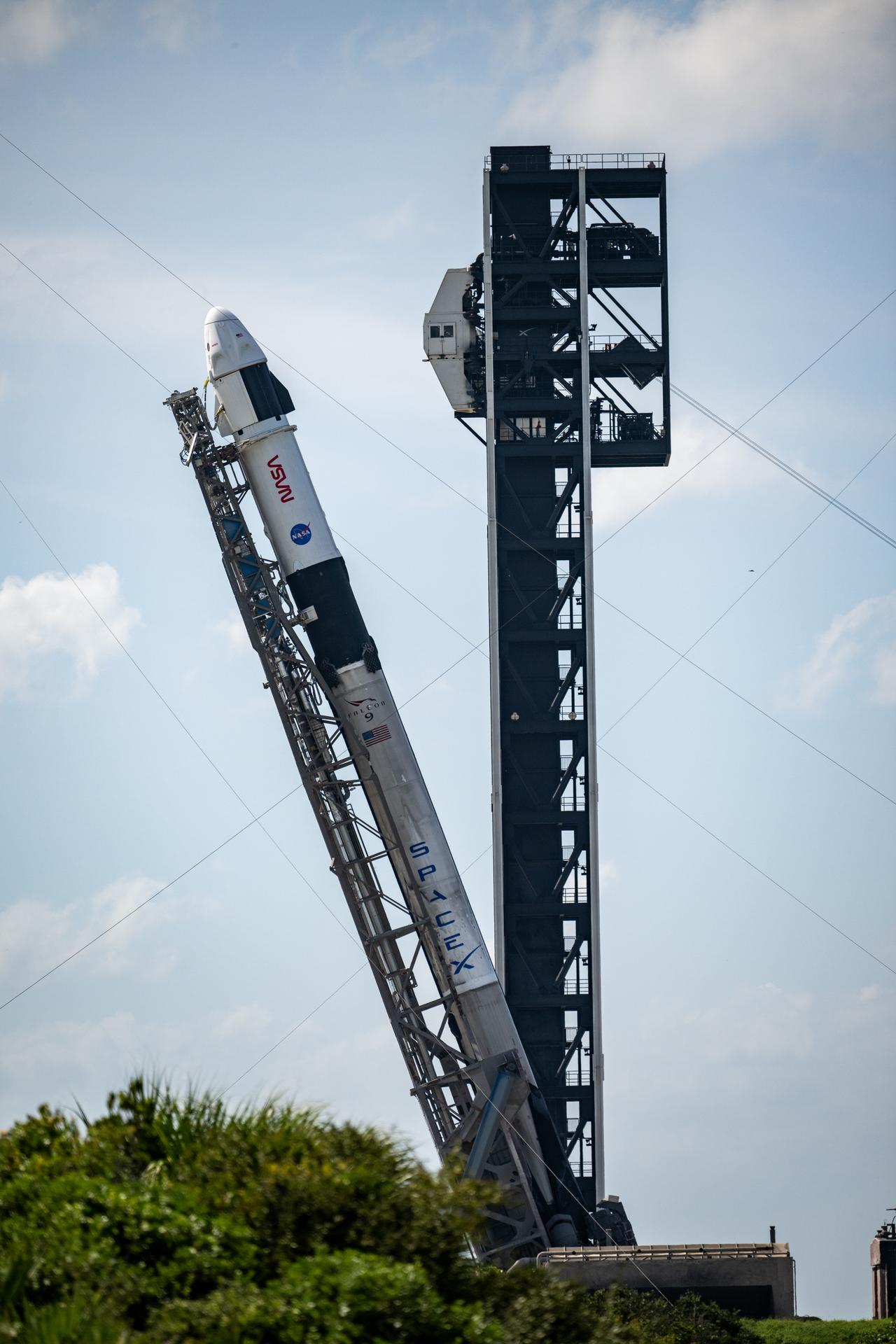
Whatever the Merlin 1D's paper specifications, its strongest credential is operational. Merlin engines power the Falcon 9 family, and according to SpaceRocket's launch database the Falcon 9 variants together have flown 672 times with 668 successes — a 99.4 percent success rate accumulated across five configurations since 2010. The current Block 5 variant alone accounts for 615 of those launches, with 614 successes since its 2018 maiden flight. This is what a thrust-to-weight-led design philosophy looks like when it survives contact with industrial-scale operations: repetition converts a design margin into a statistical record.
IV. Reading the Falcon Launch Database
| Configuration | Total Launches | Successful | Maiden Flight | Success Rate |
|---|---|---|---|---|
| Falcon 9 Block 5 | 615 | 614 | 2018-05-11 | 99.8% |
| Falcon 9 Full Thrust | 25 | 24 | 2015-12-22 | 96.0% |
| Falcon 9 v1.1 | 15 | 14 | 2013-09-29 | 93.3% |
| Falcon 9 Block 4 | 12 | 12 | 2015-12-22 | 100% |
| Falcon Heavy | 12 | 12 | 2018-02-06 | 100% |
| Falcon 9 v1.0 | 5 | 4 | 2010-06-04 | 80.0% |
| Falcon 1 | 5 | 2 | 2006-03-24 | 40.0% |
Three trends stand out in this data. First, maturation: success rates climb monotonically across generations, from Falcon 1's two successes in five attempts through v1.0 and v1.1 to the essentially saturated Block 5 record. Second, consolidation: Block 5 carries roughly 91 percent of all Falcon 9 launches, meaning the record is not spread thin across variants but concentrated in a single frozen, iterated design — the configuration-management counterpart of the Merlin philosophy. Third, the one Block 5 failure in 615 flights implies that the engine-out tolerance built into the clustered architecture has, in aggregate, done its job. The Falcon Heavy adds a further twelve-for-twelve record using a triple-core arrangement that multiplies the same engine count rather than introducing a new engine — extending the clustering logic to 27 engines without leaving the proven design space.
V. Raptor and Full-Flow Staged Combustion
Full-flow staged combustion routes all of the fuel and all of the oxidizer through separate preburners before they enter the main combustion chamber. Each preburner stream drives its own turbopump; the two hot gas streams then merge and burn completely in the main chamber. The practical benefits, as described in reference discussions of the cycle: propellant utilization is maximized and specific impulse rises; turbine working temperatures actually fall, extending component life; and the cycle is inherently well suited to repeated use. The concept is old. The Soviet Union began pursuing it in the 1960s with the RD-270 program, and for nearly sixty years the cycle defeated every attempt to fly it. Raptor was the first FFSC engine to reach flight, which — by widespread industry assessment — made it the first of its kind in the world, with all later programs measured against it.
VI. The Methalox Choice
Raptor's second commitment was fuel: liquid oxygen and liquid methane. Reference analysis of propellant trade-offs frames methalox as the middle path between kerosene and hydrogen. Methane offers a slightly higher specific impulse than kerosene — roughly 365 seconds against about 355 — while burning cleanly, without the carbon deposits and coking that kerosene leaves in engine hardware and that obstruct rapid reuse; kerosene engines can be cleaned and flown again, but the maintenance burden grows with engine size. Storage temperature is another argument: liquid oxygen at about minus 182 degrees Celsius and methane at about minus 162 are near neighbors, easing tank and insulation design, whereas liquid hydrogen at minus 253 degrees sits far from oxygen and demands heavy separation. Finally, methane's molecular weight of 16 against hydrogen's 2 makes it far denser, shrinking tank volume for the same energy. The Saturn V's architecture — kerosene to escape the atmosphere, hydrogen for upper-stage efficiency — defined the old compromise; methalox attempts to make one propellant pair serve both roles in a reusable system.
VII. Raptor 3 by the Numbers
Third-generation Raptor figures circulating in technical discussion put the engine at 280 tonnes of thrust, 1.3 meters in diameter, and 1.7 tonnes in mass — implying a thrust-to-weight ratio on the order of 165. The instructive comparison is the RD-171MV, currently the most powerful single-chamber-class engine in service at about 740 tonnes of sea-level thrust, but 3.56 meters in diameter and 9.3 tonnes in mass, an implied ratio near 80. A 9-meter-diameter Starship booster accommodates 33 Raptors — roughly 9,240 tonnes of aggregate thrust — where the same diameter would fit at most four engines of 3.56-meter diameter, totaling about 2,960 tonnes. The point generalizes the NK-33 lesson: for clustered architectures, diameter and mass are as decisive as thrust. Programs that advertise thrust figures without diameter and mass, as one widely shared analysis noted, are not addressing the feasibility question that actually matters.
| Parameter | Raptor 3 | RD-171MV |
|---|---|---|
| Thrust | 280 t | ~740 t (sea level) |
| Diameter | 1.3 m | 3.56 m |
| Mass | 1.7 t | 9.3 t |
| Implied Thrust-to-Weight | ~165 | ~80 |
| Engines Fittable on a 9 m Booster | 33 | ~4 |
| Aggregate Thrust in That Layout | ~9,240 t | ~2,960 t |
VIII. Thirty-Three Engines: The Flight Evidence
SpaceRocket's launch database tracks the Starship program in three blocks: prototype flights (9 launches, 6 successes, beginning 2019-07-26), Starship V1 (6 launches, 4 successes, from 2023-04-20), and Starship V2 (5 launches, 2 successes, from 2025-01-16) — twenty flights in total. The milestone sequence shows the clustering question being answered incrementally. Flight 7 in January 2025 was the first V2 flight and the first to refly a Raptor engine; the booster was caught while the ship was lost early to a propellant leak. Flights 8 and 9 ended in further ship losses. Flight 10 in August 2025 marked the turn: satellite deployment, an in-space engine relight, and a booster that deliberately shut down one Raptor and had a backup take over before splashing down — the redundancy logic that the N-1's KORD system could not deliver in 1969. Flight 11 repeated success with deliberately removed heat-shield tiles. By Flight 13, all 33 Raptor 3 engines ignited and none shut down during ascent, and the ship survived reentry plasma, executed a dynamic turn under flap control, and splashed down softly in the Indian Ocean — with several tiles deliberately whitened to simulate missing tiles and camera-equipped Starlink satellites imaging the ship's surface in flight.
The remaining bottleneck, per observer analysis of Flight 13, is the booster landing burn: of thirteen engines planned to relight, only five to eight fired in the terminal phase, and the booster struck the water hard, at an estimated residual speed of 100 to 200 kilometers per hour. The database's V2 record — two successes in five — reflects exactly this frontier: the ascent-phase clustering problem appears solved, while the return-chain and operational-reliability questions are still being worked, one flight at a time.
| Starship Block | Total Launches | Successful | Maiden Flight |
|---|---|---|---|
| Starship Prototype | 9 | 6 | 2019-07-26 |
| Starship V1 | 6 | 4 | 2023-04-20 |
| Starship V2 | 5 | 2 | 2025-01-16 |
IX. A Second Player: LandSpace's Lanyan and the FFSC Race
The full-flow club is no longer a single-member institution. LandSpace, a private Chinese company, has completed full-system long-duration hot-fire testing of Lanyan (Blue Flame), a 220-tonne-class LOX-methane engine using full-flow staged combustion, with industry coverage describing it as the second program worldwide — after Raptor — to demonstrate the cycle. Reported status: more than thirty hot-fire tests completed and stable operation at the 50 percent power point. LandSpace's broader engine line brackets the new engine with operational hardware: the Tianque-12A, an 80-tonne-class methalox engine with multiple flights behind it, and the Tianque-12B, a 100-tonne-class product in high-frequency testing and batch delivery. For observers tracking the US-China propulsion comparison, the significance is architectural rather than numerical: the cycle that took one company decades to fly now has a second national program behind it, and the gap metric shifts from 'who has flown FFSC' to 'who can industrialize it first.'
X. Summary and Outlook
The through-line of this evolution is continuity disguised as rupture. The Merlin 1D's roughly 190:1 thrust-to-weight ratio extends the NK-33's 137:1 philosophy — light, high-pressure, clustered — into an engine whose family has now flown 672 Falcon 9 missions at a 99.4 percent success rate, according to SpaceRocket's launch database. Raptor then reopens the question the N-1 failed: thirty-three full-flow engines on one booster, all burning through ascent by Flight 13, with landing-burn reliability the acknowledged remaining bottleneck. And Lanyan's test-stand progress signals that full-flow staged combustion, sixty years after the RD-270, is becoming a contested rather than a proprietary technology. The numbers to watch are the V2 success rate in the database — two in five today — and whether Lanyan advances from 50 percent power-point stability to flight. Both are now measurable events, not speculations.
FAQ
- Q: What is the thrust-to-weight ratio of the Merlin 1D?
- A: Reference data credits the Merlin 1D with a thrust-to-weight ratio of roughly 190:1, exceeding the NK-33's approximately 137:1, though the Merlin operates in a smaller thrust class.
- Q: What is full-flow staged combustion?
- A: It is a rocket engine cycle in which all fuel and all oxidizer pass through separate preburners that drive the turbopumps before both hot gas streams enter the main combustion chamber and burn completely. The cycle raises propellant utilization and specific impulse while lowering turbine temperatures, making it well suited to reuse.
- Q: Which engines have flown using full-flow staged combustion?
- A: SpaceX's Raptor was the first FFSC engine to reach flight. LandSpace's Lanyan, a 220-tonne-class methalox engine in China, has demonstrated the cycle in more than thirty hot-fire tests and is described as the second such program worldwide.
- Q: How many Raptor engines power the Super Heavy booster?
- A: Thirty-three. At 280 tonnes of thrust each, the cluster produces roughly 9,240 tonnes of aggregate thrust on a 9-meter-diameter booster; by Flight 13, all 33 ignited with no shutdowns during ascent.
- Q: Why did Raptor choose methane over kerosene?
- A: Methane offers slightly higher specific impulse than kerosene (roughly 365 versus 355 seconds), burns without the coking and carbon deposits that complicate engine reuse, and stores at minus 162 degrees Celsius — close to liquid oxygen's minus 182, simplifying tank design.
- Q: What was the NK-33, and why does it still matter?
- A: The NK-33 was the Soviet N-1 rocket's engine, with a thrust-to-weight ratio of about 137:1 — the highest of its era — plus 331 seconds of vacuum specific impulse and 145 bar chamber pressure. It established the light, clusterable engine philosophy that the Merlin 1D later extended to roughly 190:1.