
China’s Rocket Failures: From a Culture of Zero-Defect Reliability to the Need for Rapid Iteration
August 17, 2026
A History of China’s Launch Industry, the “Australia Satellite” Crisis, Long March 5, Talent Politics, and the Rise of Commercial Spaceflight
China’s space program is often presented through its successes: the Long March rocket family, the BeiDou navigation system, the Chang’e lunar missions, the Tianwen Mars mission, and the Tiangong space station.
Those achievements are real.
But there is another side to China’s space history that is less frequently discussed outside the country: **failure**.
China’s launch industry has experienced several major setbacks over the past four decades. Some were technical failures. Others exposed deeper weaknesses in management, talent retention, and organizational culture.
The most important question is therefore not simply whether a Chinese rocket can launch successfully.
It is this:
> **Can China build a space industry that learns from failure quickly enough to compete with the world’s fastest-moving launch companies?**
That question matters more today than it did twenty or thirty years ago.
China has already demonstrated that it can build reliable launch vehicles at scale.
The next challenge is fundamentally different:
**Can it combine reliability with speed, low cost, rapid iteration, and reusability?**
1. From “Dong Fang Hong” to Long March: Building a Rocket Industry from Scratch
China’s modern space program began in the 1950s, when the country started developing missile and rocket technology.
The effort eventually became part of the broader “Two Bombs, One Satellite” program, through which China established the foundations of its independent aerospace and defense industries.
On April 24, 1970, China successfully launched *Dong Fang Hong 1*, its first satellite, aboard the Long March 1 rocket.
It was a historic moment.
For a country with a relatively weak industrial base at the time, putting a satellite into orbit meant far more than completing a single engineering project. It demonstrated that China had acquired an independent capability to reach space.
Over the following decades, China developed the Long March family of launch vehicles.
Initially, the mission was overwhelmingly strategic.
The objective was simple:
**Build it. Launch it. Make it work.**
But China's rocket industry began to change in the 1980s and 1990s as China entered the international commercial launch market.
That changed the stakes dramatically.
A failed government mission is expensive.
A failed commercial launch can also mean:
- a destroyed customer satellite;
- insurance losses;
- lost contracts;
- damaged international credibility;
- higher insurance premiums;
- and competitors taking your market share.
For the first time, China's rockets were being judged not only as national projects, but also as **commercial products**.
2. The “Australia Satellite” Crisis: China's First Major Commercial Launch Crisis
One of the most important chapters in Chinese rocket history is also one that is largely unknown to Western audiences.
It is often referred to in China as the **“AsiaSat/Australia Satellite” crisis**, referring to a series of commercial launch failures involving international customers in the 1990s.
In March 1992, a Long March 2E rocket carrying the Australian Optus B1 communications satellite experienced an engine problem shortly after ignition and the launch was aborted.
Later that year, on December 21, another Long March 2E launched the Optus B2 satellite.
This time the rocket lifted off, but approximately 48 seconds into flight it suffered a catastrophic failure and the satellite was lost.
The problems did not stop there.
On January 26, 1995, a Long March 2E carrying the AsiaSat 2 communications satellite exploded shortly after launch.
Then came the most serious accident.
On February 15, 1996, the Long March 3B made its maiden flight carrying the Intelsat 708 communications satellite.
The rocket veered off course almost immediately after liftoff and crashed roughly 20 seconds later.
The accident killed six people and injured dozens more.
Another launch failure followed in August 1996.
For China's young commercial launch industry, this was a crisis.
The country had only recently begun building an international reputation as a commercial launch provider.
Now that reputation was under serious pressure.
The problem was no longer simply:
> “Why did this rocket fail?”
It had become:
> **“Can China's entire launch industry be trusted?”**
—
Dong Fang Hong 1: China's first satellite reaches orbit
Long March 2E / Optus B1 launch aborted after ignition
—
Long March 2E / Optus B2 lost ~48 seconds into flight
—
Long March 2E / AsiaSat 2 explodes shortly after launch
—
Long March 3B maiden flight crashes (Intelsat 708)
—
Another commercial launch failure
—
—
"Zeroing" (归零) quality-reform campaign across the aerospace system
—
Long March 5 maiden flight succeeds
Long March 5 second launch fails — first-stage engine turbopump exhaust issue
—
—
Long March 5 returns to flight
—
Chang'e 5 lunar sample-return mission launches successfully
—
LandSpace's Zhuque-2 becomes the first methalox rocket to reach orbit
Long March 7A suffers an in-flight failure
—
3. Failure Forced China to Build One of the World’s Strictest Quality Cultures
The response to the failures of the 1990s fundamentally changed China's aerospace industry.
China launched an extensive campaign of quality reforms.
The aerospace system developed a highly formalized approach to investigating failures, identifying root causes, implementing corrective actions, and verifying that the same failure could not happen again.
One concept became particularly famous inside Chinese aerospace:
**“Zeroing out” the problem — or “gui ling” (归零).**
The terminology can sound strange in English.
In practice, it means something closer to:
> **Find the root cause, correct it, document the corrective action, verify the fix, and formally close the issue.**
China also developed separate approaches for what are often described as:
- technical root-cause closure;
- management root-cause closure;
- accountability;
- process improvement;
- and verification.
The system was extremely demanding.
And it worked.
After the major failures of the mid-1990s, China's Long March rockets entered a remarkably successful period.
China eventually achieved a run of more than 100 consecutive successful Long March launches.
This achievement should not be underestimated.
The quality culture that emerged from the crises of the 1990s became one of the great strengths of China's aerospace industry.
But it also created a potential weakness.
Because the system was optimized for one objective above all:
**reliability.**
4. The Long March 5 Failure: When the Old Model Met a New Generation of Rockets
The next major turning point came two decades later.
The Long March 5 was China's new heavy-lift launch vehicle.
It was designed to provide the payload capacity needed for some of China's most ambitious space programs, including lunar exploration, large spacecraft, deep-space missions, and eventually crewed lunar exploration.
Its maiden flight in November 2016 was successful.
But on July 2, 2017, the second Long March 5 launch failed.
The failure was particularly significant because Long March 5 was not simply another rocket.
It was the foundation for a new generation of Chinese space missions.
The investigation eventually identified a problem associated with the first-stage engine's turbopump exhaust system.
The response was extensive.
The engine had to be redesigned.
Testing had to be repeated.
The launch schedule for several major missions was affected.
Eventually, Long March 5 returned to flight successfully in 2019.
In 2020, it successfully launched the Chang'e 5 lunar sample-return mission.
The story ended well.
But the episode raised a broader question:
> **How much time should a national space program spend proving that a failure can never happen again?**
That question becomes increasingly important when rockets need to fly not once every few years, but potentially dozens of times a year.
5. “Zeroing” Is Not the Problem. The Question Is What Happens After Failure.
There is nothing inherently wrong with rigorous failure investigation.
A rocket failure must be understood.
If an engine component fails, engineers need to determine why.
Was it:
- a design flaw?
- a manufacturing defect?
- a material problem?
- an assembly error?
- a software issue?
- a testing failure?
- or a systems-engineering problem?
Aerospace cannot simply shrug and say:
> “It was unlucky. Let's try again.”
The real issue is what happens when technical investigation turns into organizational risk management.
A failure can trigger:
- multiple layers of review;
- expanded responsibility investigations;
- extensive paperwork;
- project-wide audits;
- additional approval procedures;
- suspension of related projects;
- and lengthy administrative investigations.
At that point, a quality-control system can gradually become something else:
**a system designed to prevent people from being blamed.**
That creates a dangerous incentive.
Engineers may begin optimizing for:
> **“How do I make sure nothing goes wrong?”**
rather than:
> **“How do we test this quickly enough to discover what will go wrong?”**
Those sound similar.
They are not.
6. The Real Danger Is Not a Rocket Exploding. It Is Engineers Becoming Afraid of Failure.
This is perhaps the most important issue facing China's launch industry today.
Imagine two engineering cultures.
In the first, an engineer thinks:
> “If the test fails, we'll get valuable flight data, understand the problem, redesign the system, and fly again.”
In the second:
> “If the test fails, the project could be suspended, management could demand investigations, and my career could suffer.”
The first culture encourages experimentation.
The second encourages conservatism.
And rockets are unusually dependent on real-world testing.
A rocket is not a consumer product.
It contains highly complex systems:
- engines;
- turbopumps;
- combustion chambers;
- valves;
- guidance systems;
- flight computers;
- structures;
- thermal systems;
- separation mechanisms;
- software;
- electrical systems.
Ground testing is essential, but it cannot perfectly reproduce every condition encountered during flight.
This leads to a fundamental principle of aerospace engineering:
> **Rocket reliability is not simply designed into a vehicle. It is also learned through flight.**
That is one reason rapid iteration has become so important.
7. Why SpaceX Changed the Conversation
Any discussion of China's launch culture eventually leads to SpaceX.
It is tempting to say:
> “America tolerates rocket failures, while China does not.”
That is too simplistic.
The United States has experienced catastrophic aerospace failures of its own.
The Challenger and Columbia disasters killed astronauts and triggered enormous investigations and institutional reforms.
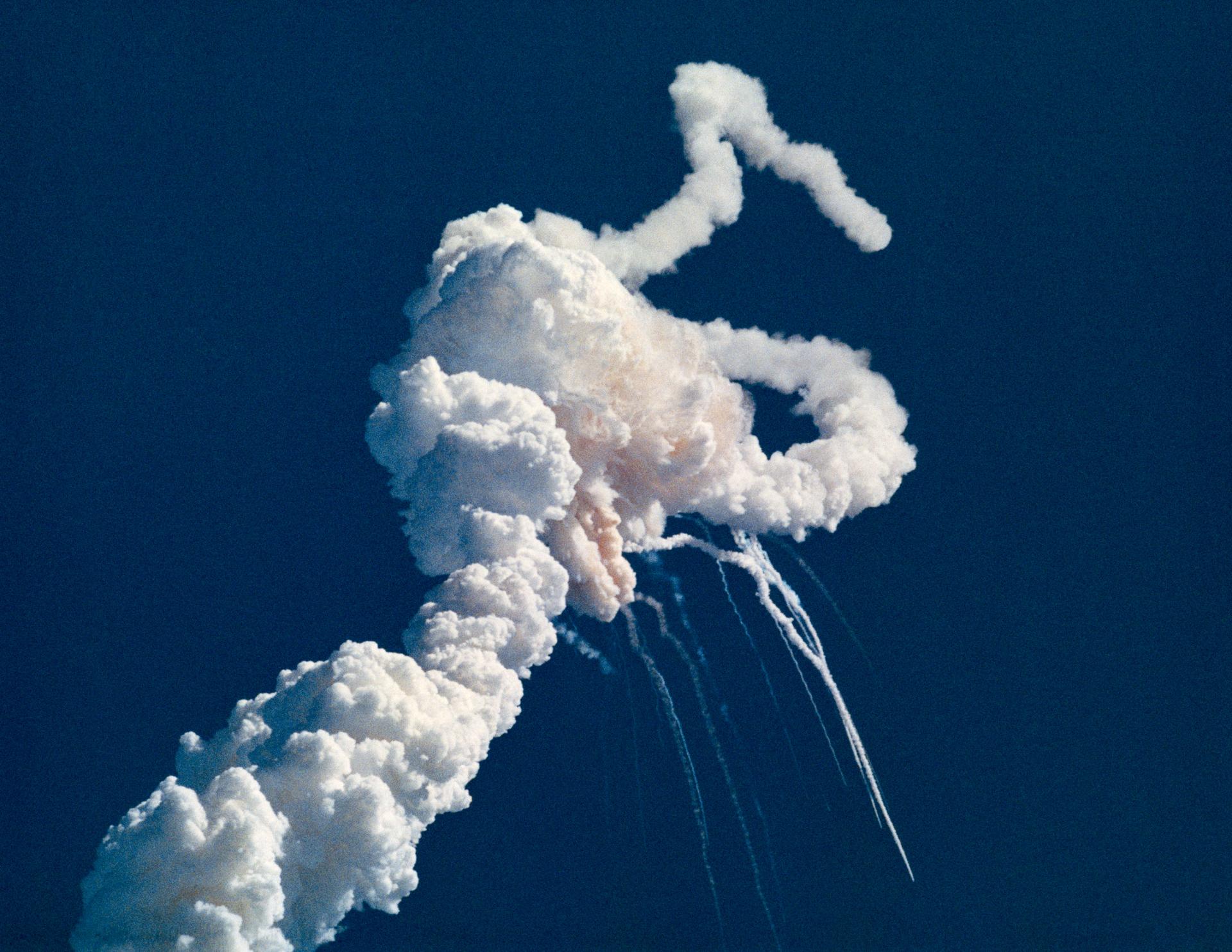
NASA is certainly not an organization that treats failure casually.
The difference is more subtle.
The United States has a much more diverse space ecosystem.
NASA operates alongside companies such as SpaceX, Blue Origin, Rocket Lab, Firefly, and others.
A company can fail without the entire American space program being considered a failure.
A company can lose money.
A project can be cancelled.
A startup can go bankrupt.
Engineers can move to another company.
Capital can move elsewhere.
Knowledge and talent can survive organizational failure.
That is a major advantage.
8. SpaceX's Most Important Innovation May Be Organizational, Not Technological
The most important lesson from SpaceX is not that Elon Musk “doesn't care if rockets explode.”
He obviously does.
SpaceX cares enormously about reliability.
The difference is the company's tolerance for **developmental failure**.
Starship testing provides an obvious example.
Early vehicles exploded.
Some tests ended in spectacular failures.
But each flight generated engineering data.
The company built another vehicle.
Changed the design.
Tested again.
And flew again.
The underlying philosophy is closer to:
> **A failed test is not necessarily a failed program. A failed learning cycle is.**
This is radically different from the traditional logic of a government flagship project.
A traditional national project tends to think:
**Success is the objective.**
A rapid-iteration commercial company tends to think:
**Learning rate is the objective.**
That distinction may become one of the defining differences between the old and new space industries.
9. China's Greatest Strength Could Become a Constraint
China's traditional aerospace system has enormous strengths.
It can mobilize:
- funding;
- engineering talent;
- industrial capacity;
- testing infrastructure;
- supply chains;
- launch facilities;
- and national resources.
This model is extremely effective for large strategic projects.
China's lunar program, Mars mission, navigation system, and space station demonstrate what the model can achieve.
But the same structure can create constraints when the objective changes.
A national aerospace organization tends to prioritize:
- strategic objectives;
- reliability;
- national security;
- political accountability;
- long-term planning;
- organizational stability.
A commercial launch company prioritizes:
- cost;
- schedule;
- cash flow;
- launch cadence;
- customers;
- market share;
- product iteration.
These are not the same incentives.
The traditional system is exceptionally good at making sure a major national mission does not fail.
It is not necessarily optimized for:
**building, testing, failing, modifying, and rebuilding rockets as quickly as possible.**
That distinction matters enormously in the reusable-launch era.
10. The Zhang Xiaoping Controversy: What Does China Pay Its Engineers?
One of the most revealing episodes in China's aerospace industry was the **Zhang Xiaoping controversy** in 2018.
Zhang was an aerospace engineer associated with the China Aerospace Science and Technology Corporation's Sixth Academy, which specializes in liquid-propellant rocket engines.
He later left the state aerospace system and joined the commercial space company LandSpace.
A document concerning his departure circulated widely online.
The controversy exploded because it appeared to illustrate a much larger problem:
> **How does China's state aerospace system reward highly skilled engineers?**
Online discussions portrayed Zhang as an engineer who had been paid relatively modestly inside the state system but could command substantially higher compensation in the private sector.
The story was often exaggerated online.
In particular, claims that one engineer's departure had somehow brought China's lunar program to a standstill were denied by his former employer.
The official response emphasized that his role had been overstated and that his departure also involved sensitive-information and security procedures.
So it would be misleading to turn Zhang into a mythical “indispensable engineer.”
But that misses the deeper point.
The important question is not:
> “Was Zhang Xiaoping personally indispensable?”
It is:
> **Why could a highly experienced aerospace engineer find a much more attractive opportunity outside the traditional state aerospace system?**
That is a structural question.
11. The Problem Is Bigger Than Salary
The most serious talent problem is not necessarily low pay.
It is the possibility that:
**technical ability and organizational rewards become disconnected.**
Suppose an engineer works for ten years and discovers that:
- exceptional performance produces only modest additional compensation;
- taking responsibility brings little additional reward;
- successful projects are credited to the organization;
- failures can be personalized;
- administrative promotion is more valuable than technical expertise.
Eventually the engineer asks:
> **Why should I take the additional risk?**
Commercial space companies offer a different proposition.
An engineer with deep experience in:
- liquid rocket engines;
- turbomachinery;
- propulsion;
- structures;
- guidance and control;
- flight software;
has a market value.
That market value becomes a mechanism for allocating talent.
Traditional bureaucratic organizations often struggle with this because compensation and authority are still heavily connected to administrative hierarchy.
The Zhang Xiaoping controversy exposed that tension in a way that ordinary policy papers could not.
12. From Zhang Xiaoping to Commercial Space: A New Competitive Layer
The rise of China's commercial launch industry is therefore more important than simply creating a few new rocket companies.
It introduces something China’s traditional aerospace system did not have in the same form:
**competition.**
Competition for:
- engineers;
- capital;
- suppliers;
- customers;
- manufacturing talent;
- management talent;
- and engineering methods.
LandSpace's Zhuque-2 became the world's first methane-fueled rocket to successfully reach orbit.
Its significance went beyond one launch.
It demonstrated that a privately backed Chinese company could achieve a major propulsion milestone that had traditionally belonged to state aerospace institutions.
Zhuque-3 represents an even more ambitious step.
Its objective is not merely to build another expendable rocket.
It is part of the effort to develop a large liquid-fueled launch vehicle with reusable first-stage capability.
That is a fundamentally different industrial philosophy.
The question is no longer:
> “Can China build a rocket?”
China has already answered that question.
The question is:
> **Can China turn rockets into mass-produced, frequently launched, partially reusable industrial products?**
13. Be Careful About Linking Zhang Xiaoping to the August 2026 Zhuque-3 Delay
There is an important factual distinction here.
It would be inaccurate to claim that the 2018 Zhang Xiaoping controversy directly caused the postponement of Zhuque-3's scheduled August 11, 2026 launch.
The Zhang Xiaoping controversy occurred in 2018.
The Zhuque-3 mission is a completely different engineering program years later.
Publicly available reporting indicates that the Zhuque-3 launch schedule had already shifted as testing and preparation progressed.
There is currently no reliable public evidence demonstrating a direct causal link between Zhang Xiaoping's 2018 departure and the August 2026 launch delay.
The two events can, however, be discussed within the same broader story:
**the changing relationship between China's traditional aerospace institutions and its emerging commercial space sector.**
That is historically meaningful without inventing a direct causal connection.
14. China May Be Entering Its Second “Australia Satellite” Moment
The biggest challenge facing Chinese aerospace has changed.
In the 1990s, the central question was:
**Reliability.**
Today, the central question increasingly is:
**Cost and speed.**
That is a fundamentally different challenge.
In the 1990s, China needed to prove:
> “Our rockets can be trusted.”
Today, China needs to prove:
> “Our rockets can be launched frequently, manufactured quickly, recovered, reused, and sold at competitive prices.”
The metrics are therefore changing.
In the old system:
**Launch success rate was the dominant metric.**
In the new system:
**Success rate × launch cadence × manufacturing time × unit cost × reusability**
may matter more.
A company that launches twice a year with extremely high reliability may still lose to a company that can launch dozens of times a year at dramatically lower cost.
That is the strategic shift created by reusable launch vehicles.
15. Why Is the Chinese Public So Intolerant of Rocket Failures?
Chinese public attitudes toward aerospace failures are also shaped by history.
China's space program has long been associated with national achievement.
Astronauts, lunar missions, Mars exploration, BeiDou, and the space station have become symbols of national technological progress.
This creates a powerful expectation:
> **If this is one of the country's most advanced engineering systems, it should work.**
As a result, a launch failure can easily become more than an engineering problem.
It can become a debate about:
- management;
- institutions;
- competence;
- funding;
- talent;
- or even national technological strength.
That creates additional pressure on aerospace organizations.
If management believes that one launch failure could trigger intense public criticism and political scrutiny, the rational organizational response may be:
- more reviews;
- more approvals;
- more testing;
- more documentation;
- more conservative design choices.
That can reduce the probability of a single failure.
But it can also reduce the speed of innovation.
This creates a paradox:
> **The more an organization fears failure, the less willing it may become to experiment. The less it experiments, the fewer real-world data points it gets. The fewer data points it gets, the more it must rely on lengthy ground validation. And the longer the validation cycle becomes, the slower the overall development process.**
In an era of rapid commercial launch development, that can become a serious competitive disadvantage.
16. The United States Does Not Simply “Accept Failure.” It Distributes Failure.
The deeper American advantage is not simply that the public is more tolerant of rocket explosions.
It is that the United States has a **distributed space ecosystem**.
NASA.
SpaceX.
Blue Origin.
Rocket Lab.
ULA.
Firefly.
And numerous suppliers, startups, universities, investors, and contractors.
If one company fails, the entire national space program does not stop.
A company can fail.
A project can be cancelled.
A startup can disappear.
But its engineers can join another company.
Its investors can finance another project.
Its suppliers can serve another customer.
Its technology can be reused.
Its institutional knowledge can survive.
This creates a kind of systemic resilience.
Traditional state-centered aerospace systems have a different problem:
**failure at the project level can be perceived as failure at the system level.**
That creates stronger incentives for caution.
Commercial space introduces a mechanism for distributing risk across many competing organizations.
That may ultimately be one of its greatest contributions to China's space industry.
17. The 2026 Long March 7A Failure Is Another Opportunity to Rethink Failure
The Long March 7A failure on August 10, 2026 is therefore worth examining beyond the immediate accident investigation.
Public reporting indicates that the rocket suffered an in-flight anomaly during a mission that failed to place its payload into the intended orbit.
This is a reminder of a fundamental truth:
**Even a mature launch system can fail.**
No aerospace engineering system can guarantee absolute zero risk.
The real measure of maturity is not:
> “Can you guarantee that this rocket will never fail?”
It is:
> **“When it fails, how quickly can you understand why, fix the problem, and fly again?”**
That is the standard the next generation of Chinese launch vehicles will increasingly have to meet.
18. China Does Not Need to Abandon “Zeroing.” It Needs to Redefine It.
The answer is not to eliminate rigorous failure investigation.
That would be dangerous.
The answer is to separate different kinds of accountability.
First: Separate technical investigation from administrative punishment.
Engineers need room to investigate problems honestly.
If every technical failure automatically becomes a personnel issue, people will eventually stop reporting problems early.
Second: Reward technical expertise.
A world-class propulsion engineer should be able to build a prestigious career without becoming a manager.
China needs a genuine technical career ladder in which exceptional engineers can receive compensation, status, and authority comparable to senior administrators.
Third: Let the market help price talent.
The Zhang Xiaoping controversy demonstrated one uncomfortable reality:
**talent has a market value.**
If state aerospace organizations cannot offer competitive compensation and career opportunities, commercial companies will.
That competition is not necessarily destructive.
It can force the entire industry to improve.
Fourth: Measure learning speed.
Instead of asking only:
> “Did the rocket fail?”
Organizations should also ask:
> “How quickly did we identify the cause?”
> “How quickly did we redesign the failed component?”
> “How quickly did we complete testing?”
> “How quickly did we return to flight?”
That is a much more sophisticated measure of engineering maturity.
19. The Real Goal Is Not “Never Fail.” It Is “Be Able to Afford Failure.”
This may be the most important distinction in the entire debate.
A mature aerospace industry is not one that never fails.
It is one that can **survive failure**.
China in the 1990s did not have much room for failure.
Its commercial launch industry was young.
Its international credibility was fragile.
Every lost satellite damaged confidence.
Every failure could threaten future contracts.
The extreme emphasis on reliability was therefore understandable.
But China today is in a different position.
It has:
- a massive aerospace industrial base;
- multiple launch providers;
- multiple launch sites;
- sophisticated propulsion manufacturing;
- a large engineering workforce;
- a growing satellite industry;
- enormous domestic demand;
- and an increasingly competitive commercial space sector.
China is now in a position to experiment.
That does not mean lowering safety standards.
It means creating a system in which **developmental failure is survivable**.
That is actually a more sophisticated form of quality control.
Because the highest-quality engineering organizations are not necessarily those in which nobody makes mistakes.
They are the organizations that:
**test aggressively, detect problems early, learn quickly, and prevent the same problem from happening twice.**
20. From Long March to Zhuque: China Is Entering a Third Era of Rocket Development
China's rocket development can be broadly divided into three eras.
Era One: Survival and Independence
**1970s–1980s**
The central question was:
> **Can China put a satellite into orbit independently?**
The keywords were:
**self-reliance, independence, technological breakthrough.**
Era Two: Reliability
**1990s–2010s**
The question became:
> **Can China operate a launch industry that customers can trust?**
The keywords were:
**quality, reliability, root-cause analysis, accountability.**
This era produced extraordinary achievements.
Era Three: Commercial Iteration
**Late 2010s onward**
The question is now:
> **Can China launch frequently, cheaply, and repeatedly?**
The keywords are:
**cost, cadence, reusability, competition, talent, iteration.**
The biggest competitor is no longer simply another national space program.
It is a new way of organizing engineering.
21. China's Biggest Challenge May Not Be SpaceX. It May Be Institutional Inertia.
China's industrial capacity is enormous.
Its engineering talent is enormous.
Its supply chain is enormous.
But successful institutions have one inherent weakness:
**They become attached to the practices that made them successful.**
For decades, China learned that:
- strict quality control works;
- extensive reviews work;
- root-cause investigations work;
- centralized planning works;
- national coordination works.
And they do.
But the environment is changing.
A rocket that once flew a handful of times a year may eventually need to fly dozens of times.
A rocket that once cost hundreds of millions of dollars may need to become dramatically cheaper.
A failure that once meant months or years of investigation may need to lead to a new flight within weeks or months.
A development cycle that once lasted a decade may need to shrink dramatically.
The question is therefore not simply whether China's technology can keep up.
It is whether:
> **China's institutions can keep up with the changing speed of technology.**
22. The Real Enemy of China's Rocket Industry Is Not Explosion
The failures of the 1990s.
The Long March 5 failure in 2017.
The rise of commercial launch companies.
The talent disputes exposed by the Zhang Xiaoping controversy.
The repeated tests of reusable rockets.
And the Long March 7A failure in 2026.
Together, they form a much larger story.
China's earlier failures forced it to build one of the world's most rigorous aerospace quality systems.
That system became a tremendous competitive advantage.
But today's environment is different.
If China treats failure itself as the ultimate enemy, it may end up with an extremely reliable but increasingly expensive and slow aerospace system.
If China becomes careless about failure, it risks returning to the problems of the 1990s.
The real solution lies between those extremes:
> **Accept that failure is part of engineering — but never accept repeating the same failure.**
> **Give engineers room to experiment — but demand that organizations learn quickly.**
> **A rocket may explode. A development program must not become paralyzed by the explosion.**
> **Respect root-cause analysis — but respect iteration speed just as much.**
China no longer needs to prove that it can put a satellite into orbit.
It needs to prove something harder:
**that rockets can become high-frequency, low-cost, reusable industrial products.**
That transition will not be easy.
There will be more failures.
There will be more delays.
There will be more arguments over management, talent, funding, and accountability.
But that is what industrial maturity looks like.
The real measure of China's aerospace future will not be whether another rocket explodes.
It will be this:
> **How quickly can China build the next one?**