
India's Launch Vehicles: ISRO's Quiet Rise
August 10, 2026
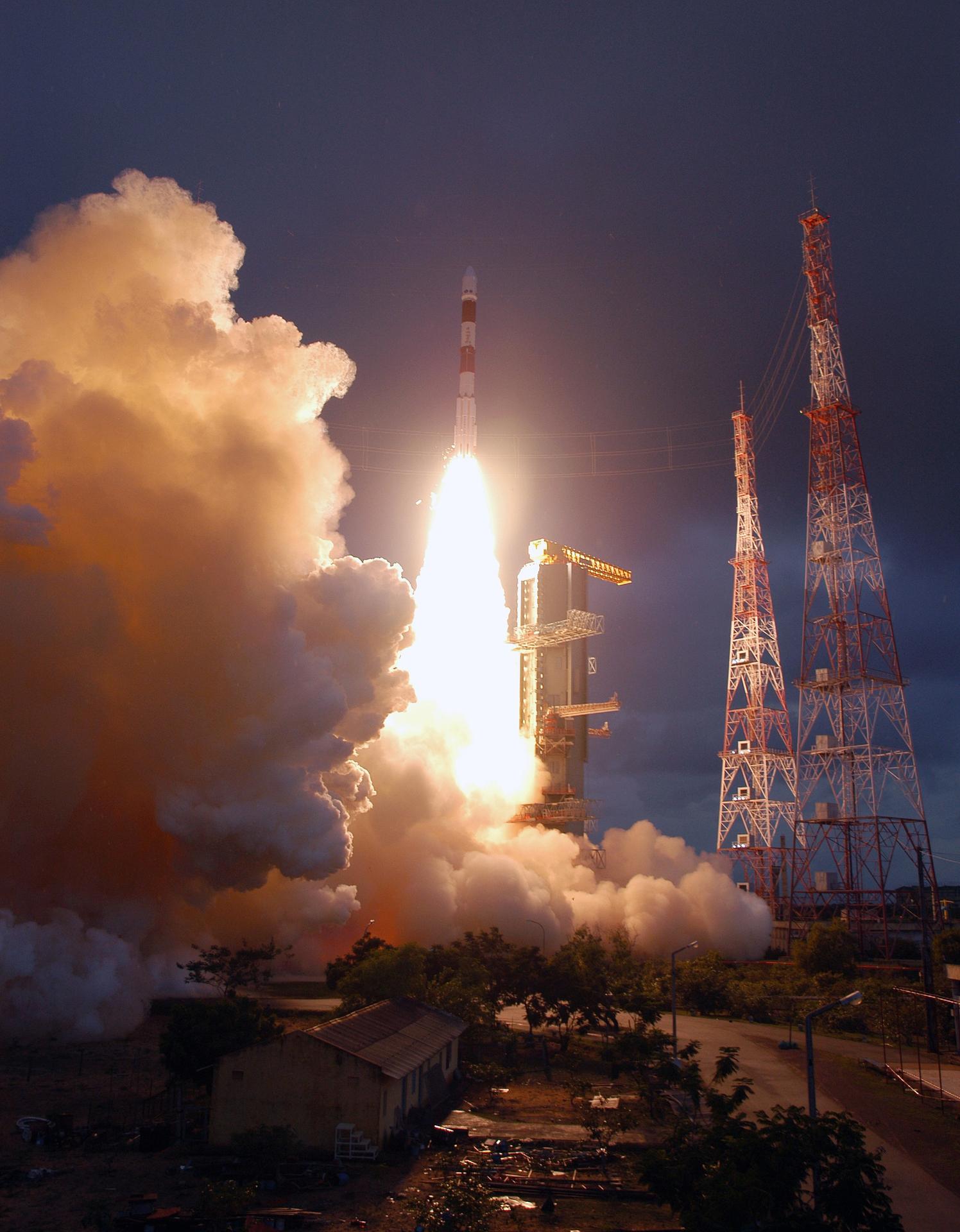
India's space program rarely dominates headlines the way American or Chinese launches do, yet the Indian Space Research Organization has quietly assembled one of the most experienced launch vehicle portfolios in the world. According to SpaceRocket's launcher configuration database, vehicles built by ISRO and its domestic successors have flown 104 times across thirteen distinct configurations, with 89 successes — an aggregate success rate of roughly 85.6 percent. That record spans more than four decades, from the 22-meter SLV-3 that first flew in 1979 to the 629-tonne LVM-3 that anchors India's heavy-lift ambitions today. This article walks through the family vehicle by vehicle, using the database's flight counts and payload figures to assess where ISRO actually stands.
I. The Active Fleet at a Glance
SpaceRocket's database lists eleven active Indian launcher configurations. They fall into four families: the workhorse PSLV in four variants, the GSLV line in two variants, the heavy LVM-3, and the small SSLV — plus one configuration tied to the Gaganyaan human spaceflight program and one privately built vehicle, Skyroot Aerospace's Vikram-I. The table below summarizes the active fleet's physical and performance parameters as recorded in the database.
| Vehicle | Height (m) | Launch Mass (t) | LEO Capacity (kg) | GTO Capacity (kg) | Maiden Flight | Flights (Success/Fail) |
|---|---|---|---|---|---|---|
| PSLV-XL | 44 | 320 | n/a in database | n/a in database | 2008-10-22 | 27 (25/2) |
| PSLV (2007 series) | 44 | 230 | 3,800 | 1,200 | 2007-04-23 | 18 (18/0) |
| PSLV (1993 series) | 44 | 295 | 3,800 | 1,200 | 1993-09-20 | 12 (10/2) |
| PSLV-DL | 44 | n/a in database | 3,800 | 1,200 | 2019-01-24 | 5 (4/1) |
| PSLV-QL | 44 | 287 | 1,500 | n/a in database | 2019-04-01 | 2 (2/0) |
| GSLV Mk II | 49 | 401 | 0 (GTO-focused) | 2,500 | 2010-04-15 | 12 (10/2) |
| LVM-3 (GSLV Mk III) | 43.4 | 629 | 10,000 | 5,000 | 2014-12-18 | 9 (9/0) |
| SSLV | 34 | 120 | 500 | n/a in database | 2022-08-07 | 3 (2/1) |
| Gaganyaan Abort Test Booster | n/a in database | n/a in database | n/a in database | n/a in database | 2023-10-21 | 1 (1/0) |
| Vikram-I (Skyroot) | 20 | n/a in database | 350 | n/a in database | 2026-07-18 (per database) | 1 (1/0) |
II. The PSLV: The Backbone of the Program
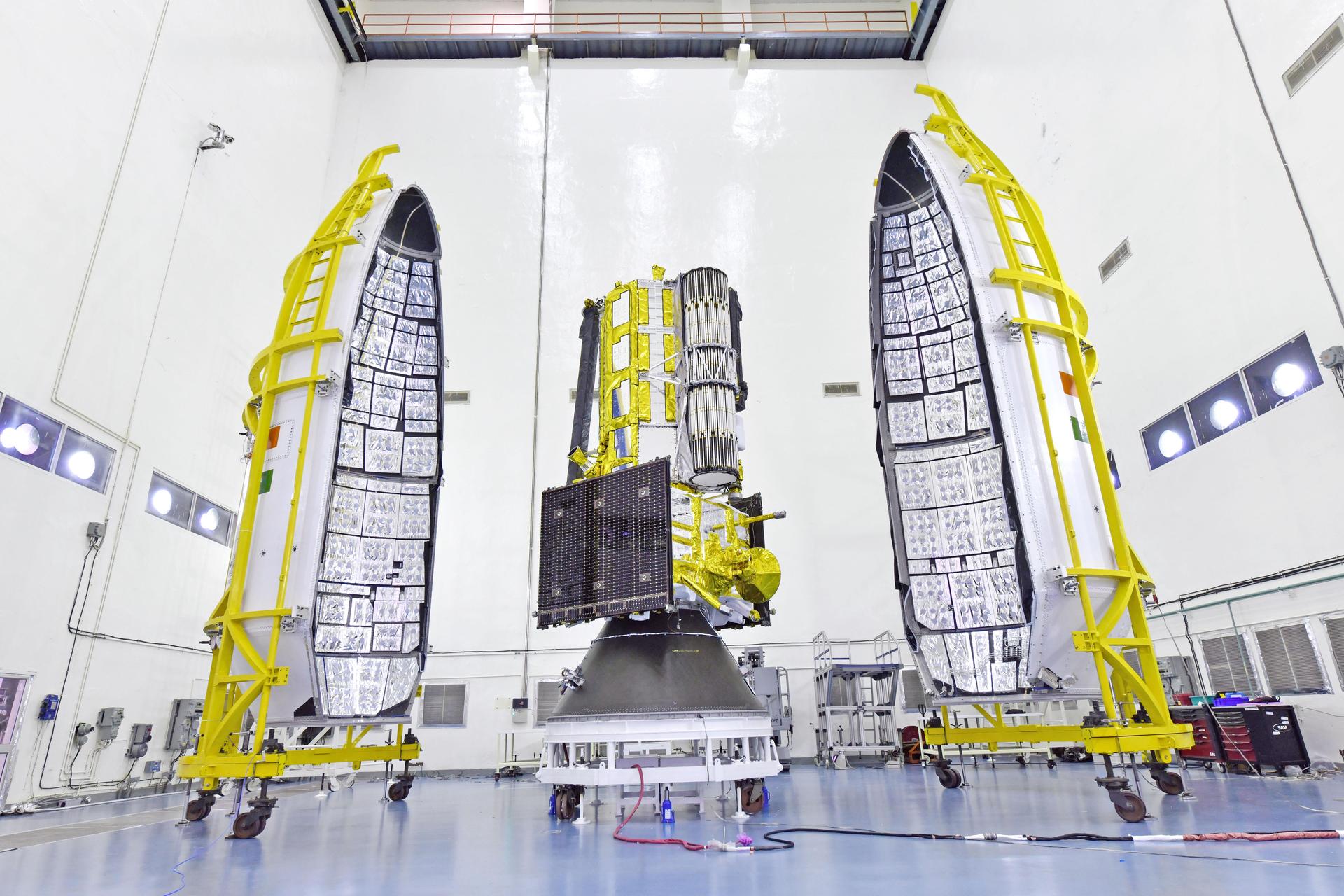
No vehicle defines ISRO's launch program the way the Polar Satellite Launch Vehicle does. Combining all four PSLV configurations in SpaceRocket's database — the original 1993 series, the 2007 series, the uprated PSLV-XL, and the later DL and QL sub-variants — the family has flown 64 missions with 59 successes, a 92.2 percent success rate over more than three decades of operation. The 44-meter rocket is the most-flown Indian configuration ever: the PSLV-XL alone accounts for 27 flights, more than any other single Indian launcher configuration in the database.
The PSLV's role is defined by its payload class: 3,800 kg to low Earth orbit and 1,200 kg to geosynchronous transfer orbit in its standard forms. That is a modest envelope by the standards of the largest operational rockets, but it maps directly onto the missions India flies most often — Earth-observation satellites, navigation spacecraft, and rideshare clusters of small satellites. The PSLV-QL variant trades capacity (1,500 kg to LEO) for a lighter, quicker configuration, while the PSLV-XL, first flown on 22 October 2008, pushed the launch mass from 230–295 tonnes up to 320 tonnes. The family's reliability arc is also notable: after early growing pains in the 1993 series (10 successes in 12 flights), the 2007 series has gone 18 for 18, and the newer QL variant stands at 2 for 2.
III. GSLV: The Hard Road to Cryogenic Capability
If the PSLV is the program's backbone, the Geosynchronous Satellite Launch Vehicle is its cautionary tale and its redemption arc combined. The original GSLV, which first flew on 18 April 2001, managed only 2 successes in 6 flights — a 33 percent success rate that made it the least reliable operational configuration in ISRO's history according to SpaceRocket's database. The follow-on GSLV Mk II, debuting on 15 April 2010, improved matters substantially: 10 successes in 12 flights, an 83.3 percent rate, with a dedicated 2,500 kg GTO capacity that the database records as its primary role (its listed LEO capacity is zero, reflecting its GTO-focused design).
Taken together, the two GSLV variants have flown 18 times with 12 successes — 66.7 percent. That combined figure understates the current state of the program, since the Mk II's record is far stronger than the first-generation vehicle's, but it illustrates how long and expensive the climb to reliable geosynchronous access was. At 49 meters and 401–414 tonnes, the GSLV is the tallest configuration in ISRO's fleet, yet it lifts less to GTO than the shorter, far heavier LVM-3 that succeeded it.
IV. LVM-3: The Heavy Lifter With a Perfect Record
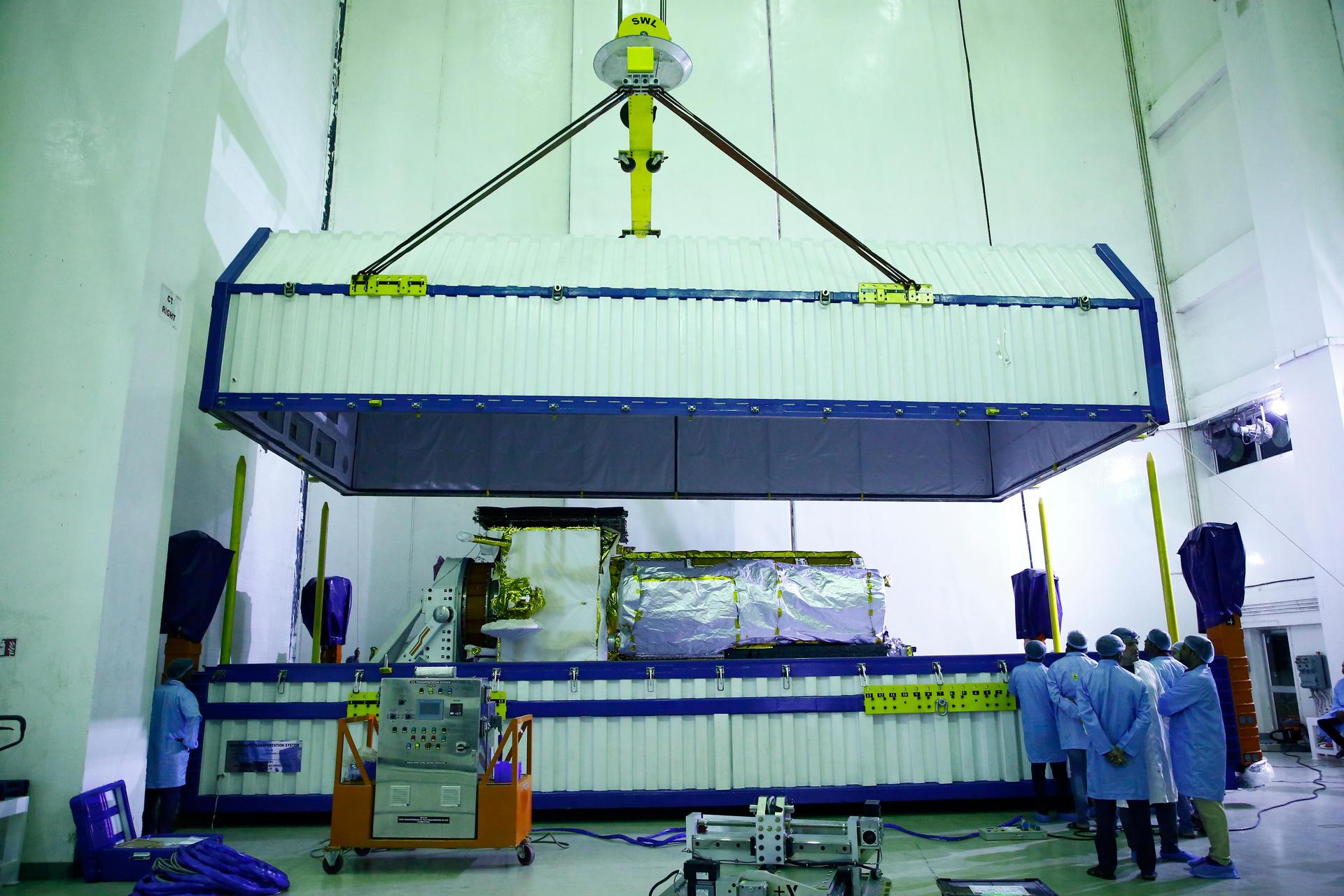
The LVM-3, originally designated GSLV Mk III, is the most capable rocket India has ever operated, and so far it has also been its most reliable in proportional terms. SpaceRocket's database records 9 flights, 9 successes, and zero failures since its maiden flight on 18 December 2014. Its specifications mark a clear generational step: a 629-tonne launch mass — nearly double the PSLV-XL and about 50 percent heavier than the GSLV — with a listed capacity of 10,000 kg to low Earth orbit and 5,000 kg to geosynchronous transfer orbit, roughly double the GSLV Mk II's GTO figure.
Nine flights is a small sample, and a perfect record at that cadence should not be read as proven long-term reliability the way the PSLV's 64-flight history can be. But within the dataset, LVM-3 is the vehicle that moved India from the 2.5-tonne GTO class to the 5-tonne class, and it did so without a single recorded failure. It is also the configuration most closely associated with India's human spaceflight ambitions, alongside the dedicated Gaganyaan Abort Test Booster, which the database records as flying once, successfully, on 21 October 2023.
V. Small Lift and the Private Sector: SSLV and Vikram-I
At the opposite end of the mass spectrum sits the Small Satellite Launch Vehicle. At 34 meters and 120 tonnes, the SSLV is designed for a 500 kg LEO payload class — a deliberate bet on the small-satellite market. Its early record is uneven: SpaceRocket's database shows 3 flights with 2 successes and 1 failure since its maiden flight on 7 August 2022. Three flights is far too few to draw firm conclusions, but the configuration remains active.
Perhaps the most structurally significant row in the database is the last one: Vikram-I, manufactured not by ISRO but by Skyroot Aerospace. The database lists it as active, 20 meters tall, rated for 350 kg to LEO, with one flight and one success on record. Regardless of how one reads the maiden-flight date field, the entry marks a milestone in the data itself — the first Indian launcher configuration in SpaceRocket's records built by a private manufacturer rather than the national agency. If that lineage grows, India's launch statistics will increasingly need to be read as an industry figure, not just an ISRO figure.
VI. Where It Started: SLV-3 and ASLV
The two retired configurations in the database show how far the program has come. The SLV-3, first flown on 10 August 1979, was a 22-meter, 17-tonne vehicle capable of placing just 40 kg into low Earth orbit; it flew 4 times with 3 successes. The ASLV that followed in 1987 grew to 23.5 meters and 41 tonnes with a 150 kg LEO capacity, but managed only 2 successes in 4 flights before retirement. Both are now inactive. The trajectory from 40 kg to LEO in 1979 to 10,000 kg on LVM-3 today is a 250-fold increase in lift capacity within a single national program — one of the steepest capability curves in the history of spaceflight, achieved without any single configuration in the database ever being abandoned mid-development.
SLV-3 maiden flight
India's first orbital launcher, 40 kg to LEO
ASLV first flight
150 kg to LEO; 2 successes in 4 flights
PSLV first flight
The family that would become the program's backbone
Original GSLV first flight
The difficult road to cryogenic capability
PSLV-XL first flight
Launched Chandrayaan-1 to the Moon
GSLV Mk II debut
Indigenous cryogenic upper stage
LVM-3 maiden flight
India enters the 5-tonne GTO class
SSLV maiden flight
Bet on the small-satellite market
Gaganyaan abort test
First flight hardware for human spaceflight
VII. Reading the Numbers: What the Aggregate Record Shows
| Family | Total Flights | Successes | Failures | Success Rate |
|---|---|---|---|---|
| PSLV family (all 4 variants) | 64 | 59 | 5 | 92.2% |
| GSLV family (Mk I + Mk II) | 18 | 12 | 6 | 66.7% |
| LVM-3 | 9 | 9 | 0 | 100% |
| SSLV | 3 | 2 | 1 | 66.7% |
| SLV-3 (retired) | 4 | 3 | 1 | 75% |
| ASLV (retired) | 4 | 2 | 2 | 50% |
| Gaganyaan Abort Test Booster | 1 | 1 | 0 | 100% |
| Vikram-I (Skyroot) | 1 | 1 | 0 | 100% |
| All Indian configurations | 104 | 89 | 15 | 85.6% |
The aggregate table reveals three structural facts about the Indian program. First, reliability is strongly generational: configurations debuting after 2007 (PSLV 2007 series, PSLV-XL, LVM-3, PSLV-QL, the Gaganyaan booster, Vikram-I) account for the large majority of flights and hold a far better combined record than the pre-2001 configurations, which went 15 for 26. Second, the failure modes cluster in the hardest technical domains — early flight development (SLV-3, ASLV, SSLV) and cryogenic upper-stage operations (the original GSLV). Third, the program's center of gravity has moved steadily upward in mass class while keeping its bread-and-butter PSLV line in continuous production; the database lists every PSLV variant as still active, an unusually long production overlap.
VIII. How Does This Compare to the Long March Family?
A full quantitative comparison with China's Long March family would require launch-by-launch data outside the scope of this dataset, so this article limits itself to what the Indian numbers themselves establish — and to framing the structural questions a comparison would need to answer. On capability, ISRO's fleet tops out at 10,000 kg to LEO and 5,000 kg to GTO with LVM-3; everything else in the active inventory sits at 3,800 kg to LEO or below. India's portfolio is therefore weighted toward the light and medium classes, with heavy lift covered by a single vehicle with nine flights of experience. On reliability, the PSLV family's 92.2 percent rate across 64 flights is the program's strongest comparative asset — a long, statistically meaningful record rather than a short perfect streak. On cadence and industrial depth, the 104 flights spread across thirteen configurations over 46 years imply an average tempo that has historically been low but is now supplemented by a private entrant for the first time. Any rigorous India–China comparison should measure those three axes — capability ceiling, demonstrated reliability, and flight rate — rather than headline mission counts alone.
IX. Outlook
The data points to a program in transition on three fronts. The PSLV line continues to deliver volume and reliability, but its payload class caps what India can do without LVM-3, which must convert its 9-for-9 start into a sustained operational record. The Gaganyaan abort booster entry in the database signals that human-rating work is now producing flight hardware, the most demanding reliability standard any launch program faces. And Vikram-I's appearance in the records means ISRO is no longer the whole story of Indian launch. Whether the next decade's statistics show a rising flight rate — not just rising capability — will determine how far India's quiet rise actually carries.
FAQ
- Q: What is ISRO's most-flown rocket?
- A: The PSLV-XL is the most-flown single configuration, with 27 flights (25 successes) recorded in SpaceRocket's launcher database. Across all four PSLV variants combined, the family has flown 64 missions.
- Q: What is the LVM-3's success rate?
- A: According to SpaceRocket's database, the LVM-3 (formerly GSLV Mk III) has flown 9 times with 9 successes and zero failures — a 100 percent record since its 2014 maiden flight.
- Q: How much can India's largest rocket lift?
- A: The LVM-3 is rated at 10,000 kg to low Earth orbit and 5,000 kg to geosynchronous transfer orbit, per SpaceRocket's launcher configuration data — double the GTO capacity of the GSLV Mk II.
- Q: Which ISRO rocket had the worst reliability record?
- A: The original GSLV, first flown in 2001, recorded only 2 successes in 6 flights (33 percent). Its successor, the GSLV Mk II, improved to 10 successes in 12 flights.
- Q: Does India have a privately built launch vehicle?
- A: Yes. SpaceRocket's database lists the Vikram-I, built by Skyroot Aerospace, as an active configuration with one flight and one success on record, rated at 350 kg to LEO.
- Q: What is the overall success rate of Indian launch vehicles?
- A: Aggregating all thirteen configurations in SpaceRocket's database gives 89 successes in 104 flights, an overall success rate of approximately 85.6 percent.