France in Space: From de Gaulle's Independence Doctrine to Ariane 6
August 7, 2026
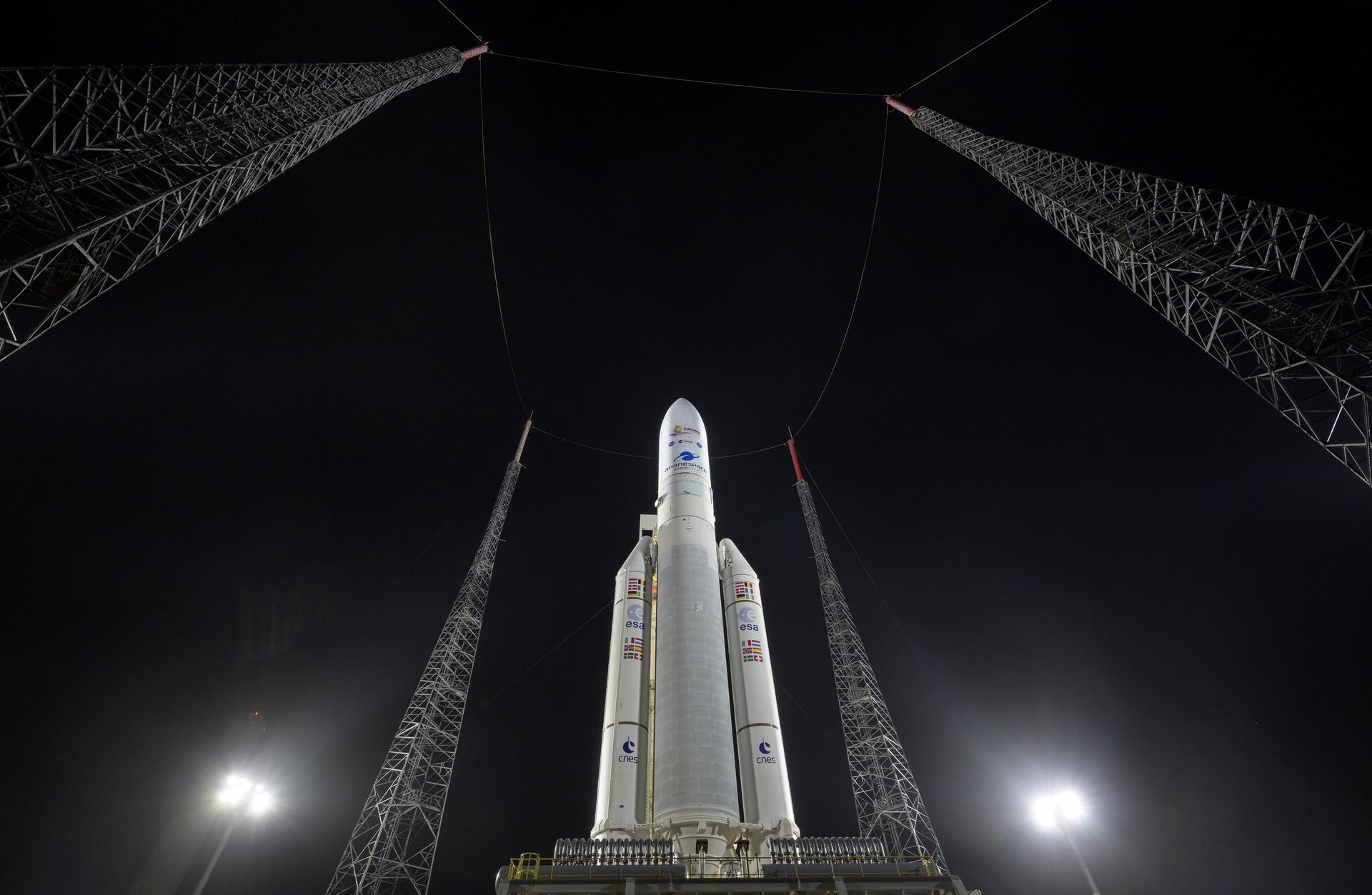
France is the only European nation that has pursued a fully independent space policy for six decades — and the reason Europe launches its own rockets at all. From the Diamant rocket that made France the world's third space power in 1965, to the founding of ESA in 1975, to an Ariane family that has flown well over 250 missions and once held half the global commercial launch market, the French trajectory blends romantic ambition with industrial rigor. This overview traces that arc — the politics, the rockets, the engines, and the equatorial spaceport in French Guiana — using program records and the Launch Library 2 (TheSpaceDevs) launch database.
I. Cultural Roots: Romance, Creativity, and an Independent Spirit
France is a land nourished by both poetry and reason. From the epics of Victor Hugo to the harmonies of Debussy, from Descartes' meditations to Marie Curie's laboratory, the French possess a unique blend of romantic imagination and rigorous creativity. This distinctive national character has not only produced a brilliant artistic and literary heritage but has also nurtured a profound scientific tradition.
Descartes, Lagrange, Laplace, Poincaré – these luminous names form a golden thread through French mathematics and physics. Prestigious institutions such as the École Polytechnique and the Paris Observatory have continuously supplied France with generations of scientific talent. Entering the space age, the French space agency CNES (Centre National d'Études Spatiales) annually funds roughly 30 postdoctoral positions across space science, cosmology, Earth science, and space technology. Elite engineering schools like Polytechnique have established dedicated aerospace chairs in partnership with industry giants such as ArianeGroup and Safran. This deep reservoir of talent forms the bedrock upon which France's space ambitions are built.
Even more deeply ingrained is the French spirit of **independence and sovereignty**. The legacy of General Charles de Gaulle – an independent foreign and defence policy – has shaped every strategic domain, and space is no exception. French commentators have long noted that "an independent defence system is one of the fundamental tenets of Gaullism and a basic guarantee for France's unique role in international affairs." This spirit enabled France to carve out a distinct space path, separate from the American and Soviet superpowers, even amid the Cold War's bipolar tensions.
II. The Path to Independence: From CNES to the World's Third Space Power
On 19 December 1961, President Charles de Gaulle signed the decree establishing CNES. Its mission was clear and resolute: **to make France an independent space power in the context of the Cold War**.
That goal was achieved just four years later. On 26 November 1965, France's indigenous **Diamant** launch vehicle lifted off from the Hammaguir launch site in Algeria, successfully placing the **Astérix** technology test satellite into orbit. France thereby became **the third nation in the world – after the Soviet Union and the United States – to independently develop and launch a satellite**. The Diamant family went on to fly 12 times between 1965 and 1975, with 10 successes, according to the Launch Library 2 database.
The significance of this achievement went far beyond technology – it proclaimed the determination of a medium-sized power to defend its strategic autonomy in the shadow of giants. CNES has upheld this philosophy to this day and is widely recognised as a benchmark for other space agencies, research institutions, and industrial players. France remains **one of the few European countries with a fully independent space policy**, and sustained investment in indigenous innovation is the key to maintaining its status as a global space power.
At the same time, France has demonstrated diplomatic flexibility. It was **the first Western country to cooperate with the Soviet Union in space** – a French satellite was launched by the USSR in 1972, and in 1982 Jean-Loup Chrétien became the first Western European to fly into space, aboard a Soviet Soyuz. This ability to maintain balance and manoeuvre independently between the great powers is a vivid illustration of France's unique approach to space.
de Gaulle founds CNES
—
—
ELDO (launchers) and ESRO (science) created
Diamant orbits Astérix — France is the 3rd space power
—
First French satellite launched by the USSR
—
—
Ariane programme launched at France's initiative
ESA headquarters established in Paris
ELDO + ESRO merge into ESA
—
Ariane 1 maiden flight from Kourou
Chrétien: first Western European in space (Soyuz T-6)
—
—
James Webb telescope launches on Ariane 5
—
Ariane 6 maiden flight (Ariane 62)
III. Uniting Forces: The Birth of ESA and European Integration
Yet even a country like France eventually recognised that **in the extraordinarily costly and scale-driven realm of space, going it alone has limits**.
After the Second World War, a significant number of European scientists emigrated to the United States, causing deep concern in European academic circles. Faced with the overwhelming lead of the two superpowers in space, European nations realised that only by pooling the continent's resources could they secure a place on the world stage.
In 1962, Europe took its first steps by establishing two parallel organisations: the **European Launcher Development Organisation (ELDO)**, focused on rocket development, and the **European Space Research Organisation (ESRO)**, dedicated to space science. ELDO's founding members included Belgium, France, Germany, Italy, the Netherlands, and the United Kingdom; ESRO added Denmark, Spain, Sweden, and Switzerland to that list.
However, this early cooperation was more a loose coordination than a true integration, and results were modest. Between 1968 and 1972, ELDO launched only seven research satellites. Europeans came to understand that **loose collaboration was no match for the systematic competition of the US and the USSR – real institutional integration was essential**.
In 1975, ELDO and ESRO merged to form the **European Space Agency (ESA)**. Ten founding nations signed the ESA Convention, and its headquarters were established in Paris – a testament both to France's central role and to the fact that Europe's space command centre would now be anchored on French soil.
ESA's creation marked the shift from project-based cooperation to full institutional integration. **The underlying logic was simple and compelling: no single European nation could compete with the US, China, or Russia alone; only by uniting all of Europe's strengths could the continent stand out.** That logic remains the fundamental credo of European space endeavours.
IV. Collaborative Efforts: National Contributions and the Franco-German Engine
After ESA's formation, member states played to their respective strengths, creating a finely tuned European space industrial ecosystem.
- **France** took the lead in overall launch vehicle design and core technology development, and CNES remains one of ESA's largest contributors. The Kourou Space Centre in French Guiana serves as Europe's primary launch base.
- **Germany** boasts formidable capabilities in rocket manufacturing, materials science, and satellite platforms, and in recent years has become **ESA's largest financial contributor**.
- **Italy** plays a key role in small launchers (such as the Vega series) and satellite manufacturing.
- **The United Kingdom** contributes significantly to satellite manufacturing and space science.
- **Spain, Belgium, Switzerland, Sweden** and others provide specialised technologies and funding in their respective niches.
At the heart of this system, **France and Germany form ESA's "dual-engine" core**. Together, they account for roughly **40% of ESA's total budget**. At the 2025 ESA Ministerial Council, Germany pledged over €5 billion, France €3.7 billion, with Italy following closely. The two nations are now forcefully extending their role as the "political and economic engine" of Europe into the space domain.
Franco-German space cooperation has deep roots. The Élysée Treaty signed by de Gaulle and Adenauer in 1963 already laid the foundation for scientific and technological collaboration. Today, they work closely not only within ESA but also through bilateral projects, such as the joint MERLIN satellite to measure atmospheric methane. In the development of the Ariane 6 rocket, Germany bore approximately **23% of the development costs**, while France led the development of core technologies, including the engines.
V. Star Launchers and Powerhouse Engines
**The Ariane Series: Europe's Space Backbone**
The **Ariane** family of rockets is the symbol of Europe's independent access to space. In July 1973, **at the initiative of France and with the support of eleven other Western European nations**, ESA formally launched the Ariane programme. After six years of painstaking effort, the **Ariane 1** made its successful maiden flight from the Kourou Space Centre in French Guiana on 24 December 1979.
At its peak, Ariane rockets commanded **half of the global commercial launch market**, securing for Europe an "independent path to space." In July 2024, the **Ariane 6** successfully completed its maiden flight, ushering in a new generation of European heavy-lift launchers. Manufactured by **ArianeGroup**, Ariane 6 aims to reduce launch costs by 30%.
Key members of the family, with flight figures from the Launch Library 2 (TheSpaceDevs) database:
| Vehicle | Maiden flight | Launches | Successful | GTO payload |
|---|---|---|---|---|
| Ariane 1 | 1979 | 11 | 9 | 1,850 kg |
| Ariane 5 G | 1996 | 16 | 13 | 6,900 kg |
| Ariane 5 ECA | 2002 | 73 | 71 | 10,500 kg |
| Ariane 5 ES (ATV) | 2008 | 8 | 8 | — (21 t to LEO) |
| Ariane 62 | 2024 | 5 | 5 | 5,100 kg |
| Ariane 64 | 2026 | 2 | 2 | 12,000 kg |
You can explore these vehicles in our rocket directory — Ariane 1, Ariane 5 ECA, Ariane 62 and Ariane 64 — each with full specifications and launch history.
**Rocket Engines: An Industrial Masterpiece of Franco-German-Italian Collaboration**
The heart of the Ariane rockets – the **Vulcain 2.1** and **Vinci** cryogenic engines – is a paragon of European industrial cooperation.

The **Vulcain 2.1** is the main engine for the Ariane 6 core stage, delivering a vacuum thrust of **135 tonnes**. The **Vinci** is an upper-stage cryogenic engine that represents the latest generation of upper-stage propulsion technology. Both engines are developed primarily by **ArianeGroup**, with critical components supplied by European partners such as Sweden's GKN Aerospace. The Vinci engine was initially built and tested at Vernon, France, with subsequent integration and testing carried out at Lampoldshausen, Germany – **this deep Franco-German collaboration in engine development epitomises the integrated nature of European space efforts**.
**The Kourou Space Centre: Europe's Spaceport on the Equator**
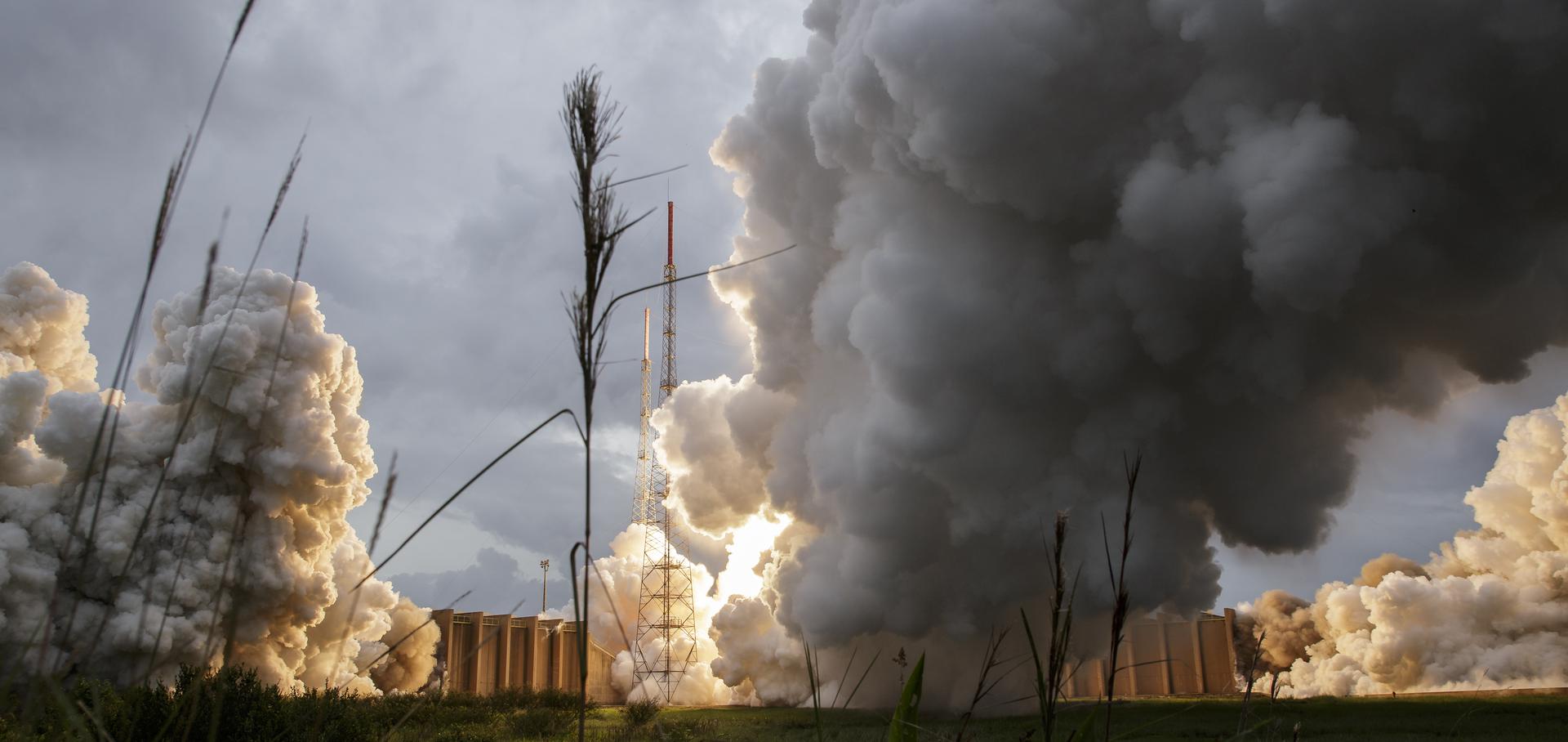
**The Guiana Space Centre in Kourou, French Guiana** is France's sole launch facility and ESA's primary spaceport. Construction began in 1964, and it became partially operational in 1968. Located at latitude 5° north, close to the equator, it offers a unique advantage: rockets launched from here benefit from the Earth's rotational speed, significantly improving efficiency.
From the maiden flight of Ariane 1 in 1979, to the launch of the James Webb Space Telescope in 2021, and the successful first flight of Ariane 6 in 2024 – Kourou has witnessed half a century of European space triumphs. Today, both Ariane 6 and the Vega-C light launcher operate from this base.
VI. Looking Ahead: Reshaping Autonomy in a Changing Landscape
In the face of a profoundly transformed global space landscape – particularly the rise of commercial players like SpaceX – European space is at a crossroads.
**Reusable launchers** have become the most urgent priority. French President Emmanuel Macron has clearly stated that France will push forward the next generation of reusable launch vehicles, focusing on **"reusability, low propulsive cost, and high thrust."** ESA has also launched funding initiatives to encourage European companies to develop and demonstrate reusable booster technologies. CNES has set a target of **2028** for hot-fire testing of a sub-scale prototype of a new full-flow staged-combustion rocket engine, aiming for a super-heavy launcher capable of competing with Starship or New Glenn. For a data-driven look at how far ahead the current leaders are, see our reusable rockets comparison and the booster reuse leaderboard.
**Deep-space exploration** is another major strategic direction. ESA's "Terrae Novae" programme focuses human spaceflight and robotic exploration on three destinations: low Earth orbit, the Moon, and Mars. In France, Venturi Space (based in Toulouse) has announced a €250 million investment in a technology centre dedicated to system design for lunar and Mars missions. Framatome, in partnership with Italian institutions, is developing nuclear fission reactor technology for future lunar settlements. **Putting the first European astronauts on the lunar surface by 2030** has become a stated European goal — an ambition that now races against both Artemis and China's two-rocket lunar plan.
**Strategic autonomy** remains the central thread running through all these plans. France and Germany are pushing for Europe to achieve "strategic autonomy" in space. Macron's government stresses that France is not merely a middle power, but should use the EU platform to amplify its global influence, championing a strategic culture of independence. In 2025, France, Germany, and Italy decided to provide additional support outside the regular ESA framework to secure 42 Ariane 6 launches up to 2030.
Conclusion
From de Gaulle's creation of CNES in 1961 with the ambition of independence, to the Diamant rocket that propelled France into the space-power club in 1965; from the birth of ESA in 1975 to the Ariane rockets' dominance of the commercial launch market – **France's six-decade journey in space is an epic of independence, cooperation, and innovation**.
Romanticism gives the French the imagination to gaze at the stars; reason gives them the creative rigour to reach them; and the spirit of independence guides them in charting their own course between the superpowers. When France pours this national character into its space programme – and when European nations channel their dispersed strengths under the banner of ESA – we see not merely rockets streaking across the sky, but a civilisation's determined stride to safeguard its dignity and sovereignty among the stars.
FAQ
- Q: Why does Europe launch rockets from South America?
- A: The Guiana Space Centre at Kourou, French Guiana, sits at just 5° north latitude. Launching near the equator lets rockets borrow more of Earth's rotational speed, which translates directly into extra payload capacity — especially valuable for geostationary missions. As an overseas department of France, it also gives ESA a sovereign, politically stable launch base.
- Q: Is Ariane 6 reusable like Falcon 9?
- A: No. Ariane 6 is a fully expendable launcher optimised for cost and reliability, targeting a 30% cost reduction over Ariane 5. Europe's reusable efforts are still at the demonstrator stage — CNES targets a hot-fire test of a sub-scale reusable engine prototype around 2028, roughly two decades behind SpaceX's first operational booster recovery.
- Q: How many times has the Ariane family flown?
- A: Counting every variant from Ariane 1 (1979) through the Ariane 6 models flying today, the family has completed well over 250 orbital launches, according to the Launch Library 2 database. Ariane 5 alone flew 117 times with 112 successes across its six variants before retiring in 2023.