
The New Moon Race: Artemis vs. China's Two-Rocket Plan
August 6, 2026
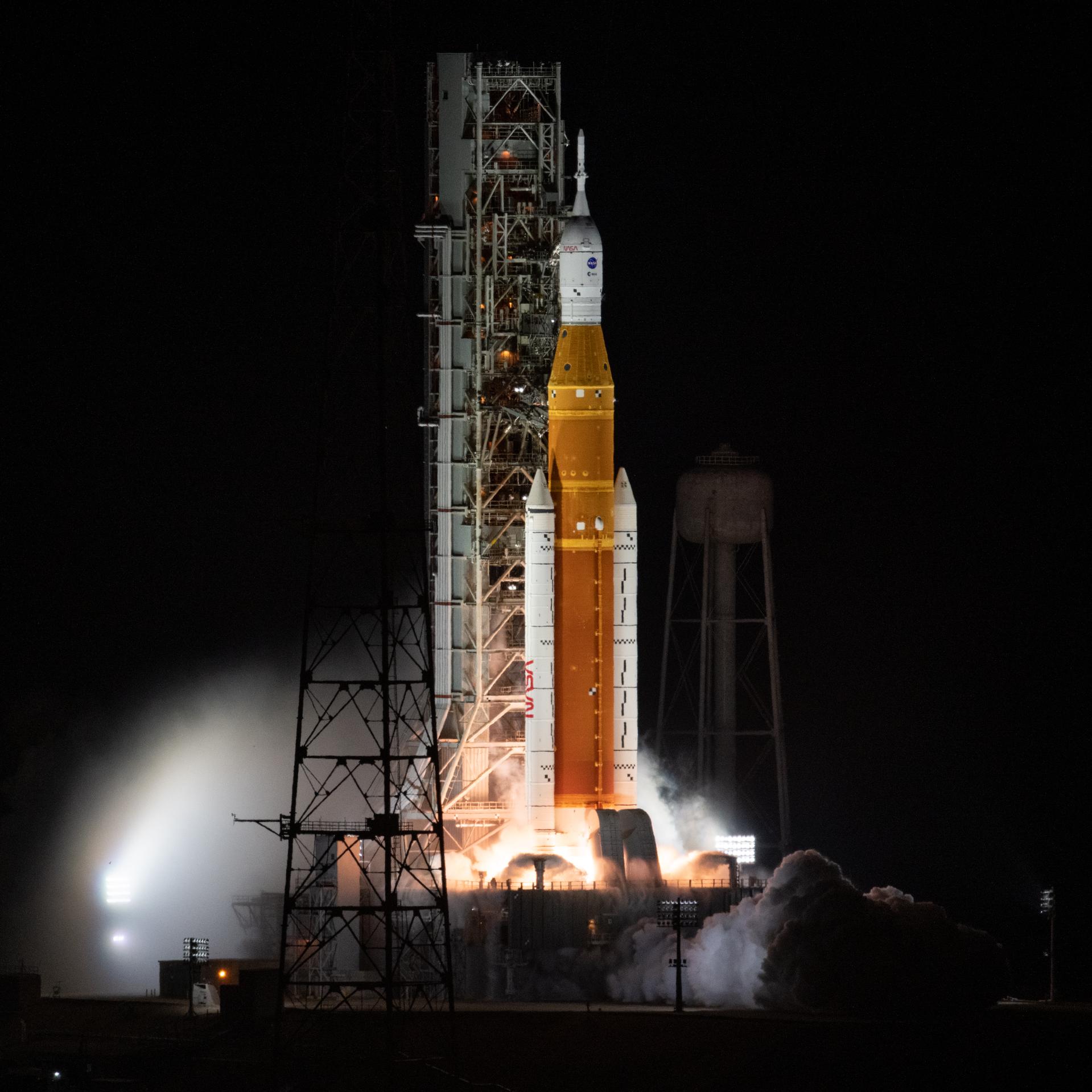
No human has traveled beyond low Earth orbit since Apollo 17 in December 1972 — a gap of 54 years. In April 2026, Artemis II finally broke that streak, carrying four astronauts around the Moon and setting a new distance record of 252,756 miles from Earth. Meanwhile, China has publicly committed to landing its astronauts on the lunar surface before 2030, using not one super-heavy rocket but two Long March 10s launched in quick succession. The scoreboard today reads: United States ahead on crewed milestones, China ahead on methodical, uninterrupted progress. Here is how the two campaigns actually compare.
I. The American Path: A Flyby Triumph, a Fragile Chain
Artemis I (November–December 2022) proved the Space Launch System and the uncrewed Orion spacecraft end to end, including a 11 km/s lunar-return re-entry. Artemis II (launched April 1, 2026) then flew Reid Wiseman, Victor Glover, Christina Koch and Jeremy Hansen on a ten-day free-return loop around the Moon — a flyby, not an orbit — passing within roughly 7,000 km of the surface and validating life support, radiation protection and manual piloting in deep space. It was the first crewed voyage to the Moon since 1972, and it puts the US several years ahead on crewed experience.
The weak link is cost and cadence. A single SLS Block 1 costs over $2 billion, is fully expendable, and flies at most once a year. Each of its four RS-25 engines — legacy Space Shuttle hardware — costs upwards of $100 million and is thrown into the ocean after one use. Congress funds the program, but the architecture cannot sustain a high flight rate, which is exactly what a permanent lunar presence requires.

The lander picture is riskier still. NASA's dual-provider strategy — SpaceX's Starship HLS as lead, Blue Origin's Blue Moon as backup — took a direct hit on May 28, 2026, when a New Glenn rocket exploded during a hotfire test at Launch Complex 36, destroying the transporter-erector at Blue Origin's only New Glenn pad. The company says it will fly again before year-end using a crane-erect workaround, but the uncrewed Blue Moon pathfinder and the Artemis V crewed-lander timeline are now under pressure. That leaves SpaceX's Starship — a vehicle still proving orbital refueling and heat-shield reliability — as the single critical path for Artemis III's crewed landing attempt in the 2027–28 window.

II. The Chinese Path: Robotic Accumulation, Then Two Rockets
China's crewed lunar bid rests on two decades of robotic milestones that each rehearsed one piece of a crewed mission. Chang'e 3 (2013) validated autonomous hazard-avoidance landing. Chang'e 5 (2020) returned 1,731 grams of samples and — more importantly — rehearsed lunar-surface ascent, autonomous rendezvous in lunar orbit, and near-lunar-velocity re-entry. Chang'e 6 (2024) then performed the first far-side sample return in history, bringing back 1,935 grams through an even more complex orbital dance. Chang'e 7 (launching around 2026) will scout south-pole water ice, and Chang'e 8 will test in-situ construction — the opening moves of the planned International Lunar Research Station (ILRS).


For the crewed landing, China deliberately avoided a Saturn V-class gamble. The plan launches a Long March 10 carrying the Mengzhou crew spacecraft, and a second Long March 10 carrying the Lanyue lander, days apart from Wenchang. The two vehicles dock in lunar orbit; the crew transfers, descends, and returns the same way. Each rocket needs only about 27 tonnes of trans-lunar injection capability — a far lower bar than a single 45-tonne-plus throw. The Long March 10 lifts roughly 70 tonnes to LEO from three 5-meter cores burning 21 YF-100K staged-combustion kerolox engines, a design that has already accumulated well over ten thousand seconds of hot-fire testing. Mengzhou itself flew an uncrewed high-speed re-entry prototype in 2020 and has since completed escape-system abort tests.

Milestones in the new Moon race
Still an aspiration — China's first satellite, Dong Fang Hong 1, flies in 1970.
Apollo lands 12 astronauts on the Moon; Apollo 17 closes the era in December 1972.
Chang'e 1 and 2 orbiters map the Moon; Chang'e 3 lands the Yutu rover (2013).
Crewed deep-space hiatus: the Space Shuttle retires in 2011; Orion remains in development.
Chang'e 5 returns 1,731 g of samples, rehearsing ascent and lunar-orbit docking.
Artemis program underway (formalized 2017); SLS completes green-run testing.
Far-side sample mission in preparation.
Artemis I flies an uncrewed Orion around the Moon (Nov–Dec 2022).
Chang'e 6 completes the first far-side sample return (1,935 g).
Starship IFT-5 achieves the first tower catch of a Super Heavy booster (Oct 2024).
Chang'e 7 south-pole scout in launch preparation; Mengzhou abort tests completed.
Artemis II crewed flyby (Apr 1); New Glenn pad explosion (May 28) clouds the Blue Moon timeline.
Long March 10 debut flights; Chang'e 8 in-situ resource demo.
Artemis III crewed landing attempt on SpaceX's Starship HLS.
ILRS: a permanently crewed south-pole research station.
Artemis Base Camp builds toward sustained surface operations.
III. Two Architectures Side by Side
| Element | United States | China |
|---|---|---|
| Heavy launcher | SLS Block 1, fully expendable | 2 × Long March 10, launched days apart |
| LEO payload | ~95 t | ~70 t per rocket |
| Trans-lunar injection | ~27 t (Orion) | ~27 t per launch — the reason two rockets suffice |
| Crew spacecraft | Orion (4 astronauts) | Mengzhou (4–7 astronauts) |
| Lunar lander | Starship HLS (SpaceX); Blue Moon Mk2 (Blue Origin, Artemis V) | Lanyue (state-developed) |
| First-stage propulsion | 4× RS-25 hydrolox + 2 solid boosters | 21× YF-100K kerolox across three cores |
| Cost per crewed attempt | >$2B for the SLS alone | Undisclosed; architecture implies far lower |
| First crewed landing target | 2027–28 (Artemis III) | Before 2030 |
IV. Analysis: Innovation Speed vs. Systemic Persistence
America's bet is commercial speed. Starship's iteration — booster catches, in-orbit refueling demos — is genuinely unprecedented, and if it works, it collapses the cost of lunar logistics by an order of magnitude. But the chain is fragile: an expendable $2B rocket built by traditional contractors, a lander outsourced entirely to commercial firms, and a backup lander whose only launch pad was just blown up. Every link must hold, and the schedule is hostage to any single failure.
China's bet is systemic persistence — but it has its own dilemma. The super-heavy Long March 9 was redesigned mid-course after Starship proved that clustering many smaller methalox engines with full reuse beats a classic Saturn V-style layout; the 500-tonne YF-130 kerolox engine was deprioritized, and first flight slipped to around 2035. So China walks on two legs: Long March 10 for the first landing and an early Earth–Moon transport line, Long March 9 for eventual base construction. The risk is hesitation; the strength is that no single explosion can stop the program. For the commercial engine race underneath all this, see our map of China's commercial rockets, and track both countries' actual launch cadence on our launch schedule and statistics pages.
The most honest scoreboard is this: the US owns the crewed-experience lead and the boldest technology; China owns momentum, redundancy, and the only funded plan whose ultimate goal is not a visit but a permanent base. The winner will be decided less by any single launch than by who best integrates industry, money, and patience over the next decade. Launch figures in this article are drawn from Launch Library 2 (TheSpaceDevs) data served from the SpaceRocket database; program details from NASA and CMSA public statements.
FAQ
- Q: Who is currently ahead in the new Moon race?
- A: The United States, on crewed milestones — Artemis II flew four astronauts around the Moon in April 2026. China has never flown crewed beyond low Earth orbit but leads in robotic lunar firsts, including the only far-side sample return (Chang'e 6, 2024).
- Q: Why does China need two rockets for one Moon landing?
- A: Splitting the crew ship (Mengzhou) and the lander (Lanyue) across two Long March 10s drops the trans-lunar payload requirement to about 27 tonnes per launch — achievable without a Saturn V-class rocket. The two vehicles rendezvous and dock in lunar orbit.
- Q: Is the SLS rocket reusable?
- A: No. SLS is fully expendable — its four RS-25 engines, costing over $100 million each, are discarded on every flight. That is the core criticism of the Artemis architecture and the reason NASA depends on SpaceX's reusable Starship for the lander.
- Q: When will astronauts walk on the Moon again?
- A: NASA targets Artemis III in the 2027–28 window using SpaceX's Starship HLS, though the date has slipped repeatedly and depends on orbital refueling demos. China targets a crewed landing before 2030 using two Long March 10 launches.