
India vs China in Space: Rockets, Missions, and Two Different Strategies (2026)
August 5, 2026
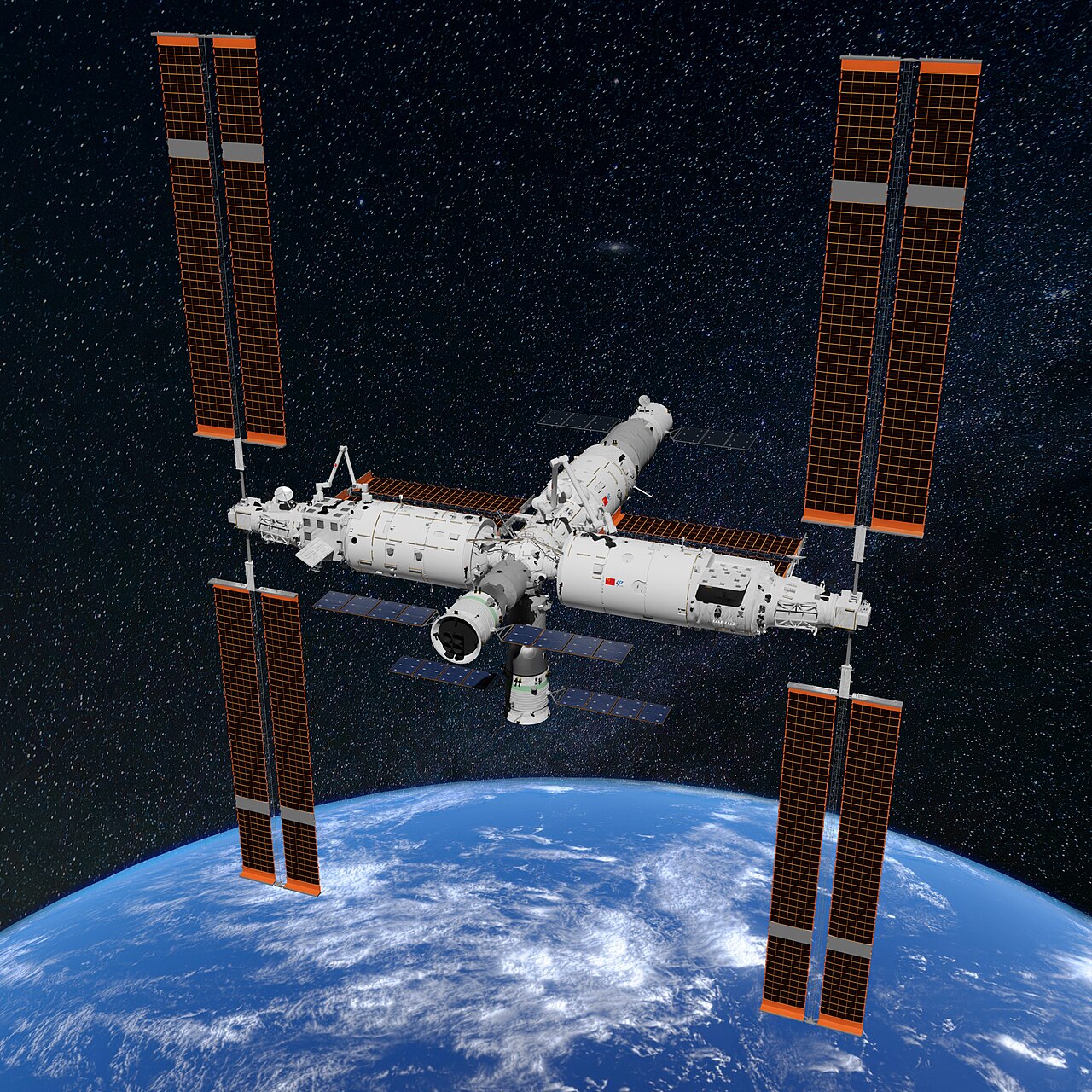
In the mirror of the 21st-century space race, the United States is the far-ahead leader and Russia the veteran coasting on Soviet-era hardware. On the Asian mainland, however, China and India — longtime neighbours and rivals — embody two opposite approaches to building a space program. China runs a fully state-funded, systemically complete effort: its own heavy-lift rockets, a permanently crewed space station, and a string of planetary firsts. India, operating on a fraction of the budget, assembles ISRO missions from proven international components and engineers around capability gaps to deliver eye-catching 'firsts' — a Mars orbiter, a south-pole Moon landing — at Hollywood-budget scale. This article compares the two programs across rockets, flagship missions, military implications, and strategy, on a side-by-side timeline.
I. Different Starts
China's space program traces back to Qian Xuesen, who returned to Beijing from the United States in 1955 and led early rocket research with hand-cranked calculators and improvised workshops. After the Soviet Union withdrew its advisors in 1960, China developed rocketry in isolation. The Long March 1 put the 173 kg Dongfanghong-1 satellite into orbit in April 1970. India's origin story is equally modest: in 1963 its first sounding rocket was carried by bicycle to a rural launch site in Kerala, with a cow shed serving as the launch pad. ISRO grew into a uniquely structured agency that reports directly to the Prime Minister, and its early satellites were almost entirely practical — remote sensing, communications, and educational broadcasting.
Road to orbit and beyond
Qian Xuesen returns to China (1955); the Long March program begins under a state-directed effort.
ISRO's predecessor launches its first sounding rocket from Kerala, carried to the pad by bicycle (1963).
Dongfanghong-1 (173 kg) reaches orbit aboard the Long March 1.
Still a decade away from orbital capability; SLV-3's first launch attempt is in 1979.
Long March 2C and 3 mature; China becomes a regular orbital launcher and later a crewed-program aspirant.
SLV-3 reaches orbit in 1980; PSLV (1980s-90s) becomes India's workhorse.
Chang'e 1 orbits the Moon (2007); Chang'e 3 soft-lands with Yutu (2013).
Chandrayaan-1 orbits the Moon (2008); Mangalyaan (MOM) launches for Mars (2013).
Chang'e 4 lands on the lunar far side (2019); Chang'e 5 returns lunar samples (2020).
Chandrayaan-2's lander crashes near the lunar surface (2019).
Tiangong space station enters full operation with three crew; China confirms a crewed Moon-landing target before 2030.
Chandrayaan-3 soft-lands at the lunar south pole — a world first; Aditya-L1 solar probe launches; Gaganyaan crew-escape test fires.
Chang'e 6 returns far-side lunar samples (2024); Long March 10 and reusable commercial rockets progress.
ISRO prepares Gaganyaan crewed flight; LVM3 and reusable-rocket studies continue on a much smaller budget.

II. The Rockets: Muscle vs Gymnastics
The single clearest gap between the two programs is launch capability. China's Long March 5 has a 5-meter core with two YF-77 hydrogen-oxygen engines plus YF-100 kerosene engines in its boosters, and delivers roughly 14 tonnes to geostationary transfer orbit. China's next heavy-lift rocket, the Long March 9, is planned for about 150 tonnes to low Earth orbit. India's most capable vehicle, the LVM3 (formerly GSLV Mk III), stands 43.5 m tall, lifts about 640 tonnes, and delivers roughly 10 tonnes to LEO and 4 tonnes to GTO. Its core stage is powered by two Vikas engines — licensed versions of the French Viking engine from the 1970s — and its upper stage by the domestic CE-20 hydrogen engine. India's own large-engine development (the 60-tonne CE-60) remains years from flight.
| Metric | China (Long March 5) | India (LVM3) |
|---|---|---|
| Height | ~57 m | 43.5 m |
| Launch mass | ~870 t | ~640 t |
| LEO payload | ~25 t | ~10 t |
| GTO payload | ~14 t | ~4 t |
| Core engines | YF-77 hydrolox + YF-100 kerolox | 2× Vikas (Viking-derived, hypergolic) |
| Upper stage | Hydrolox | CE-20 hydrolox |
| Status | Operational; LM-9 (~150 t LEO) in development | Operational; CE-60 in development |

III. Three Missions, Two Philosophies
Three flagship missions illustrate how each program achieves its results. First, Mars: India's Mangalyaan (2013) carried only 15 kg of science payload, launched on the smaller PSLV, and spent nearly a month raising its Earth orbit through seven burns before escaping for Mars — a clever workaround for having no heavy launcher. It cost about $74 million, less than the film Gravity. China instead flew its 8-tonne Tianwen-1 directly to Mars on a Long March 5, completing an orbit, land and rover mission in one shot. Second, the Moon: Chandrayaan-3 (2023) made India the first country to land near the lunar south pole, but its lander used four fixed-thrust engines switched on and off to control descent rather than a deep-throttling engine — after Chandrayaan-2's crash in 2019 was attributed to control software. China's Chang'e missions have landed twice and returned samples from both the near and far side. Third, crewed flight: India's Gaganyaan escape-system test (2023) validated launch-abort hardware but at suborbital energy levels far from real re-entry. China has flown its own crews since 2003 and operates the Tiangong station.
IV. The Military Dimension
Launch vehicles and ballistic missiles share the same solid-propulsion and guidance technologies, and both countries have crossed that line. India's Agni missile family is derived from its solid-booster experience; the Agni-5, tested since 2012, covers roughly 5,000-5,500 km. India's 2019 anti-satellite test (Mission Shakti) demonstrated kinetic interception at about 300 km altitude but drew criticism for generating debris. China fields a comparable, larger ballistic-missile and ASAT capability. Both programs therefore carry strategic weight well beyond science — one reason the US has courted India (via the Quad and the Artemis Accords) as a hedge in the Indo-Pacific, while continuing to view China's space capabilities with caution.

V. Different Orbits, Different Destinations
Strategically, the two programs diverge. India's model is surgical: a small budget (roughly $2 billion a year, a fraction of NASA's) spent on a few signature achievements, assembled from bought-in components, that maximize public and international impact per dollar. Its long-term ceiling is the problem — deep-space stations, heavy reusable boosters, and crewed missions to the Moon or Mars require sustained investment in core physics, materials, and engine development that component assembly cannot shortcut. China's model is horizontal and systematic: an estimated $10-15 billion annual budget spread across a complete national capability — new Long March generations, the Tiangong station, lunar and planetary programs, Beidou navigation, and a domestic satellite-constellation plan. It has chosen the slower, more expensive road precisely so it cannot be cut off from critical technology. Both deserve respect: India's ingenuity on a shoestring, and China's patient construction of a full space ecosystem. But on the trajectory that decides the long game — heavy lift, reuse, and deep-space infrastructure — China is building the highway while India is perfecting the shortcut. For a closer look at China's launch fleet, see the complete map of China's commercial rockets; for ISRO's launch-vehicle family, browse the rocket directory.
FAQ
- Q: Which is more advanced, India's or China's space program?
- A: China's program is larger and more complete — heavier launch vehicles, a permanently crewed space station, and successful lunar sample returns from both near and far side. India has achieved notable firsts (Mars arrival, south-pole lunar landing) on a far smaller budget, but lacks China's heavy-lift and crewed-flight capabilities.
- Q: How does India's LVM3 compare to China's Long March 5?
- A: The Long March 5 lifts roughly 25 tonnes to LEO and 14 tonnes to GTO, versus about 10 tonnes and 4 tonnes for India's LVM3. China's core uses domestically developed hydrolox and kerolox engines; India's LVM3 core still uses licensed Vikas engines derived from the French Viking, with a domestic CE-20 upper stage.
- Q: Has India landed on the Moon?
- A: Yes — Chandrayaan-3 made a soft landing near the lunar south pole in August 2023, making India the fourth country to soft-land on the Moon and the first at the south-pole region. China has also landed softly (Chang'e 3, 2013) and remains the only country to have returned samples from both the lunar near side and far side.
- Q: What is Gaganyaan and when will India launch astronauts?
- A: Gaganyaan is India's crewed spaceflight program. It has completed pad-abort and crew-escape system tests; ISRO targets its first crewed orbital flight around 2025-2026.