
Blue Origin’s New Glenn vs. SpaceX’s Starship: A Comprehensive Comparison of Two Super Heavy Reusable Rockets
August 10, 2026
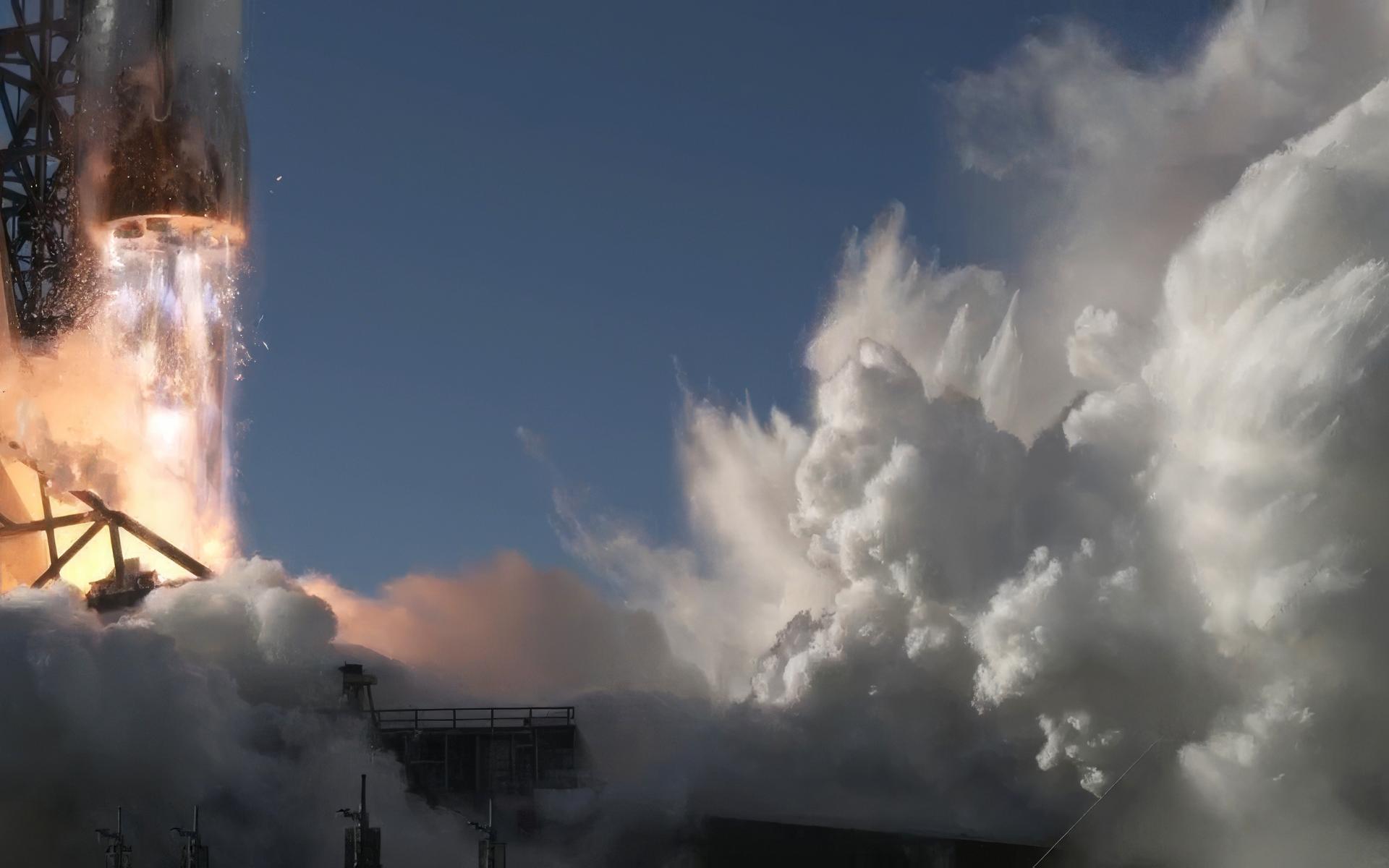
As the second half of the 2020s unfolds, two distinct technological pathways for super heavy‑lift launch vehicles are taking shape in direct contrast with one another. On one side stands Jeff Bezos’s Blue Origin, building New Glenn with a methodical, step‑by‑step approach; on the other, Elon Musk’s SpaceX is forging Starship through rapid iteration and extreme scale. Both are reusable heavy‑to‑super‑heavy rockets, yet they differ markedly in design philosophy, technical specifications, mission objectives and business models.
This article draws on publicly available information as of August 2026 to provide a deep, objective comparison of New Glenn and Starship across multiple dimensions — basic parameters, propulsion, recovery methods, cost structure, risk profiles, technical difficulty and mission positioning. A personal perspective on the talent foundation underpinning U.S. space leadership and the evolving gap with China is offered at the end.
—
First full-stack Starship/Super Heavy test flight
—
IFT-5: first tower catch of a Super Heavy booster
Maiden orbital flight; first-stage soft-landing attempt fails
—
1. Basic Parameter Comparison
| Parameter | New Glenn | Starship |
|---|---|---|
| **Height** | 98 m | ~120–125 m (with Super Heavy booster) |
| **Diameter** | 7 m (first stage) | 9 m (Starship & Super Heavy) |
| **Liftoff mass** | ~1,750 t | ~5,000 t |
| **Liftoff thrust** | ~17.1 MN (7 × BE-4) | ~75 MN (33 × Raptor 2) |
| **Payload to LEO** | ~45 t (first stage recovered) | 100–150 t (fully reusable); >200 t (expendable) |
| **Payload to GTO** | ~13 t (first stage recovered) | No precise figure; scaled estimate ~30–50 t |
| **Stages** | 2 | 2 |
| **Engine cycle** | BE-4: oxygen‑rich staged combustion, methalox | Raptor 2/3: full‑flow staged combustion, methalox |
| **Propellant** | LNG / LOX | Liquid methane / LOX |
| **Reusability** | First stage vertical landing & reuse | Super Heavy booster tower catch; Starship upper stage re‑entry & recovery |
| **First flight** | January 2025 (orbital test) | April 2023 (first full‑stack test) |
| **Current status** | First stage recovery being validated; commercial operations not yet commenced | Flight test iteration ongoing; partial recovery achieved; no commercial missions yet |
2. New Glenn: Blue Origin’s Methodical Heavy‑Lifter
Design Philosophy and Configuration
New Glenn is a two‑stage vehicle, standing 98 m tall with a first stage 7 m in diameter housing seven BE‑4 liquid‑methane/liquid‑oxygen engines. The second stage, which is expendable, uses BE‑3U hydrolox engines. The design follows Blue Origin’s trademark “step‑by‑step” engineering philosophy: first prove vertical landing and reuse with New Shepard, then scale the technology up to an orbital class.
New Glenn’s payload fairing is 7 m in diameter, one of the largest of any currently operational rocket, capable of accommodating large commercial and military satellites or deploying dozens of small‑to‑medium LEO satellites in a single launch. The first stage performs a vertical landing using grid fins and retro‑propulsion from the centre engines, targeting recovery on a dedicated autonomous drone ship named *Jacklyn*. The landing legs deploy outwards in a splayed configuration.
Engine System
The BE‑4 engine is the heart of New Glenn and the first large‑thrust oxygen‑rich staged‑combustion methalox engine developed in the United States in decades. Key parameters:
- Sea‑level thrust: ~2,450 kN (250‑tonne class)
- Cycle: oxygen‑rich staged combustion
- Chamber pressure: ~13.4 MPa
- Specific impulse: ~310 s (sea level), ~340 s (vacuum)
BE‑4 faced turbopump and combustion‑stability challenges during development, leading to multiple delays of the New Glenn debut. The engine also powers ULA’s Vulcan Centaur, so its maturity is closely watched industry‑wide.
Recovery Method
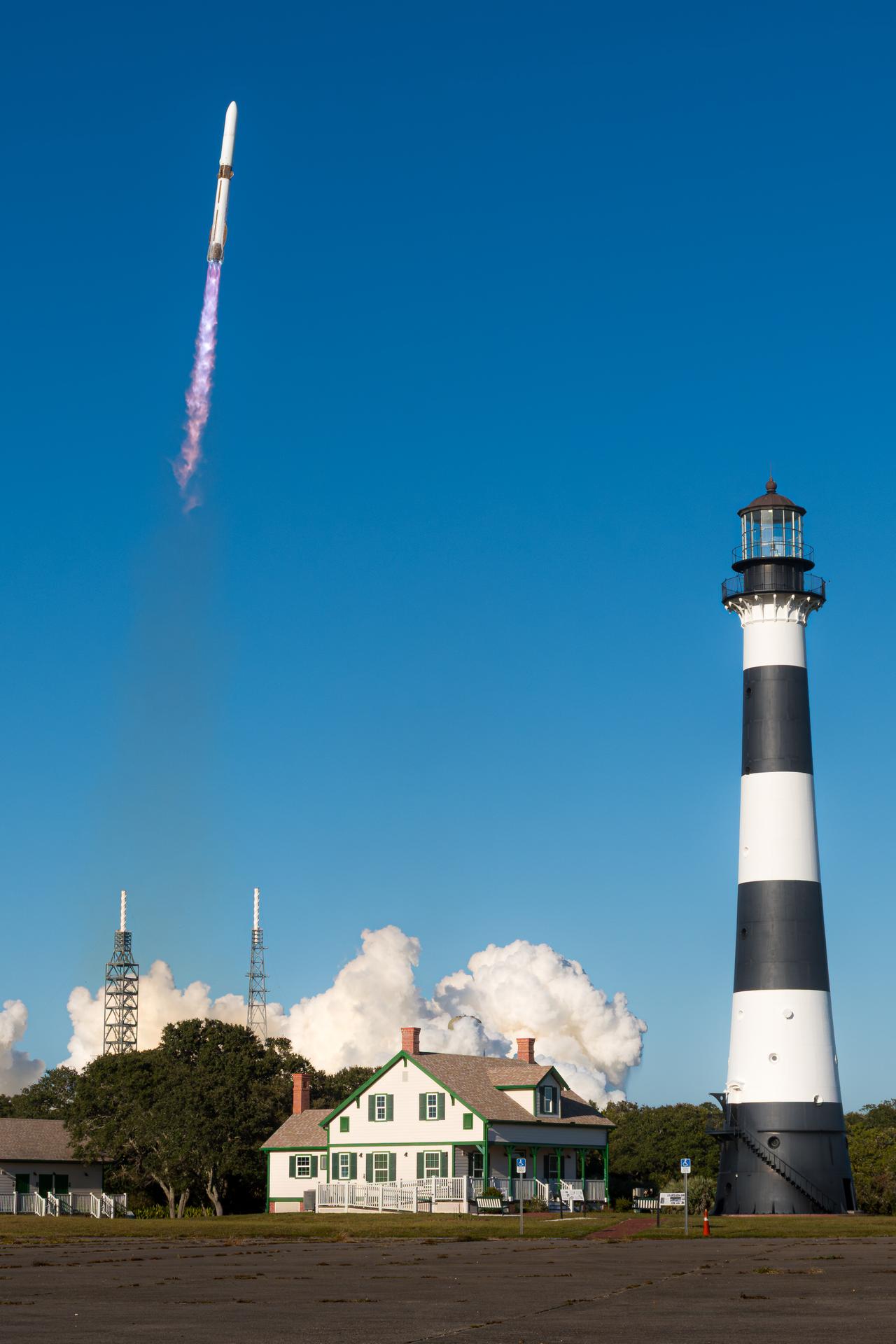
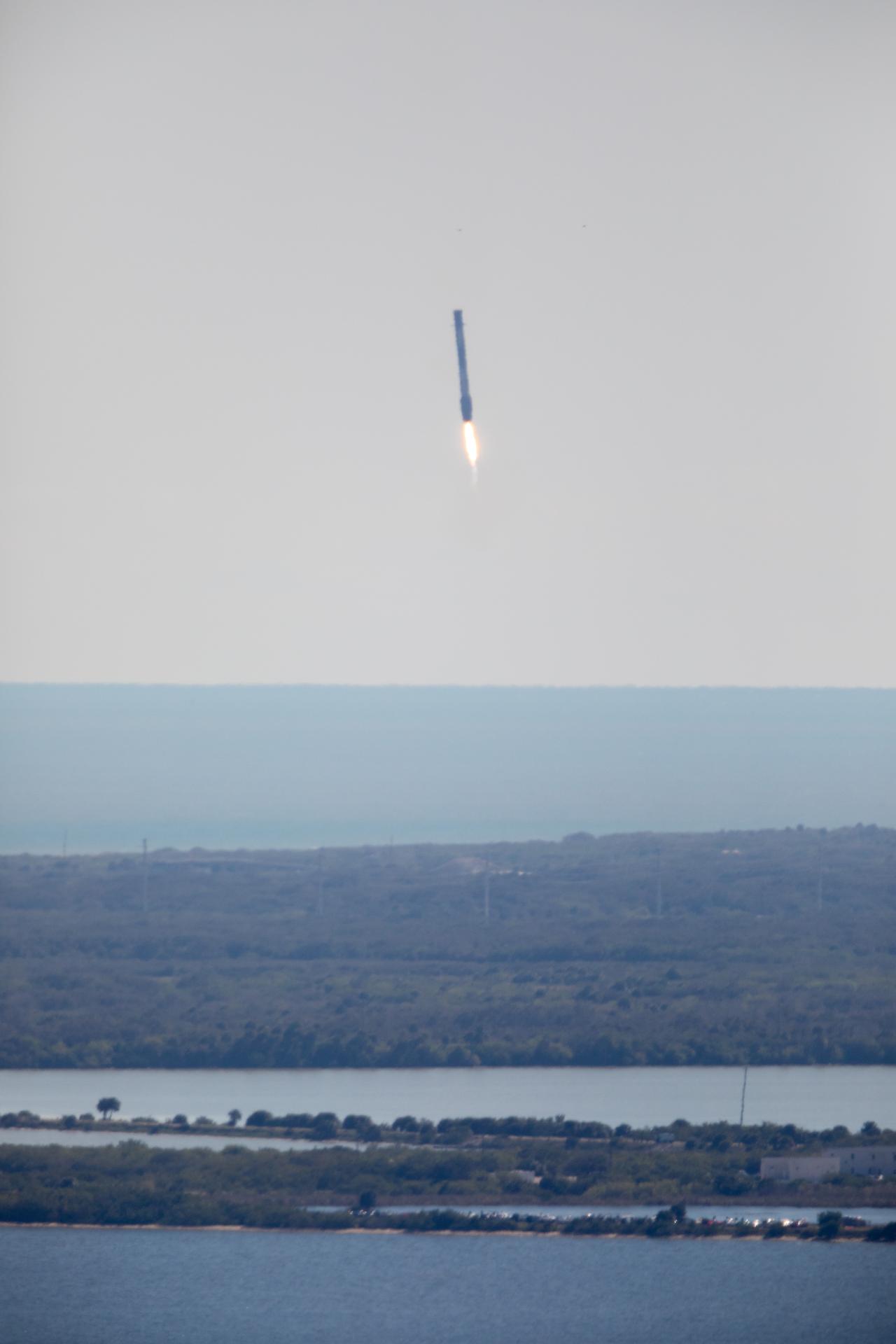
New Glenn’s first‑stage recovery is analogous to that of Falcon 9: after re‑entry deceleration using grid fins, a subset of engines performs a landing burn for a vertical touchdown on the drone ship. Because the stage is substantially larger and heavier than Falcon 9, managing inertia and thrust control during landing is more demanding. On its maiden flight in January 2025, a control‑system anomaly caused the first stage to fail its soft‑landing attempt and crash into the Atlantic; recovery validation continues.
Mission Capability and Cost
New Glenn is aimed at commercial comsat launches, large government payloads (e.g. national security missions), and massive deployment of Amazon’s Project Kuiper constellation. With a 7‑m fairing and roughly 45 t to LEO, it can carry dozens of satellites at once. Industry estimates place a single launch cost at $150–200 million, with a reuse target around $100 million. Once first‑stage recovery matures, the per‑kilogram cost to LEO could approach $6,000–8,000.
3. Starship: The Radical, Fully‑Reusable Disruptor
Design Philosophy and Configuration
Starship consists of the Super Heavy booster and the Starship upper stage; the full stack stands approximately 120–125 m tall with a diameter of 9 m, making it the largest rocket ever built by volume. The design philosophy is “rapid reuse at scale”: the entire vehicle is intended to be turned around quickly and flown repeatedly, much like an aircraft.
The Super Heavy booster mounts 33 Raptor engines, while the Starship upper stage carries six (three sea‑level optimised, three vacuum optimised). The vehicle is built from stainless steel, trading a small amount of structural mass efficiency for low material cost, high‑temperature resilience and rapid manufacturing. Mission profiles range from LEO resupply and heavy deep‑space probe launches to serving as NASA’s Artemis lunar lander, with the ultimate goal of transporting large numbers of people and cargo to Mars.
Engine System
Raptor is a revolutionary full‑flow staged‑combustion engine:
- Sea‑level thrust: ~2,256 kN (Raptor 2)
- Cycle: full‑flow staged combustion
- Chamber pressure: ~30 MPa (300 bar)
- Specific impulse: ~330 s (sea level), ~380 s (vacuum)
- Negligible coking, ideal for reuse
Raptor has evolved through multiple rapid generations, with thrust increasing from ~185‑tonne to ~230‑tonne class. Its cumulative test and flight time far exceeds that of BE‑4.
Recovery Method
Starship employs tower‑catch recovery: the Super Heavy booster, after separation, returns to the launch site and is caught directly by the tower’s mechanical “chopstick” arms while hovering, eliminating landing legs. The Starship upper stage, after re‑entry protected by heat‑shield tiles, transitions to a vertical attitude and is eventually caught by the same tower arms, or initially performs a soft splashdown at sea. In October 2024, the IFT‑5 mission successfully achieved the first tower catch of a Super Heavy booster.
Mission Capability and Cost
Starship’s fully‑reusable LEO payload is roughly 100–150 tonnes, far exceeding New Glenn. A single launch could deliver an entire space‑station module or tens of tonnes of cargo, and with in‑orbit refuelling can transport payloads to the Moon and Mars. SpaceX has publicly targeted a per‑launch cost as low as a few million dollars; more realistic near‑term estimates are in the $10–50 million range. If full reusability and high‑cadence operations materialise, the per‑kilogram cost to orbit could drop below $500, comparable to intercontinental air freight. For now, the system remains in a costly test phase.
4. Integrated Comparison: Recovery, Risk and Technical Difficulty
Recovery Methods
- **New Glenn**: Retro‑propulsion plus landing legs on a large drone ship. Good inheritance from Falcon 9, but faces challenges in managing heavy‑stage landing impact and maritime platform adaptation.
- **Starship**: Tower catch without landing legs, offering a minimal weight penalty, but demanding centimetre‑level precision dynamic rendezvous, placing extreme demands on control algorithms, sensor reliability and tower response speed.
Cost and Reuse Efficiency
New Glenn’s reuse target mirrors Falcon 9, with 10–25 flights per booster and marginal cost well below that of expendable heavy rockets. Starship pursues faster turnaround and full‑vehicle reuse. If its goals are met, Starship’s economics will be difficult for New Glenn to match; if Starship’s timeline slips, New Glenn can retain an advantage in specific markets with its 7‑m fairing and 45‑t capability.
Technical Risk
- **New Glenn**: Risks are concentrated in BE‑4 engine reliability and first‑stage return control. These are known challenges for orbital rocket recovery, though scaling to a 7‑m diameter introduces new issues.
- **Starship**: The risk surface is broader: multi‑engine stability (33 engines), stainless‑steel cryogenic/high‑temperature coupling, heat‑shield tile reliability, and the maintenance regime for full reuse. The technical leap is enormous, failure consequences are more severe, and the timeline is more uncertain.
Mission Flexibility
New Glenn is oriented toward established space missions and fits existing commercial and government demand. Starship targets disruptive missions, requiring a redesign of payload concepts, ground support and mission planning — high adaptation cost for customers. In the short term, New Glenn has stronger market alignment; in the long run, a mature Starship will redefine the economics of launch.
5. Personal Perspective: Talent as the Bedrock, and Reflections on the U.S.–China Gap
The rivalry between New Glenn and Starship is, on the surface, a contest of technical paths between two companies. But what underpins it is a fundamental advantage that American spaceflight has built over decades and that remains extremely difficult to replicate: talent.
The collective explosion of U.S. commercial space — from Blue Origin and SpaceX to ULA and Rocket Lab — is no accident. Its foundation is the enormous knowledge base and human network that NASA has constructed since the Apollo era. NASA has not only directly cultivated tens of thousands of engineers, scientists and programme managers; through deep ties with universities, sustained basic‑research funding and an open system of technical reports, it has created a self‑renewing space‑talent ecosystem. The Raptor engine team at SpaceX includes numerous veterans from NASA’s Marshall Space Flight Center and Stennis Space Center. Blue Origin’s BE‑4 likewise benefited from early work on oxygen‑rich staged combustion at the U.S. Air Force Research Laboratory and NASA. Even the “rapid iteration, failure‑tolerant” culture that SpaceX champions did not emerge in a vacuum — it grew in soil where large numbers of highly experienced people could flow directly out of NASA, Boeing, Lockheed Martin and other institutions.
Looking at China’s space programme, the achievements of the Long March family, the Chang’e lunar missions and the Tiangong space station are remarkable. Yet one must acknowledge that China still lags significantly in the commercialisation of reusable rockets, in the management of large‑scale systems engineering, and in cross‑disciplinary innovation. Most of China’s space talent is concentrated in state‑owned research institutes, where a culture of “no failure permitted” and institutional caution largely suppresses the kind of radical innovation — learning by blowing things up — that SpaceX has embraced. Private space companies in China have grown rapidly in recent years, but their scale and talent pool remain a fraction of what Blue Origin or SpaceX can draw upon.
Will the gap narrow or widen? There is no simple answer. On the positive side, China produces the world’s largest cohort of STEM graduates, state investment in space continues to rise, and steps are being taken — university–industry partnerships, overseas talent recruitment, commercial space pilot programmes — to improve the innovation ecosystem. The recent maritime net‑capture test of the Long March 10B and the vertical‑landing experiments by private firms are encouraging signals. However, America’s talent ecosystem has systemic strengths: not only top‑flight engineers, but also a mature venture‑capital mechanism, a flexible labour market, and a societal tolerance for failure. So long as that machinery keeps running, it will continuously transform scientific discoveries into engineering reality and rapidly re‑organise after each setback.
In the short term, the absolute gap between China and the United States in reusable super heavy‑lift rockets may narrow — as China achieves its own breakthroughs and its talent matures, some metrics will gradually catch up. But in terms of systemic innovation capacity, the speed at which frontier technology is translated into practice, and the overall vitality of the commercial space ecosystem, there is even a risk that the gap could widen. Behind Starship and New Glenn lies a century‑deep reservoir of American space talent being unleashed in concentrated form in the 21st century. For China to truly draw level or even take the lead, it is not enough to rely on state funding and the success of one or two rocket models. It must fundamentally cultivate a space ecosystem that tolerates failure, incentivises innovation and allows talent to flow freely. That road is far longer — and far more decisive — than simply building a recoverable rocket.
6. Conclusion
New Glenn and Starship embody, respectively, the “evolutionary” and “revolutionary” paths within the space industry. New Glenn scales up the Falcon‑9‑validated recovery logic to the heavy‑lift class, seeking a balance between reliability and cost to serve a large, tangible commercial launch market. Starship is a complete structural break, using full reusability and hundred‑tonne payload capacity to upend the traditional cost curve — but its complexity and radical nature also carry enormous engineering and business risk.
Behind their competition lies the deep foundation of American space talent. From NASA’s open accumulation of knowledge to the synergy among universities, capital and private enterprise, this system is the true cornerstone of sustained U.S. space leadership. China is catching up with determination; whether the gap narrows or widens in the coming years will depend on whether deeper changes can be achieved in the institutional, cultural and ecosystem dimensions. The coming decade will be the period in which the answer begins to emerge.