
YF-100 and Lanyan: China Joins the Kerolox–Methalox Race
August 10, 2026
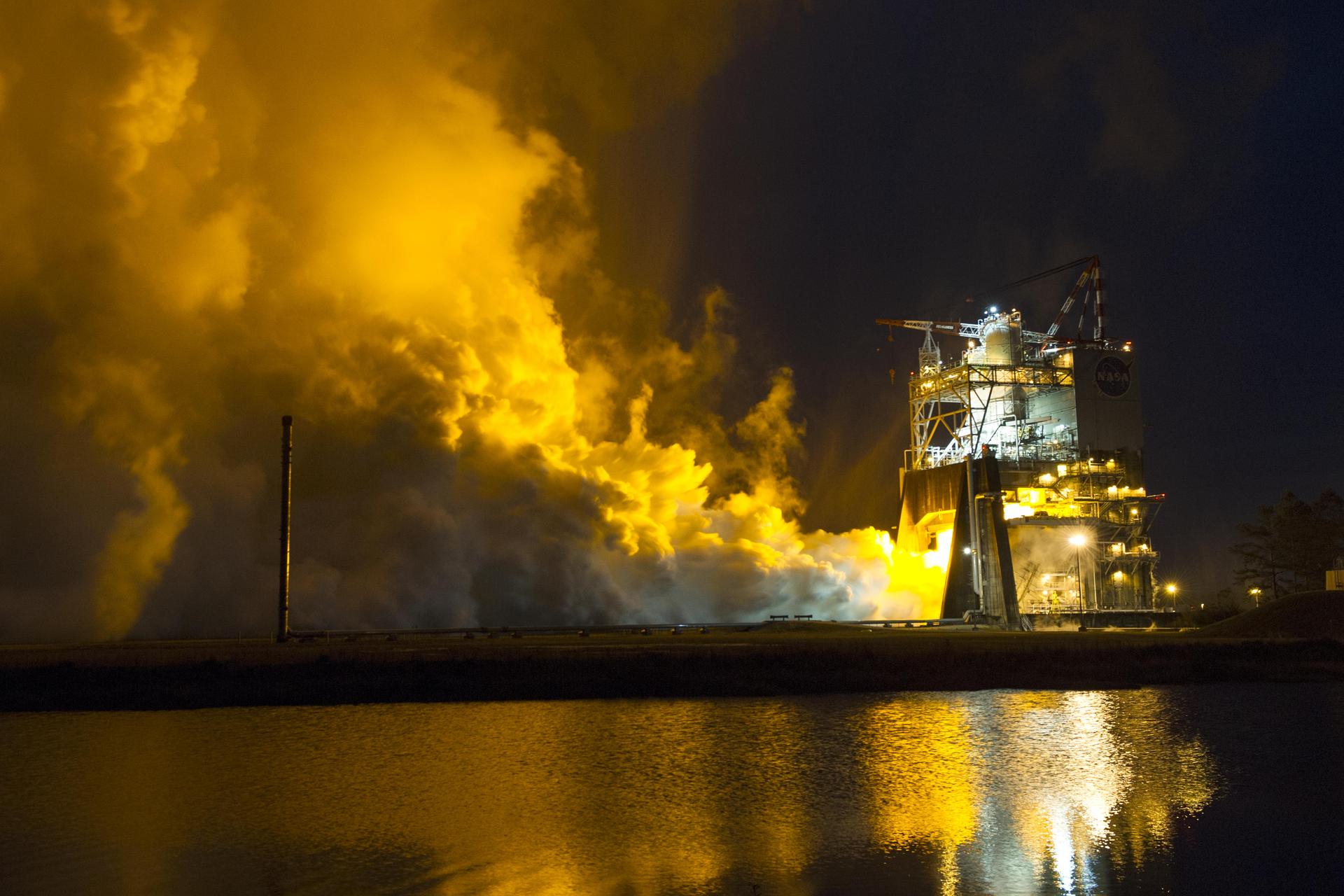
Every spacefaring nation eventually has to answer the same two questions: which propellant combination should power its workhorse rockets, and which engine cycle should extract the most from that propellant. China is currently answering both at once. On the state side, the YF-100 kerolox family has become the foundation of the new-generation Long March fleet. On the commercial side, LandSpace's 220-tonne-class Lanyan ("Blue Flame") engine completed a full-system, long-duration hot-fire campaign built around full-flow staged combustion — one of the most demanding engine cycles ever attempted. This installment of Rocket Engine Evolution traces both threads, and uses SpaceRocket's launch database to show what the fleet behind these engines is actually doing.
I. From the NK-33 Story to the YF-100: Why Kerolox Matters
The kerolox debate is older than most of today's rocket companies. In the early 1960s, Sergei Korolev's OKB-1 laid out the N-1 lunar rocket with an initial target of about 75 tonnes to low Earth orbit, and insisted on liquid oxygen and kerosene — a combination validated for a decade by the R-7 family and its RD-107 engines. Valentin Glushko's OKB-456 refused to build a large kerolox engine, arguing instead for storable N2O4/UDMH propellants despite their lower specific impulse (roughly 280 seconds versus about 330 seconds for kerolox, in the figures recorded from that dispute). The work migrated in 1961 to the Kuznetsov bureau, OKB-276 — an aircraft-engine house with turboprop lineage — which produced the NK-15 and later the NK-33: oxygen-rich staged combustion engines with an annular preburner borrowed from aircraft practice, a dry mass of about 1,222 kg, and a thrust-to-weight ratio near 137:1. The episode fixed kerolox staged combustion as the benchmark every later program would be measured against.
China's answer to that benchmark is the YF-100 family, documented by Encyclopedia Astronautica as a LOX/kerosene engine. The propellant combination that split the Soviet lunar program became, decades later, the backbone of China's new-generation launchers — the machines that are gradually displacing the hypergolic fleet that carried the Chinese program through its first four decades. SpaceRocket's launch database makes that transition visible in launch counts rather than in program announcements.
II. The Legacy Fleet: What 472 Launches of Heritage Hardware Look Like
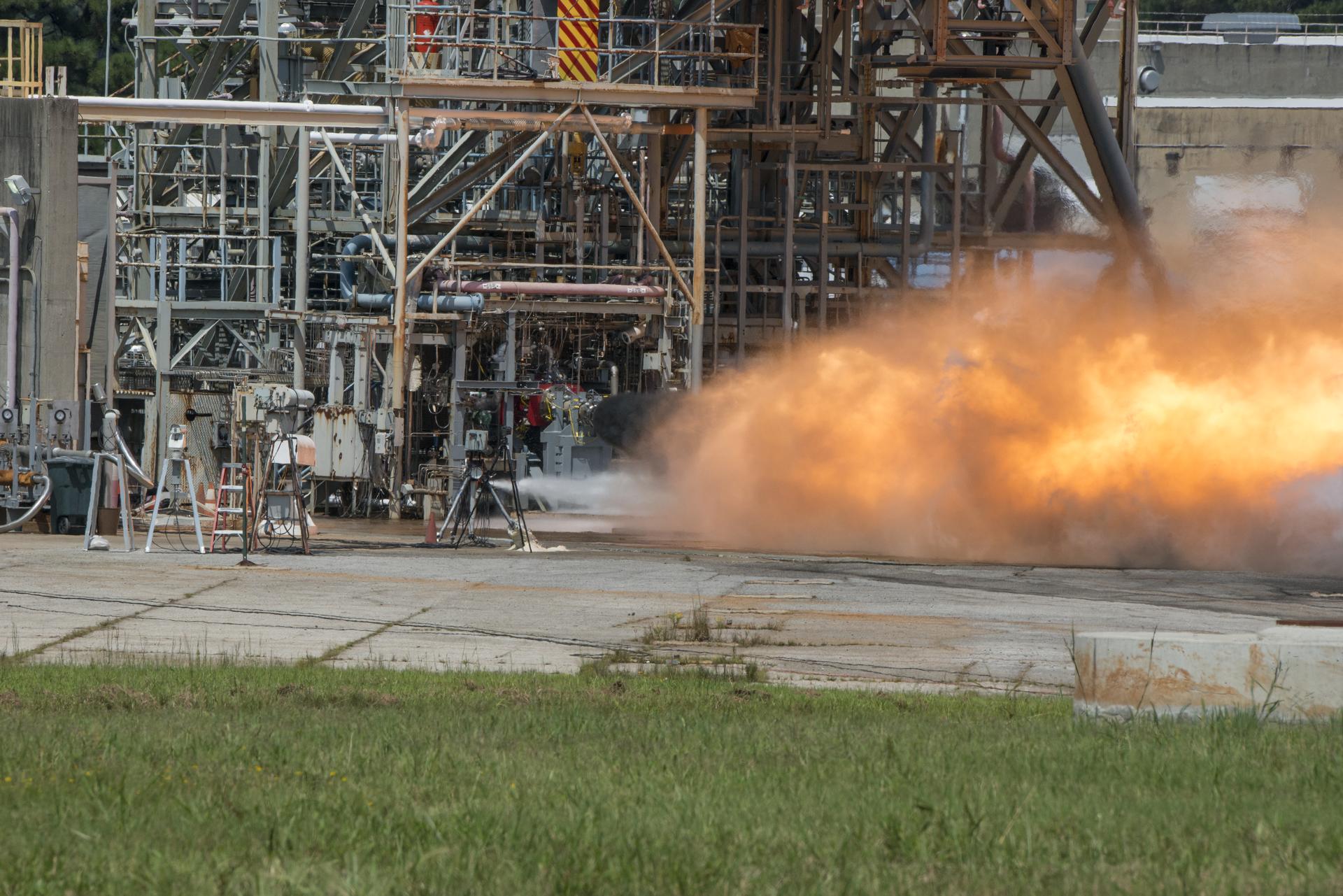
According to SpaceRocket's launch database, the most-flown active Chinese configurations are overwhelmingly the established Long March types. As Chinese technical commentators have noted in discussing why the Long March series has not adopted methane, most of the legacy family — apart from the newer CZ-5 and CZ-7 generation — flies on UDMH/N2O4 hypergolic propellants: storable at room temperature and technically simple, but toxic, polluting in the event of leaks or debris impact, and limited in performance. The cumulative record of that fleet is substantial.
| Configuration | Manufacturer | Maiden flight | Total launches (SpaceRocket database) |
|---|---|---|---|
| Long March 2D | CASC | 1992-08-09 | 100 |
| Long March 3B/E | CASC | 2007-05-13 | 78 |
| Long March 2C | CASC | 1982-09-09 | 65 |
| Long March 4C | CASC | 2006-04-26 | 60 |
| Long March 4B | CASC | 1999-05-10 | 57 |
| Long March 3A | CASC | 1994-02-08 | 27 |
| Long March 3B | CASC | 1996-02-14 | 24 |
| Long March 2F/G | CASC | 2011-10-31 | 22 |
| Long March 3B/YZ-1 | CASC | 1996-02-14 | 15 |
| Long March 3C | CASC | 2008-04-25 | 14 |
| Long March 2C/YZ-1S | CASC | 2018-10-09 | 10 |
These eleven configurations alone account for 472 launches in SpaceRocket's records. The Long March 2D, first flown in August 1992, reached the 100-launch mark — the only Chinese configuration in the database at triple digits. The 3B/E and its 3B and 3C siblings, together with YZ-1 upper-stage variants, add another 131. This is the fleet that built China's launch cadence, and it is the fleet whose propellant handling the new generation was designed to leave behind.
III. The New Generation in the Data
The new-generation Long March vehicles — the family associated with the move away from hypergolics that Chinese commentators identify with the CZ-5/CZ-7 generation — show a different profile: recent maiden flights, smaller cumulative counts, but a steep ramp.
| Configuration | Maiden flight | Total launches (SpaceRocket database) |
|---|---|---|
| Long March 6 | 2015-09-19 | 15 |
| Long March 7 | 2016-06-25 | 10 |
| Long March 7A | 2020-03-16 | 17 |
| Long March 6A | 2022-03-29 | 26 |
Together these four configurations have flown 68 times — about 12.6 percent of the 540 Long March launches in the tables above. The standout is the Long March 6A: 26 launches since its March 2022 debut, a rate of roughly six per year, making it the fastest-accumulating new-generation type in the database. The 7/7A pair has added 27 launches since 2016. The pattern in the data is consistent with a deliberate transition: legacy types still carry the bulk of cumulative history, but the newest configurations are where the cadence growth sits.
N-1 kerolox engine work moves to Kuznetsov OKB-276 (NK-15/NK-33)
—
Long March 2D maiden flight — legacy fleet's eventual 100-launch leader
—
Long March 3B/E maiden flight
—
Long March 6 maiden flight — new-generation era begins
—
Long March 7 maiden flight
—
Long March 7A maiden flight
—
Long March 6A maiden flight — fastest-accumulating new type
—
—
Lanyan: 30+ test runs, stable 50% thrust, full-system long-duration hot fire completed
IV. Why Kerolox — and Where It Hits Its Limits
Kerolox's attraction is economic as much as technical: in propellant trade studies circulated in Chinese space-media discussions, LOX/kerosene is described as the current best value for first-stage propulsion, with vacuum specific impulse figures around 355 seconds commonly cited. Its weakness for the reusable era is chemical: kerosene combustion leaves carbon deposits and coking inside the engine, complicating rapid turnaround between flights — the same maintenance burden noted in those discussions on foreign kerolox engines.
Chinese industry is attacking that limitation directly rather than only routing around it. Galactic Energy's CQ-50, a LOX/kerosene engine intended to power the reusable Pallas-1 launcher — seven engines on the first stage and a single vacuum variant on the second — is described by the company as having solved the kerolox coking and deposit problem, enabling engines to be delivered without disassembly after calibration testing. According to Galactic Energy's announcement, the CQ-50 offers restart and reuse capability with deep throttling over a 32–105 percent range, has accumulated more than 15,640 seconds of ground hot-fire time, and uses large-scale 3D printing in its regeneratively cooled thrust chamber, which the company credits with a performance gain above 3 percent, a 15 percent cut in thrust-chamber production cost, and a 30 percent shorter production cycle. Kerolox, in other words, is not being treated as a legacy dead end in China — it is being re-engineered for reuse in parallel with the methalox push.
V. The Case for Methane
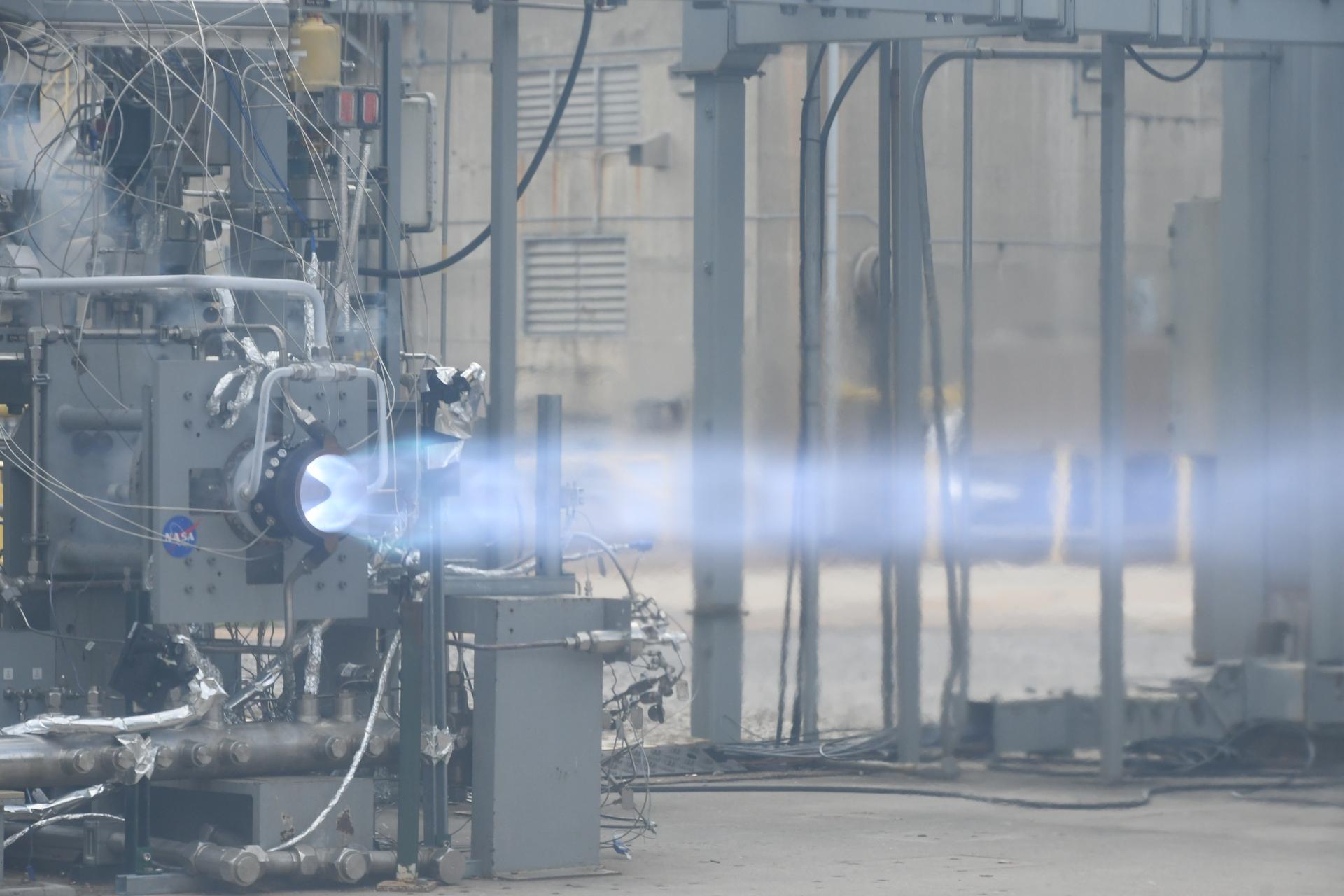
The argument for methalox, as laid out in Chinese technical discussions, runs as follows. Methane offers a modest specific impulse edge over kerosene — figures around 365 seconds versus about 355 are commonly cited — and, more importantly for reuse, it burns cleanly: no coking, no deposit removal between flights, and engines that can be flown repeatedly with minimal refurbishment. It sits between kerolox and hydrolox in performance without hydrogen's deep-cryogenic storage burden.
The costs are handling complexity. As one widely read Chinese explainer on why the Long March series has not adopted methane points out, both propellants are cryogenic: methane boils at −161.5 °C and liquid oxygen at −182.96 °C. Tanks frost over during fueling; plumbing, valves, and turbopump components must be protected against embrittlement; boil-off requires pressure-relief systems; and the propellants need a dedicated ignition system and sequence. None of this is insurmountable, but it is categorically harder than room-temperature hypergolics — which is precisely why the established state fleet has been slow to switch, and why the methalox push has come from the commercial sector instead.
VI. Lanyan: The 220-Tonne Full-Flow Campaign
LandSpace's Lanyan engine is the center of that push. It is a 220-tonne-class LOX/methane engine built around the full-flow staged combustion cycle (FFSC), in which both the fuel and the oxidizer each pass through their own preburner — driving their own turbopumps — before the two hot gas streams reunite in the main combustion chamber. Because virtually all propellant is burned in the main chamber at high efficiency, the cycle maximizes propellant utilization and specific impulse while keeping turbine temperatures comparatively low. As one Chinese analysis of the test put it, the cycle has challenged engine designers worldwide for nearly six decades.
According to LandSpace's official announcement in September 2025, as circulated in Chinese space media, Lanyan had completed more than 30 test runs and achieved stable operation at 50 percent thrust, and the engine completed a full-system, long-duration hot-fire test. The company framed the milestone as placing it in the first tier of global propulsion development. The significance, as Chinese commentators emphasized, is less the thrust figure than the cycle itself: running an FFSC engine through a sustained, full-system test campaign is a qualitatively different claim than demonstrating a large combustion chamber.
VII. The Engine Line-Up Behind the Race
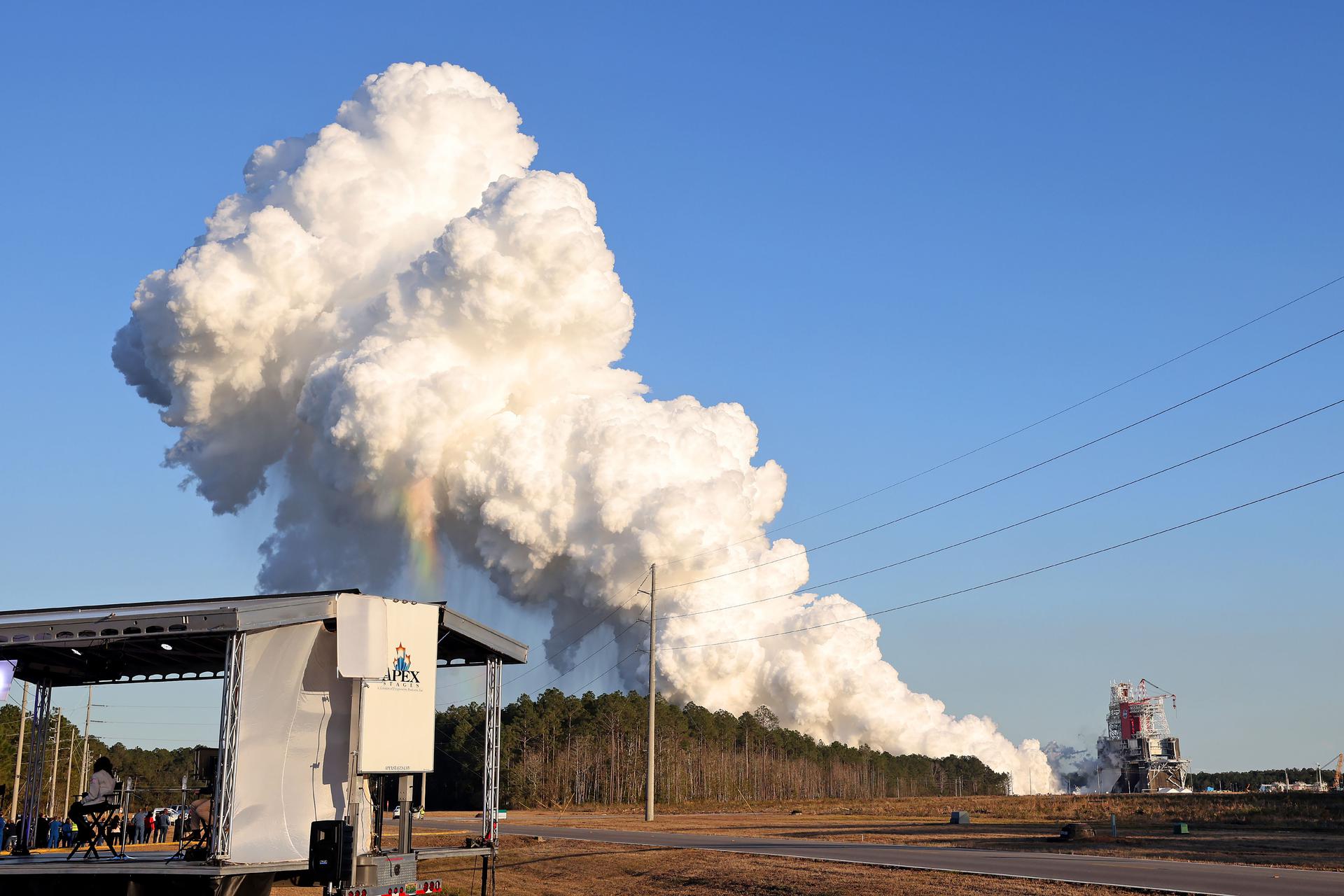
Lanyan does not stand alone. LandSpace's announced product line and Galactic Energy's kerolox work together sketch a layered Chinese engine ecosystem, summarized here from the company announcements and reference documentation collected by SpaceRocket.
| Engine | Propellant | Class / key details | Status per provided sources |
|---|---|---|---|
| YF-100 | LOX/kerosene | State new-generation kerolox family | Documented by Encyclopedia Astronautica as a LOX/kerosene engine |
| Tianque-12A (TQ-12A) | LOX/methane | 80-tonne class | Mature; multiple flight validations, per LandSpace |
| Tianque-12B (TQ-12B) | LOX/methane | 100-tonne class | High-frequency testing and batch delivery, per LandSpace |
| Lanyan (BF) | LOX/methane | 220-tonne class, full-flow staged combustion | 30+ test runs; stable 50% thrust operation; full-system long-duration hot fire completed |
| CQ-50 | LOX/kerosene | Reusable; 32–105% throttling; 7 + 1 vacuum per Pallas-1 | 15,640+ seconds cumulative hot fire; coking problem solved per Galactic Energy |
VIII. A Crowded Commercial Field
The engine race sits inside a crowded launch market. SpaceRocket's database already lists commercial Chinese vehicles with meaningful records: ExPace's solid-fueled Kuaizhou 1A at 31 launches, Galactic Energy's Ceres-1 at 17, CAS Space's Kinetica 1 at 15, and China Rocket Co.'s Smart Dragon 3 at 11 — 74 commercial launches among them. Chinese market commentary describes a field that also includes LandSpace, iSpace, Space Pioneer, Orienspace, and Deep Blue Aerospace, pursuing divergent paths — some going straight to methalox, some starting from kerolox, some from solids — with survival hinging on state constellation demand and, above all, on demonstrating reuse. That commentary predicts sharp consolidation ahead, with only a handful of firms likely to endure. The propellant choice each company made years ago is now becoming a sorting mechanism: those positioned for high-frequency reuse, whether via clean-burning methane or coking-resistant kerolox, hold the stronger hand.
IX. International Yardsticks — and the Right Metric
Chinese space-enthusiast discussions routinely benchmark domestic engines against two foreign reference points — figures that circulate widely but are not officially confirmed and should be treated as indicative: SpaceX's Raptor is cited at roughly 280 tonnes of thrust with a diameter of 1.3 meters and a mass of about 1.7 tonnes, allowing 33 engines on the 9-meter-diameter Starship; Russia's RD-171MV is cited at about 740 tonnes of sea-level thrust, but with a 3.56-meter diameter and 9.3-tonne mass that would limit a 9-meter vehicle to roughly four engines and about 2,960 tonnes of total thrust. The argument these discussions draw from the comparison is that thrust alone is a misleading headline number: for clustered, reusable boosters, engine diameter and mass determine whether a design closes at all. Against that yardstick, Lanyan's 220-tonne class and the TQ-12 family's flight heritage place China's commercial methalox effort in a small international club — Chinese commentators note that only China and the United States have built and flown methane engines — while the FFSC cycle, if it matures through the test campaign, would address exactly the efficiency and turbine-temperature margins that reuse economics reward.
X. What the Numbers Mean
Read together, the data and the test reports describe a two-speed transition. The installed base remains the heritage fleet: 472 launches across eleven legacy Long March configurations in SpaceRocket's database, built on propellants the program intends to leave behind. The growth edge is the new generation: 68 launches across four post-2015 configurations, led by the Long March 6A's rapid accumulation, powered by the kerolox family the YF-100 represents. And the next step — methalox, full-flow staged combustion, reuse — is still in the test-stand phase for the big engines: notably, no methane-fueled orbital launcher yet appears among the top twenty active Chinese configurations in SpaceRocket's records. The near-term indicators to watch are straightforward: whether Lanyan's campaign progresses beyond its announced 50-percent stable operating point, whether TQ-12B batch delivery converts into flight cadence, and whether the new-generation kerolox fleet's share of the annual launch total keeps climbing at the rate the 6A has set.
XI. FAQ
- Q: What is the YF-100?
- A: The YF-100 is China's new-generation rocket engine family documented by Encyclopedia Astronautica as a LOX/kerosene (kerolox) engine. It represents the propellant combination behind the post-2015 Long March generation, which SpaceRocket's database shows has accumulated 68 launches across the Long March 6, 6A, 7, and 7A configurations.
- Q: What is the Lanyan engine?
- A: Lanyan ("Blue Flame") is LandSpace's 220-tonne-class LOX/methane engine using the full-flow staged combustion cycle. Per LandSpace's September 2025 announcement, it had completed more than 30 test runs, achieved stable operation at 50 percent thrust, and finished a full-system, long-duration hot-fire test.
- Q: What is full-flow staged combustion?
- A: It is an engine cycle in which both the fuel and the oxidizer pass through their own preburners — each driving its own turbopump — before the two hot gas streams combine and burn fully in the main combustion chamber. The design maximizes propellant utilization and specific impulse while keeping turbine temperatures relatively low, but it has challenged engine designers worldwide for decades.
- Q: Why is methane favored for reusable rockets?
- A: Figures commonly cited in Chinese technical discussions put methalox specific impulse around 365 seconds, slightly above kerolox at roughly 355, and methane burns without the coking and carbon deposits that complicate kerolox engine refurbishment. The trade-off is cryogenic handling: methane boils at −161.5 °C and liquid oxygen at −182.96 °C, requiring insulation, boil-off relief, and dedicated ignition systems.
- Q: What other methalox engines has LandSpace announced?
- A: Per the company's announcements, the Tianque-12A is a mature 80-tonne-class methalox engine with multiple flight validations, and the Tianque-12B is a 100-tonne-class product in high-frequency testing and batch delivery, sitting below the 220-tonne-class Lanyan.
- Q: Which Chinese rocket has flown the most?
- A: According to SpaceRocket's launch database, the Long March 2D leads active Chinese configurations with 100 launches since its 1992 debut, followed by the Long March 3B/E at 78 and the Long March 2C at 65 — all part of the legacy fleet that the new-generation vehicles are intended eventually to succeed.