
Zhuque-3 vs. Falcon 9: How Close Is China’s Reusable Rocket to SpaceX?
August 17, 2026
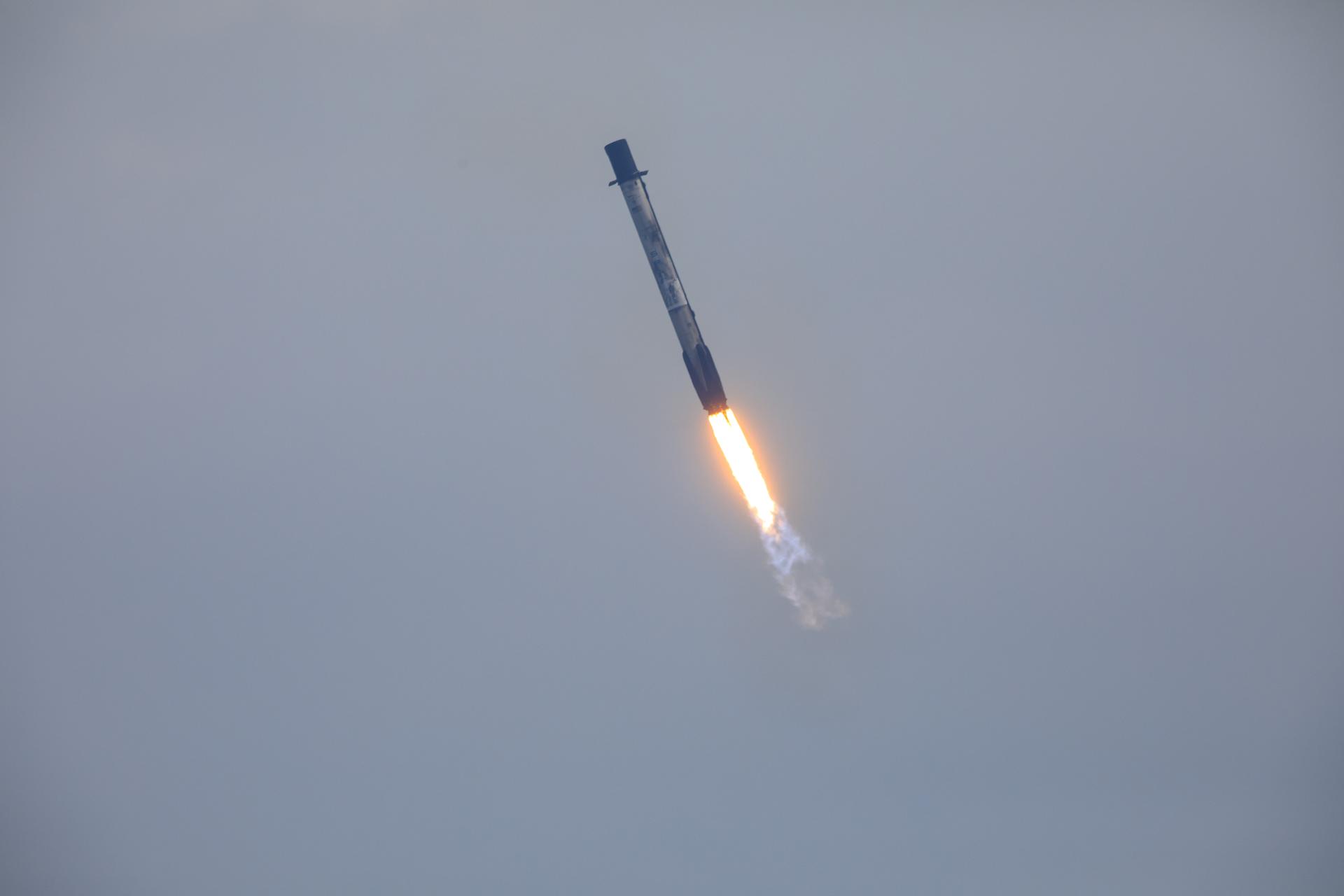
China’s commercial space industry is approaching an important test.
LandSpace’s Zhuque-3, a large reusable liquid-fueled rocket, is preparing for another launch attempt. One of the most closely watched parts of the mission will be the attempted recovery of its first stage.
If the landing succeeds, it would be a significant milestone for China’s commercial launch industry.
But it would be misleading to say that Zhuque-3 has already caught up with SpaceX’s Falcon 9.
The two rockets have surprisingly similar headline specifications in some areas. The much larger gap is in flight heritage, reliability, reusability, launch frequency, and operational experience.
That distinction is important.
A quick comparison
| Zhuque-3 | Falcon 9 Block 5 | |
|---|---|---|
| Developer | LandSpace | SpaceX |
| First flight | 2025 | 2010 |
| Configuration | Two-stage, partially reusable | Two-stage, partially reusable |
| Propellant | Liquid oxygen / methane | Liquid oxygen / RP-1 |
| Diameter | About 4.5 m | About 3.7 m |
| Height | About 76.6 m | About 70 m |
| Liftoff mass | About 660 tonnes | About 550 tonnes |
| First-stage engines | 9 × Tianque-12 series | 9 × Merlin 1D |
| Liftoff thrust | About 900 tonnes-force | About 760 tonnes-force |
| LEO payload, expendable | About 21.3 tonnes | About 22 tonnes |
| LEO payload, downrange recovery | About 18.3 tonnes | Mission dependent |
| Landing method | Vertical landing | Vertical landing |
These numbers are interesting because they show that Zhuque-3 is not a small experimental rocket.
On paper, it is already in the same general performance class as Falcon 9.
In some areas, such as liftoff thrust and vehicle diameter, Zhuque-3 is actually larger.
The real question is therefore not whether Zhuque-3 can produce enough thrust.
It is whether the entire system can become reliable and reusable over many flights.
That is a much harder problem.
Falcon 9 has had more than a decade to mature
Falcon 9 is often discussed as if it were a single design.
In reality, today's Falcon 9 Block 5 is the result of more than a decade of development.
SpaceX launched the first Falcon 9 in 2010.
The company then went through several major iterations, including Falcon 9 v1.0, v1.1, Full Thrust, Block 3, Block 4 and eventually Block 5.
The first successful landing of a Falcon 9 first stage came in 2015.
In 2017, SpaceX demonstrated that an orbital-class booster could actually fly again.
Block 5, introduced in 2018, was designed with higher reliability, longer life and faster refurbishment in mind.
That history matters.
When we compare Zhuque-3 with today's Falcon 9, we are not really comparing a new Chinese rocket with the Falcon 9 of 2010.
We are comparing a relatively young reusable rocket with the result of more than a decade of continuous operational experience.
Falcon 9 maiden flight
—
First successful first-stage landing
—
First reflight of an orbital-class booster
—
Block 5 introduced — designed for rapid reuse
—
—
Zhuque-2 maiden flight (fails to reach orbit)
—
Zhuque-2 becomes the first methalox rocket to reach orbit
—
Zhuque-3 maiden flight
—
Next Zhuque-3 launch attempt with first-stage recovery
The engines are particularly interesting
Zhuque-3 uses LandSpace's Tianque-12 family of methane engines.
Falcon 9 uses SpaceX's Merlin 1D engines, which burn RP-1 kerosene and liquid oxygen.
Both first stages use nine engines.
This makes the comparison especially interesting.
A Merlin 1D produces roughly 845 kN of sea-level thrust.
The newer Tianque-12B is a roughly 100-ton-class engine.
That gives Zhuque-3 a first-stage liftoff thrust of around 900 tonnes-force, compared with roughly 760 tonnes-force for Falcon 9.
So, at least in terms of raw thrust, Zhuque-3 is not obviously behind Falcon 9.
But engine performance is about much more than thrust.
The Merlin family has accumulated an enormous amount of flight experience.
The engines have been started, throttled, shut down, exposed to reentry conditions and flown again many times.
That operational database is one of SpaceX's most valuable assets.
LandSpace's methane engines have a much shorter flight history.
This is one of the areas where the difference between the two programs is still substantial.
Methane could become an important advantage
Zhuque-3's use of liquid methane is also worth watching.
Methane has become increasingly attractive for reusable launch vehicles because it burns relatively cleanly and can potentially reduce some of the problems associated with repeated engine operation.
SpaceX itself chose methane for its much larger Raptor engine.
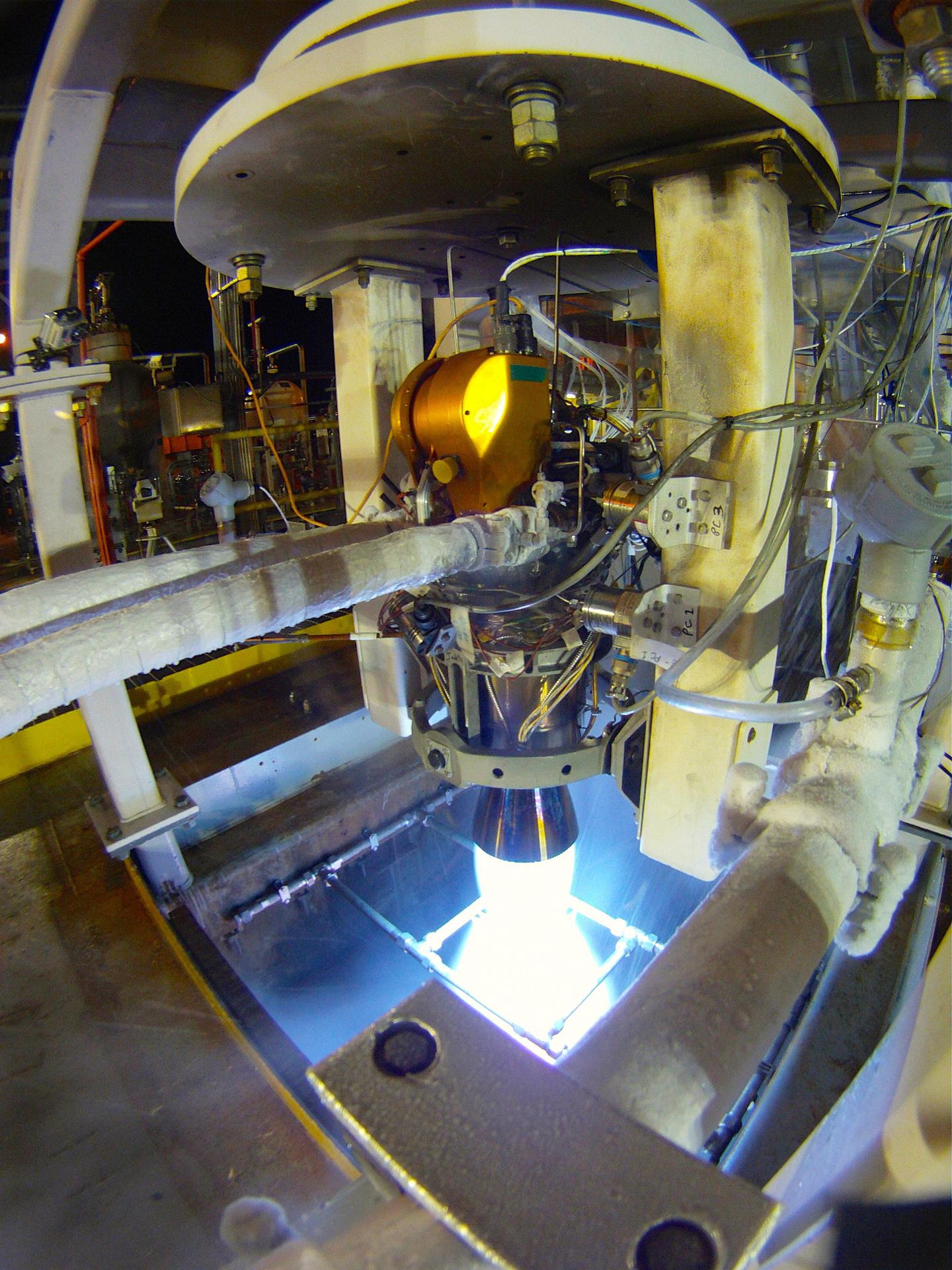
However, there is an important distinction.
Tianque-12 is not a copy of Raptor.
The two engines use different architectures.
Tianque-12 uses a gas-generator cycle, while Raptor uses the considerably more complex full-flow staged-combustion cycle.
In other words, Zhuque-3 is not trying to compete with Starship by using the same engine technology.
Instead, LandSpace appears to be taking a somewhat more conservative approach: develop a powerful methane engine that can be manufactured and operated reliably, and then build a reusable launch vehicle around it.
For an early-generation reusable rocket, that may be a sensible strategy.
The payload numbers are already impressive
One of the most interesting aspects of Zhuque-3 is its advertised payload capability.
LandSpace has stated that Zhuque-3 can carry approximately 21.3 tonnes to low Earth orbit in an expendable configuration.
With downrange recovery, the figure is about 18.3 tonnes.
With a return-to-launch-site recovery profile, the payload is lower.
These numbers put Zhuque-3 firmly into the medium-to-heavy orbital launch category.
That is particularly relevant to the development of large satellite constellations.
A reusable rocket does not necessarily need to return all the way to the launch site every time.
A downrange landing can allow a vehicle to carry more payload while still recovering the first stage.
Falcon 9 has demonstrated the same basic principle for years.
Where Zhuque-3 is still far behind
This is where I would be cautious about making comparisons based only on specifications.
A rocket can have similar dimensions and similar thrust without having similar operational capability.
Falcon 9's greatest advantage today is not its engine thrust.
It is experience.
SpaceX has performed hundreds of Falcon 9 missions and has reused individual first-stage boosters many times.
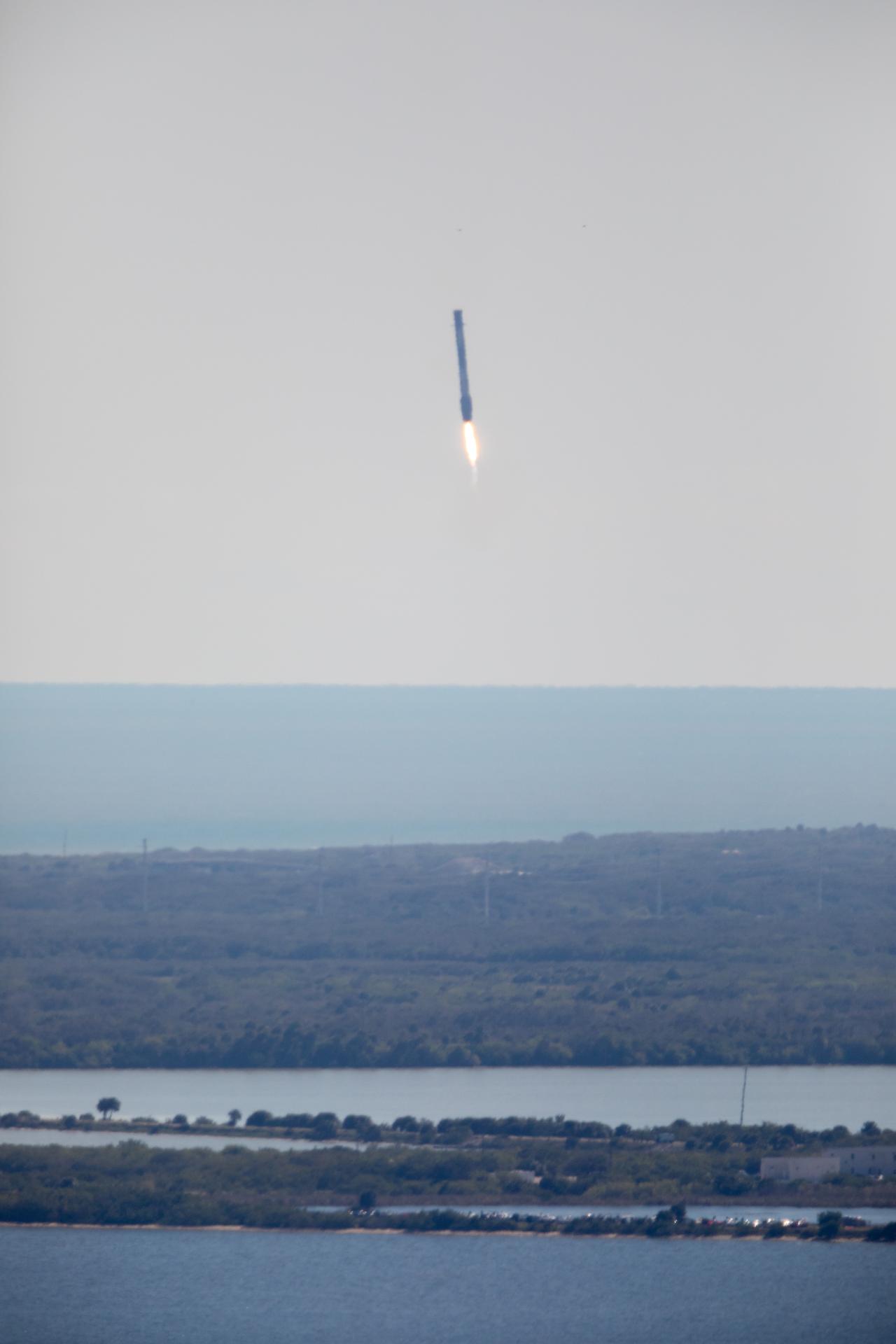
Some boosters have now flown well into the double digits.
This changes the economics of launch.
A reusable rocket becomes truly valuable when the operator can recover it, inspect it, prepare it and fly it again without treating every flight as a major experimental event.
That is the real benchmark Zhuque-3 still needs to reach.
If Zhuque-3 successfully lands its first stage on the next flight, it will demonstrate that the basic recovery architecture works.
But one successful landing would still be only the beginning.
The next questions would be:
Can it land again?
Can the same booster fly again?
Can it fly five times?
Ten times?
Can the company launch every few weeks?
Can it eventually launch every week?
Those milestones matter more than a single successful landing.
Is Zhuque-3 equivalent to an older Falcon 9?
People often ask this question because it is difficult to compare two rockets from different generations.
If we look purely at advertised performance, Zhuque-3 is surprisingly close to today's Falcon 9 in some respects.
But if we look at maturity, the comparison is very different.
I would describe Zhuque-3 as being closer to the stage of development that Falcon 9 reached when SpaceX was proving that orbital-class boosters could be recovered and reused.
That does not mean Zhuque-3 is literally equivalent to a specific version of Falcon 9.
The development environments are different, and the engineering choices are different.
It simply means that Zhuque-3 is now approaching a similar historical milestone:
**moving reusable rockets from an engineering concept to a repeatable flight operation.**
The recent Long March 7A failure adds some tension
The timing is unfortunate.
China's Long March 7A recently suffered a launch failure, with the vehicle experiencing a serious anomaly during flight.
The incident naturally creates some additional public concern around China's launch industry, especially with another high-profile rocket preparing for a challenging mission.
However, I would not draw a direct technical connection between the Long March 7A failure and Zhuque-3.
They are different vehicles, developed by different organizations and based on different propulsion and system architectures.
The Long March 7A failure should primarily be viewed as a reminder of how unforgiving launch vehicle engineering is.
It does not automatically imply anything about the reliability of Zhuque-3.
If anything, the incident highlights why Zhuque-3's upcoming recovery attempt is so important.
Reusable rockets introduce another layer of complexity beyond simply reaching orbit.
The vehicle must survive ascent, stage separation, atmospheric reentry, controlled descent and a final landing burn.
Every part of that sequence has to work.
Experience from China's traditional aerospace sector also matters
Another interesting aspect of China's commercial launch industry is the movement of experienced engineers between the traditional state aerospace sector and private companies.
Zhang Xiaoping is one example that has received considerable attention.
He has experience working on liquid rocket propulsion within China's traditional aerospace sector before joining LandSpace.
It would be an oversimplification to attribute Zhuque-3 to any single engineer.
Large launch vehicles are the result of thousands of engineering decisions made by large teams.
But the transfer of experience from China's established aerospace institutions into commercial companies is clearly an important part of the story.
It combines decades of accumulated engineering knowledge with a different organizational and commercial environment.
That combination could become increasingly important in the coming years.
What I would consider a successful Zhuque-3 program
For me, the upcoming landing is not the final goal.
I would see the milestones roughly like this:
**First:** successfully reach orbit and recover the first stage.
**Second:** repeat the recovery on subsequent missions.
**Third:** fly a previously used booster again.
**Fourth:** demonstrate multiple reuses of the same booster.
**Fifth:** increase launch frequency while keeping reliability high.
Only after those milestones are achieved would I consider Zhuque-3 a mature reusable launch system.
And that is exactly why the upcoming launch is worth watching.
My view
I am cautiously optimistic about Zhuque-3.
I would not describe it as a Chinese Falcon 9 that has already caught up with SpaceX.
That would be premature.
At the same time, I think it would also be unfair to dismiss it as simply an imitation or as a rocket that is many generations behind.
Its advertised payload, size, engine architecture and planned recovery capability show that China's commercial launch industry has made considerable progress.
The gap with Falcon 9 is increasingly less about whether China can build a rocket with enough thrust.
It is about whether that rocket can become a reliable machine that flies again and again.
That is a much harder challenge.
If Zhuque-3 successfully recovers its first stage, I would see it as an important milestone rather than the end of the race.
It would mean that China has demonstrated another credible path toward orbital rocket reusability.
But the real test will come afterward.
Five flights.
Ten flights.
Repeated booster flights.
Higher launch frequency.
Lower refurbishment costs.
And eventually, a launch system that can operate routinely rather than experimentally.
That is the standard Falcon 9 has already established.
Zhuque-3 is not there yet.
But it is getting close enough that the comparison is becoming meaningful.
And that, in itself, is significant.
For that reason, I will be watching the next Zhuque-3 launch with considerable interest.
I hope it succeeds.
Not because it would prove that China has overtaken SpaceX, but because a successful recovery would represent a meaningful step forward for China's commercial space industry.
The engineers behind the project, including people with years of experience in liquid rocket propulsion, have taken on a difficult problem.
A successful landing would be a good reward for that effort.
And perhaps more importantly, it would mark the beginning of the next phase: proving that the same rocket can come back and fly again.