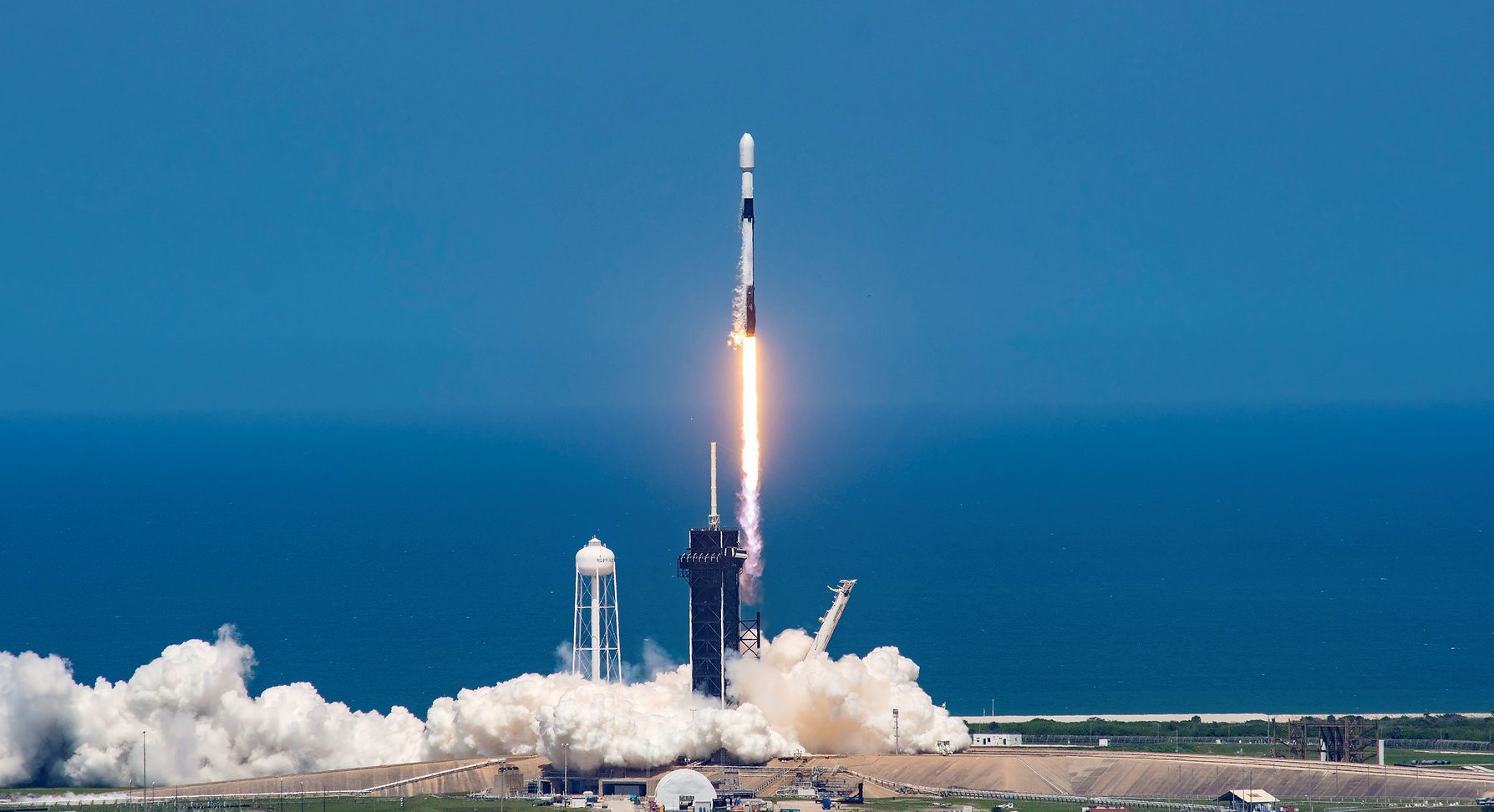
Falcon 9 is a two-stage rocket designed and manufactured by SpaceX for the reliable and safe transport of satellites and the Dragon spacecraft into orbit. The Block 5 variant is the fifth major interval aimed at improving upon the ability for rapid reusability.
SpaceX Falcon 9 Block 5 by AllThingsSpace on Sketchfab · licensed CC BY 4.0
.jpg%3Fwidth%3D640) Metal Puzzles~$15
Metal Puzzles~$15Laser-cut steel sheets, no glue needed — a one-evening build that lands on your desk. The cheapest way to own a Falcon 9.
.jpg%3Fwidth%3D640) Diecast & Display Models$80–200
Diecast & Display Models$80–200Hand-finished resin display models with soot-blackened booster option — the kind you see on mission-control desks.
.jpg%3Fwidth%3D640) 3D-Printable FilesFree
3D-Printable FilesFreeCommunity-made STL files, including versions with deploying grid fins and landing legs. Print your own booster fleet.
Falcon 9 Block 5 is a two-stage orbital launch vehicle designed and manufactured by SpaceX, an American aerospace company founded in 2002 and headquartered in Hawthorne, California. The vehicle is the fifth major variant of the Falcon 9, which itself belongs to the broader Falcon family of two-stage, partially reusable rockets. According to the program description in SpaceRocket's database, the Falcon 9 was developed for the reliable and safe transport of satellites and the Dragon spacecraft into orbit, and the Block 5 variant was specifically aimed at improving the rocket's capacity for rapid reusability. The Block 5 made its maiden flight on 11 May 2018 and remains in active service.
The Falcon 9 Block 5 stands 70 metres tall with a diameter of 3.65 metres and a launch mass of 549 tonnes. Its two-stage configuration can deliver up to 22,800 kilograms to low Earth orbit or 8,300 kilograms to geostationary transfer orbit. A defining characteristic of the vehicle is its reusability: the first stage is designed to return to Earth for recovery and reflight, an approach central to SpaceX's stated goal of reducing space transportation costs. The Block 5 iteration in particular was developed to make this reusability faster and more practical to achieve between flights. The rocket is used to launch both satellite payloads and the Dragon spacecraft, reflecting its role across cargo and crewed missions.
According to SpaceRocket's database, the Falcon 9 Block 5 had accumulated 615 launches at the time of recording, of which 614 were successful and one ended in failure. Its landing record shows 600 successful first-stage recoveries against five failed landing attempts. These figures correspond to a launch success rate of more than 99.8 percent and a landing success rate above 99 percent. On the basis of those numbers, the Block 5 stands as a statistically reliable vehicle by historical standards for orbital rockets, and its combined record of frequent launches and routine booster recovery indicates that the rapid reusability targeted by the variant's design has been demonstrated in operational practice. The single recorded launch failure and the small number of unsuccessful landings nonetheless show that neither orbital launch nor booster recovery has been entirely without risk.
Sources: Launch Library 2 (TheSpaceDevs) · Wikipedia (CC BY-SA 4.0)